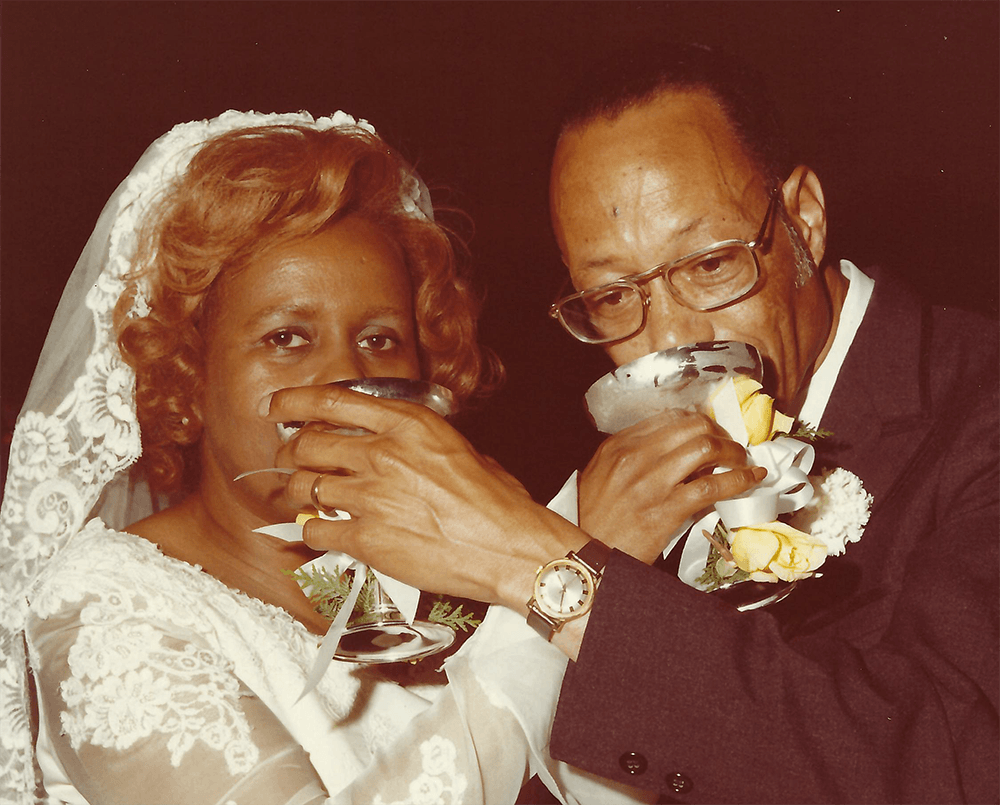
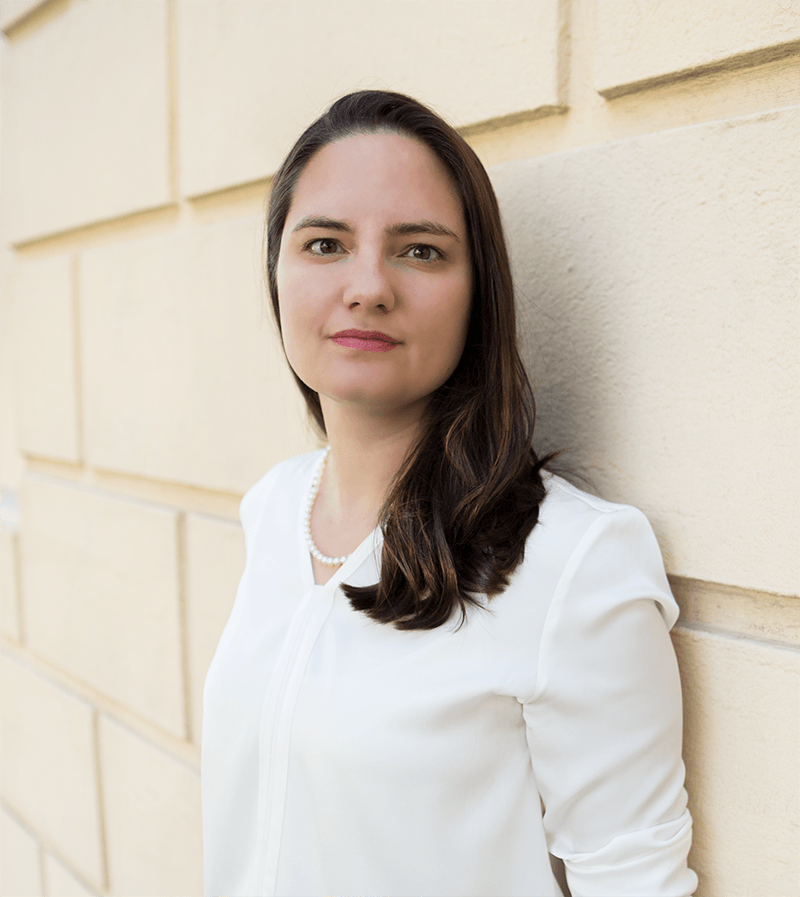
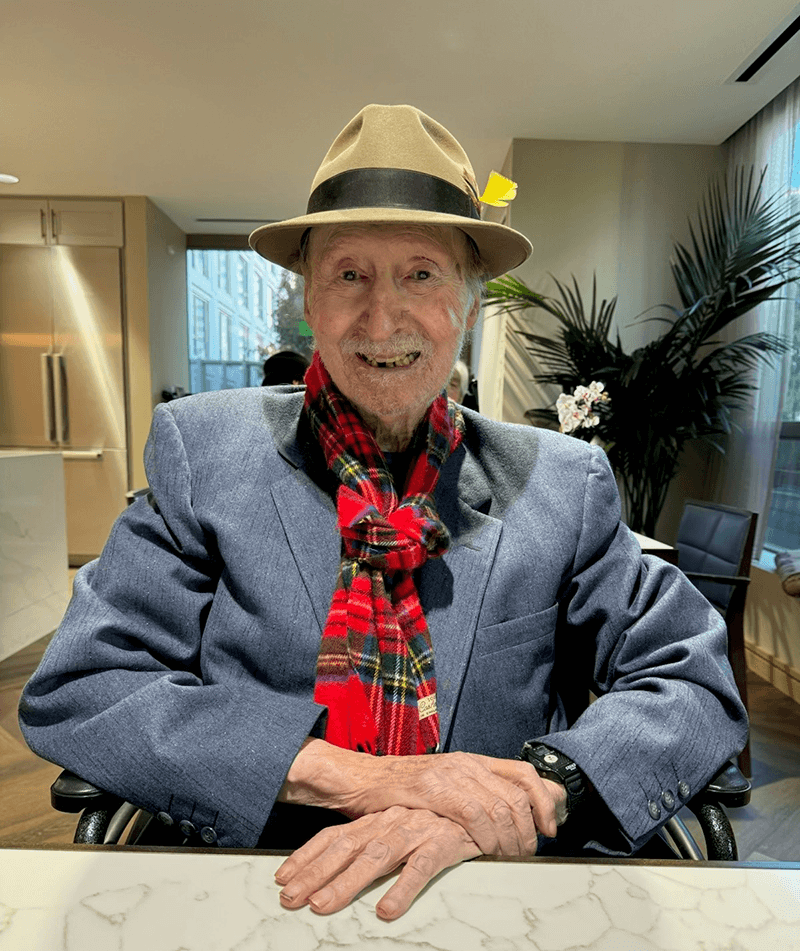
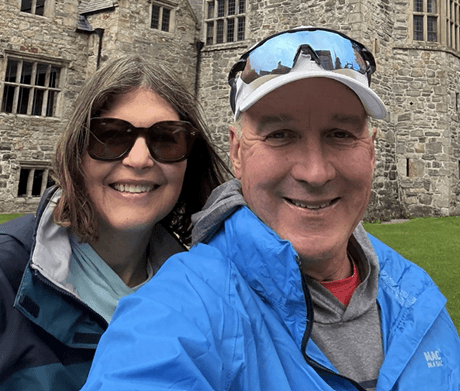
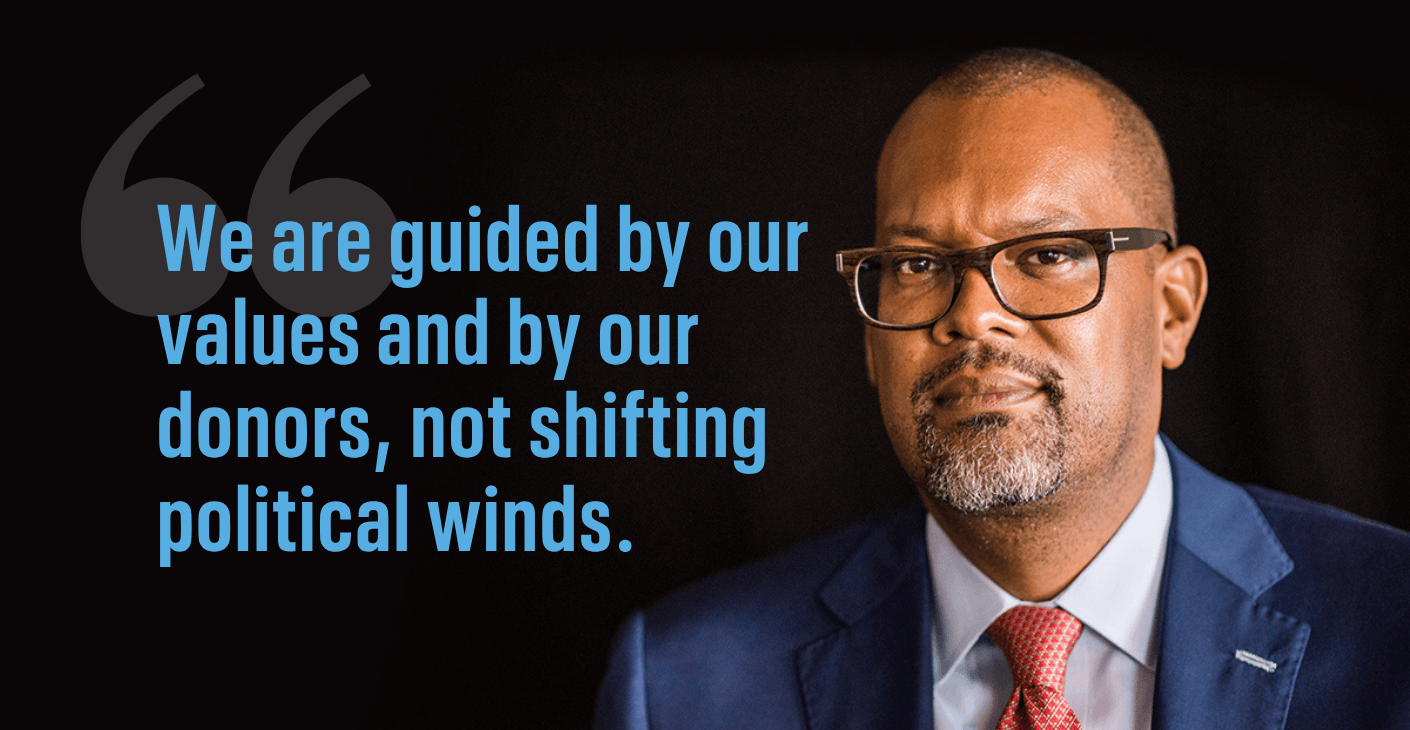
“At its core, philanthropy is an act of solidarity. It’s a belief that our futures are connected and that we all can play a role in creating the communities we want to leave for the next generation.”
LOW-INTEREST LOANS AND INVESTMENTS TO SUPPORT LOCAL COMMUNITIES AND SMALL BUSINESSES
$7.9M
GRANTS MADE SINCE 1948
$4.0B
Trusted Partner
CONTRIBUTIONS AND BEQUESTS IN FY26
$293.4M
RAISED FROM INSTITUTIONAL PARTNERS IN FY26
$30.1M
10-YEAR FINANCIAL RETURNS AMONG ENDOWMENTS AND FOUNDATIONS
Top 20%
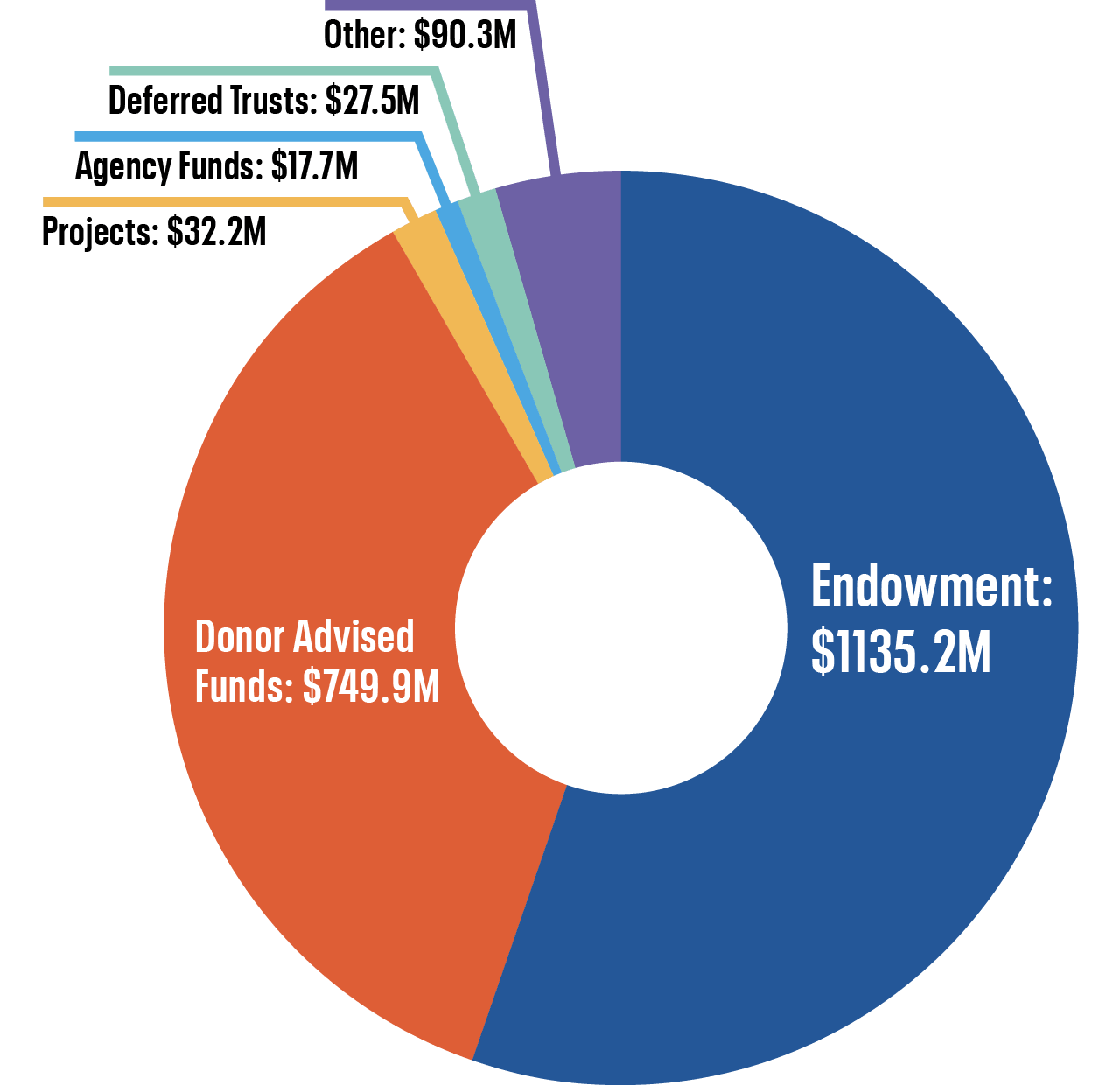
DONOR ADVISED FUNDS UNDER MANAGEMENT
$749.9M
Dear Friends,
This past year called on the best in the donors, leaders, and organizations we support. Many of them met the moment with resolve — adapting quickly, protecting what mattered most, and finding new ways to serve their communities, even as the ground moved beneath them.
The challenges facing our communities are too big for any one organization, sector, or solution. Progress happens when unlikely allies find common ground and roll up their sleeves together. And so, we work closely with donors, nonprofit partners, civic leaders, and residents who share a dedication to improving the Bay Area and beyond. We meet the moment by inviting people into our mission.
That’s the work we are committed to every day.
This year, donors entrusted the San Francisco Foundation with more than $300 million in new philanthropic giving. We’re deeply grateful for that trust, and for the opportunity to help put those resources to work across the Bay Area and beyond. This past year, we made $275 million in grants to thousands of nonprofit partners. This report is a snapshot of the impact we have made together.
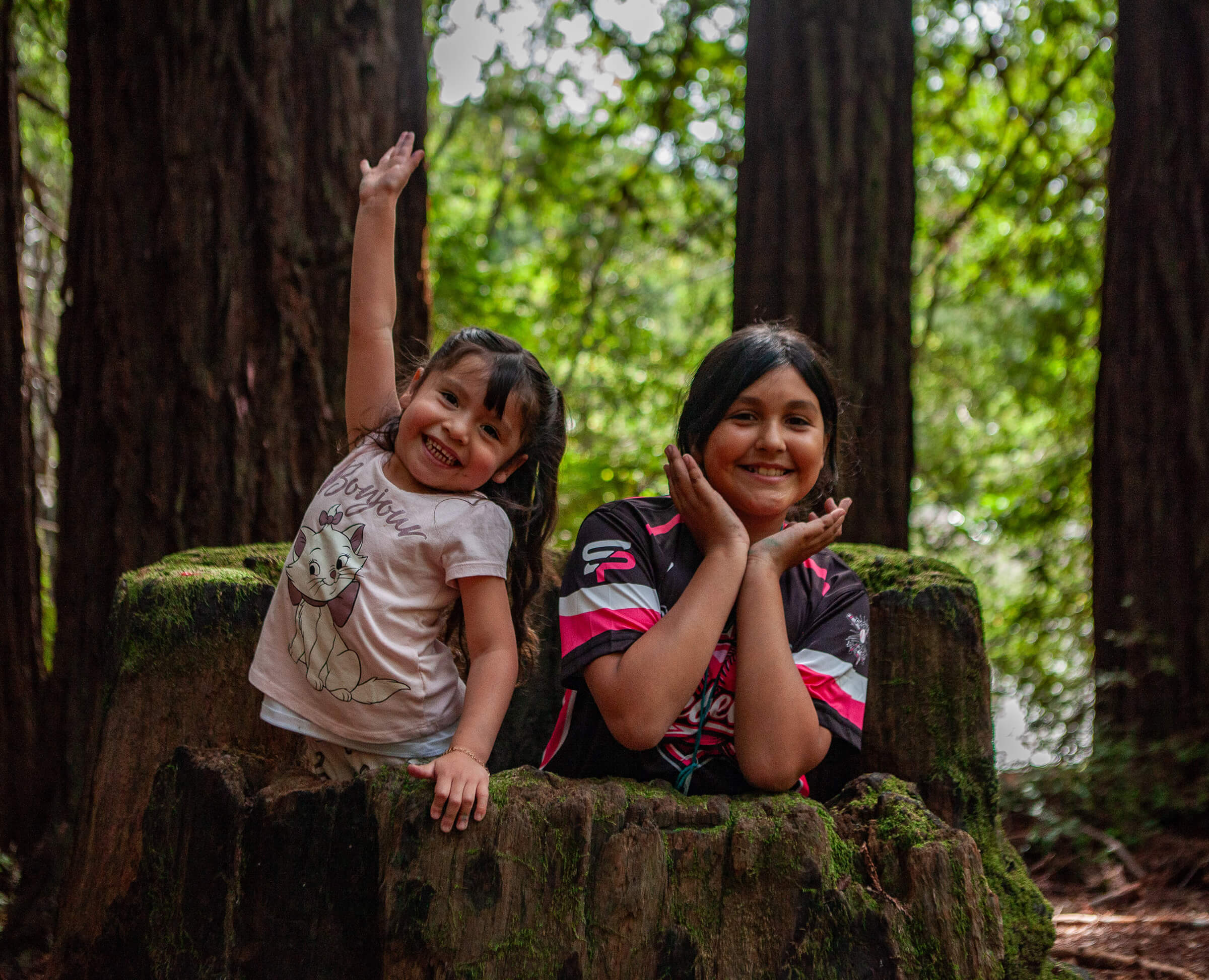
At its core, philanthropy is an act of solidarity. It’s a belief that our futures are connected and that we all can play a role in creating the communities we want to leave for the next generation.
Thank you for being part of this work. We’re building a Bay Area that works better because we work together.
With gratitude,
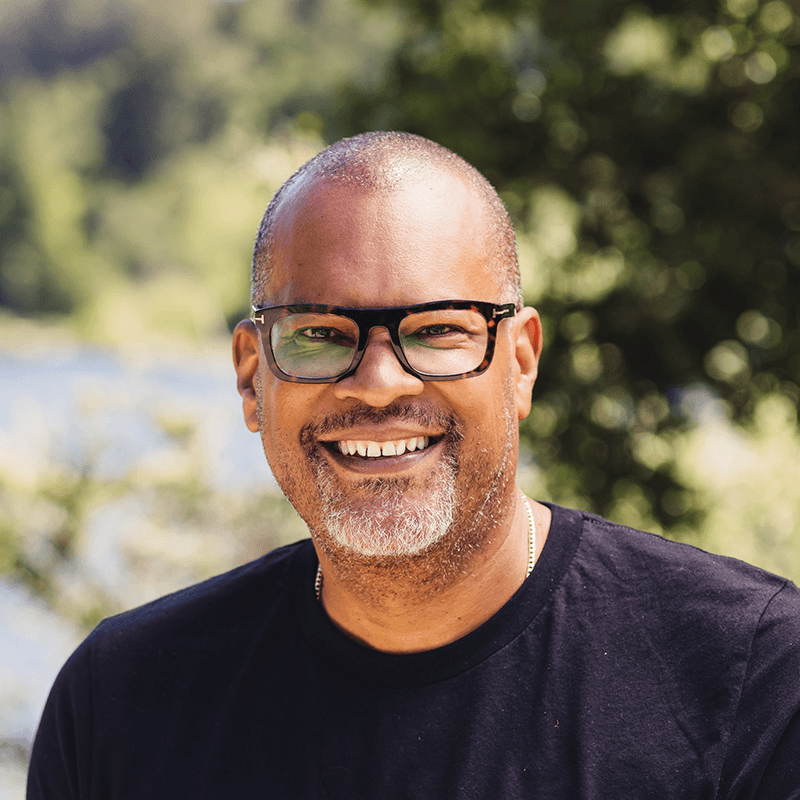
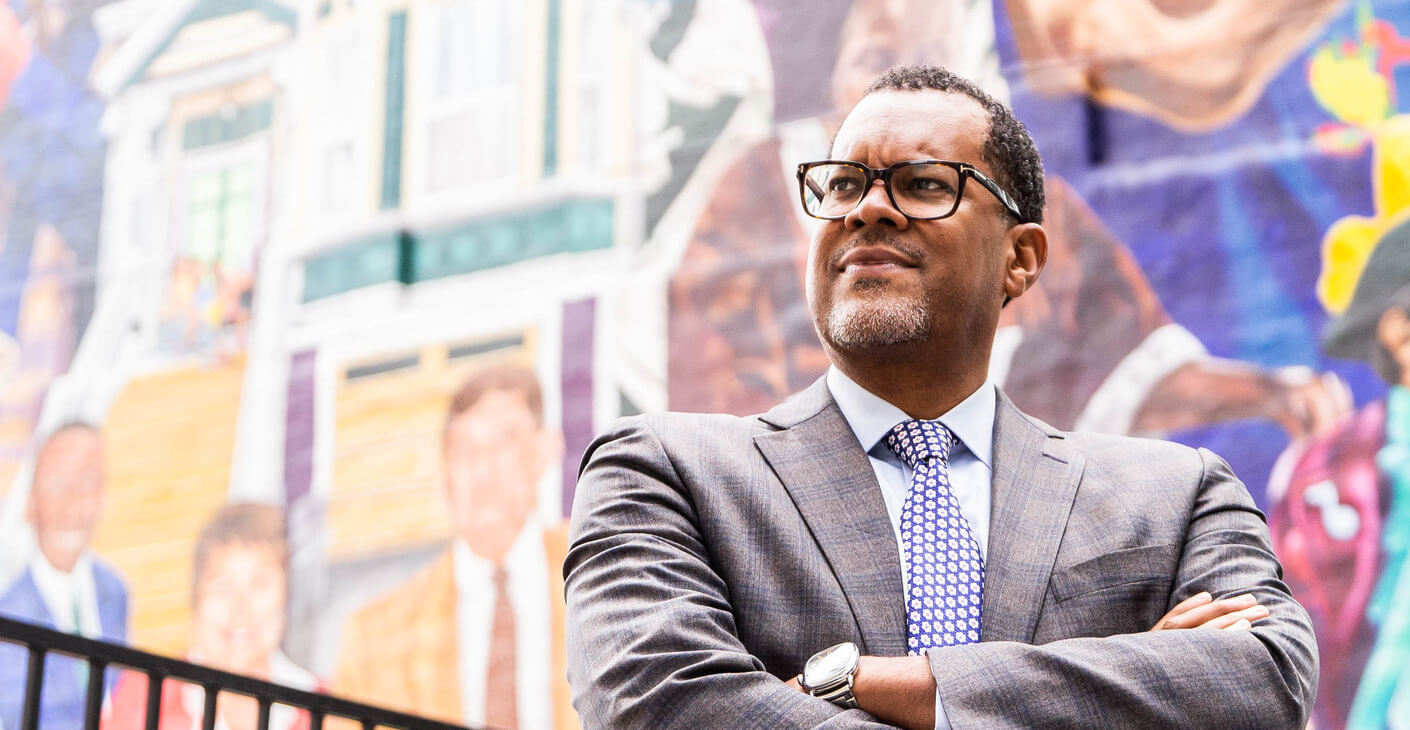
Fred Blackwell Chief Executive Officer San Francisco Foundation
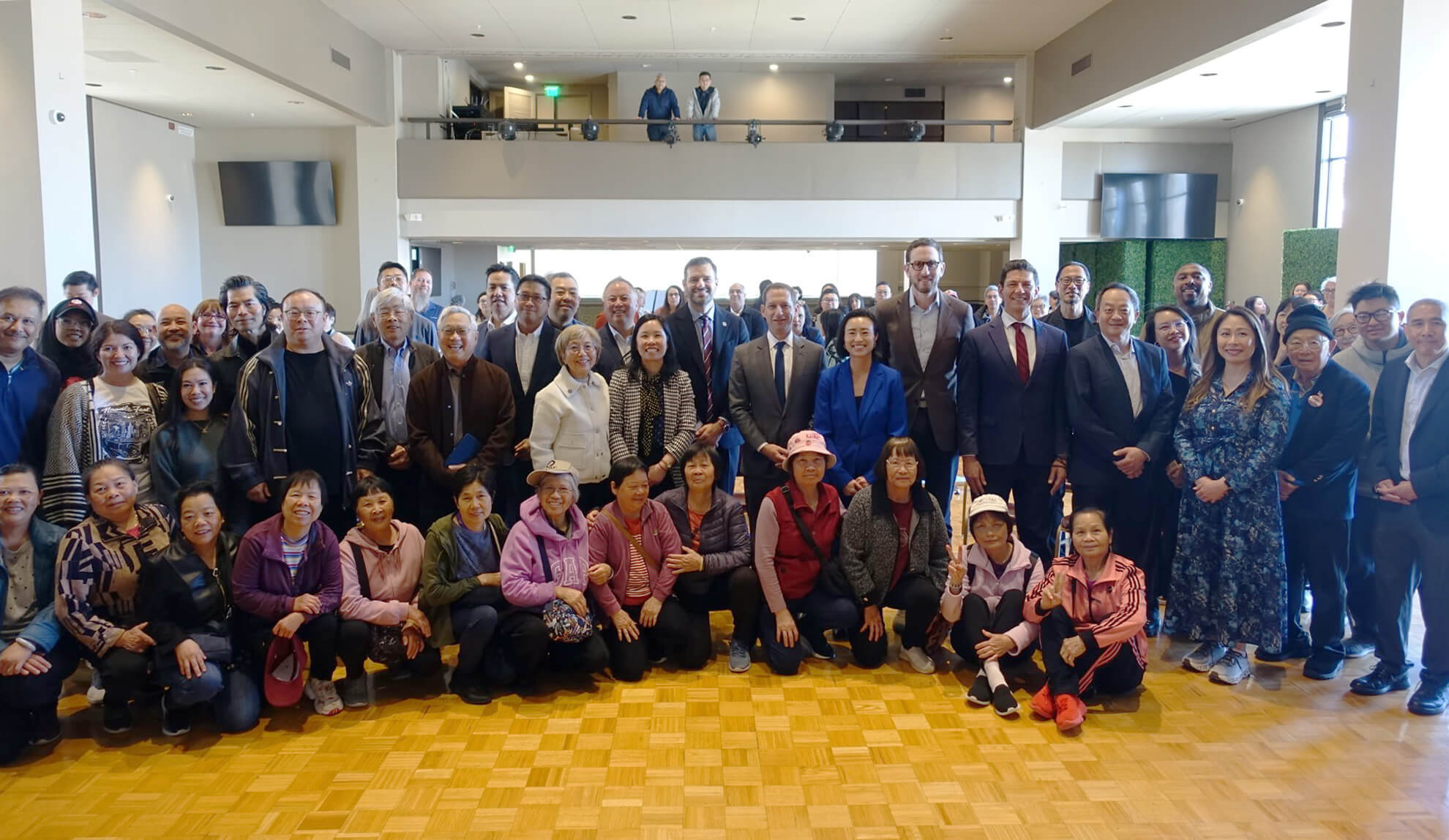
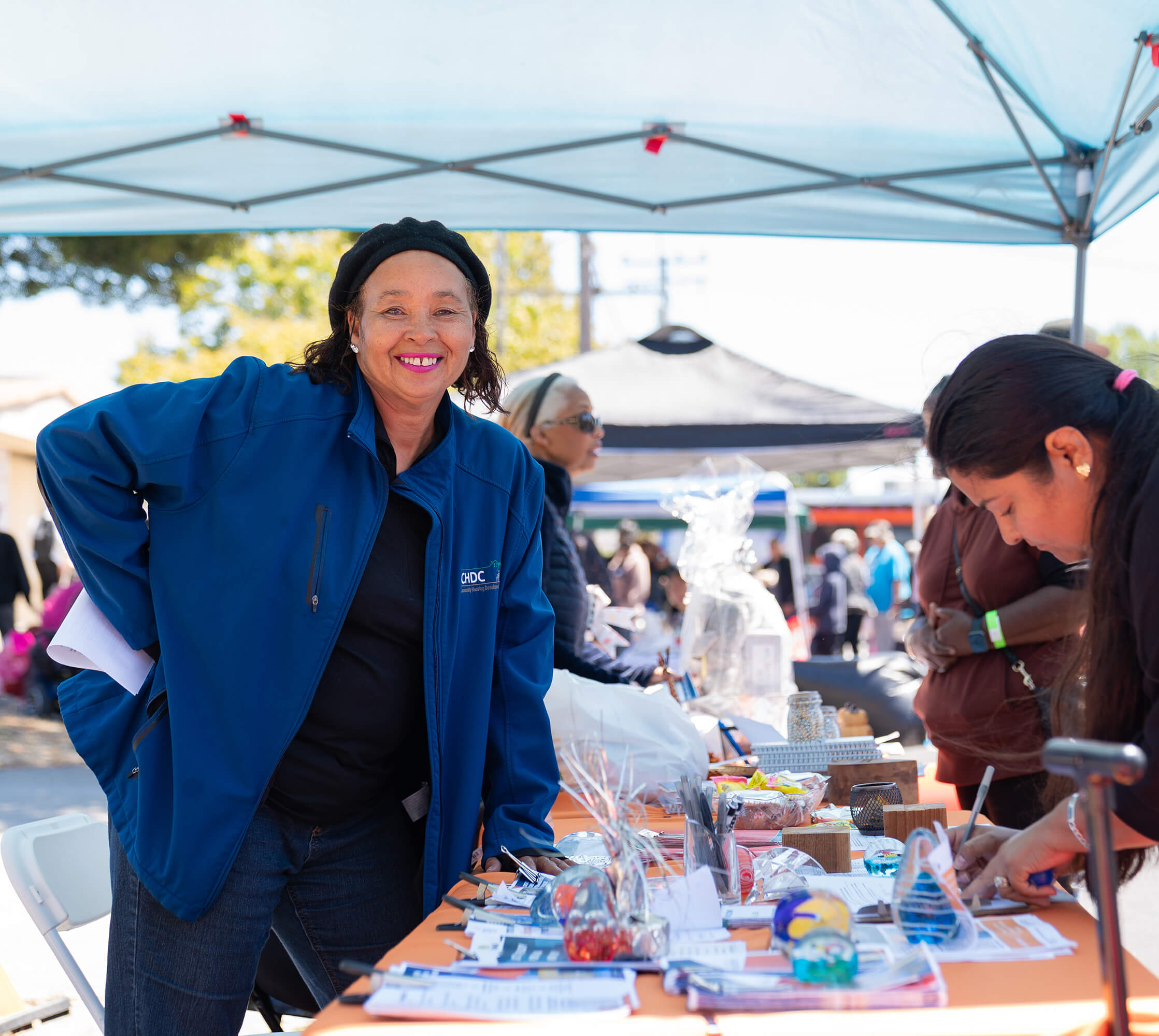
SFF’s $2 million loan to Chinatown Community Development Center’s (CCDC) Project Opportunity Fund will provide flexible early-stage capital in an increasingly constrained environment to keep affordable housing projects moving forward. Over its 50-year history, CCDC has developed more than 3,500 affordable homes, and it continues to advance new housing developments, including New Asia Senior Housing, which will create 175 affordable homes for low-income and formerly homeless seniors in Chinatown.
Meeting the Moment
Thriving Communities and Shared Opportunity
Everyone benefits when all people are economically secure, connected to their communities, and empowered to shape public decisions. We support organizations that make housing more affordable, strengthen worker and civic power, and foster belonging. We bring people together to work on solutions and ensure all people have the resources, voice, and support they need to thrive and contribute to vibrant, resilient communities.
We support organizations building economic security, vibrant communities, and community power in the Bay Area. The stories below are a small sample of the impact SFF grantees and donors made in the past year.
$55.9M
in program grants
81%
of program grants to orgs headquartered in the five-county Bay Area
79%
of executive directors identify as Black, Indigenous, or people of color**
** Among grantees with race/ethnicity data submitted, FY26
A Victory for Workers’ Rights
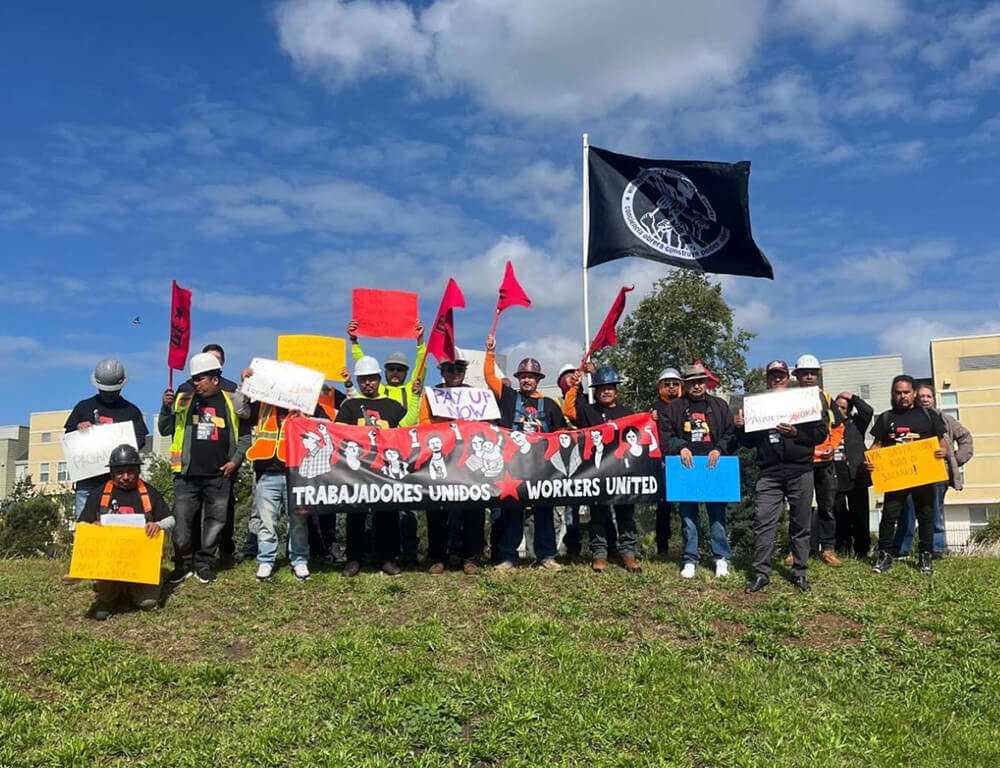
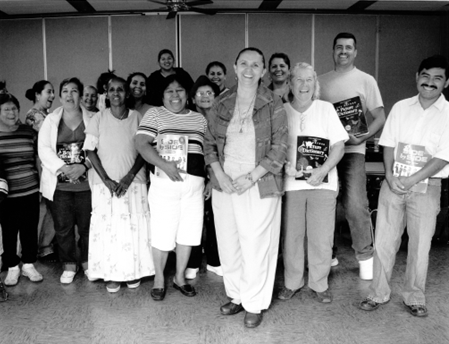
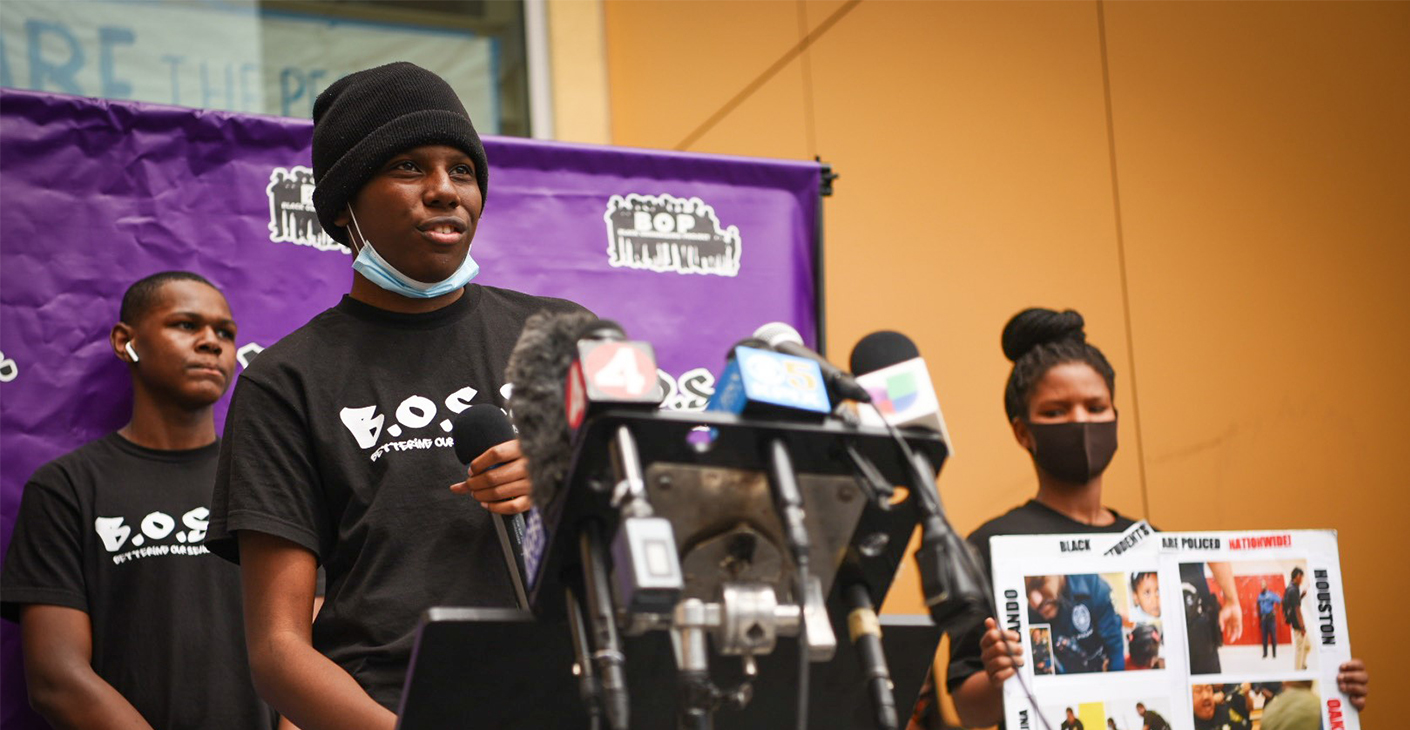
Construction workers in Oakland successfully recovered nearly $300,000 in unpaid wages. Members of Trabajadores Unidos Workers United’s Roofer’s Organizing Committee, who faced underpayment and wage theft, came together to demand accountability. Following a worker‑led press conference, the general contractor agreed to pay 100% of the wages owed. Their collective action restored income, upheld labor standards, and will help ensure workers are treated with fairness and dignity.
Preserving Culture, Building Opportunity
The Chinatown Media and Arts Collaborative is bringing new life to the historic Empress of China building as a hub for arts, culture, and community life in San Francisco’s Chinatown. The building will anchor a broader cultural hub that supports local artists, preserves heritage, and creates opportunities for small businesses while ensuring Chinatown residents help shape the neighborhood’s future.
A Community-Based Approach with Life-Saving Results
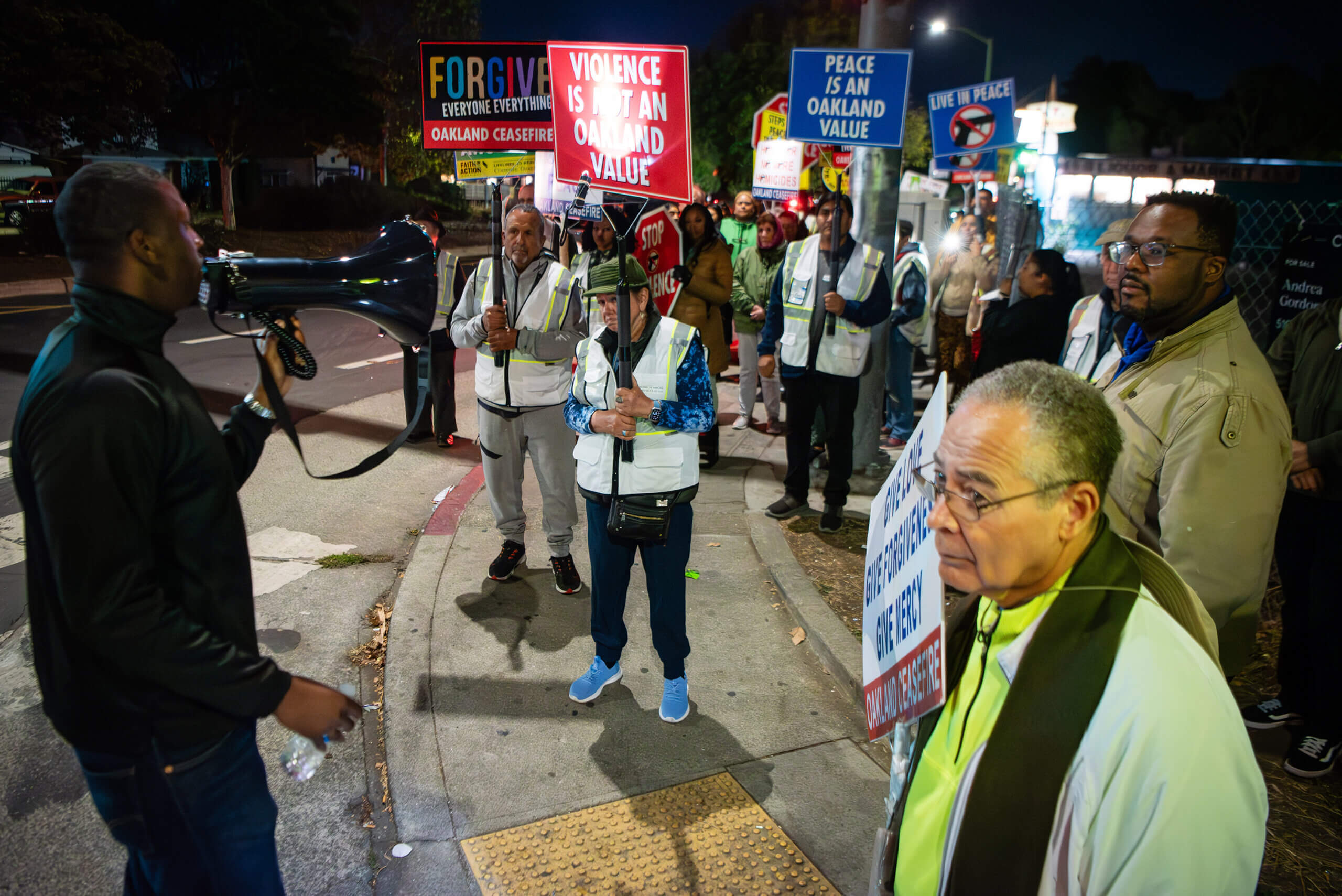
Faith in Action East Bay helped establish Oakland’s Ceasefire strategy in 2012. This community-based approach connects people at the highest risk of gun violence with coaching, workforce opportunities, and support services. Over the past three years, more than 1,000 residents have participated in weekly Friday night walks in Deep East Oakland and supported intervention efforts. Their work has contributed to dramatic reductions in gun violence, including Oakland’s lowest homicide total since 1967.
A Legacy of Generosity That Supports What Matters Most
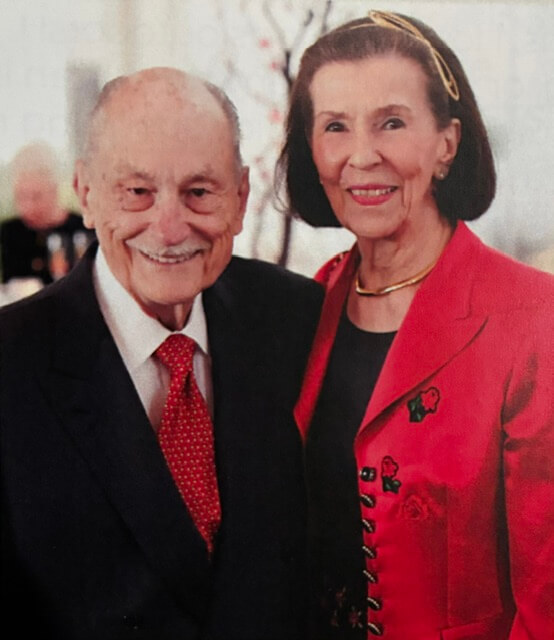
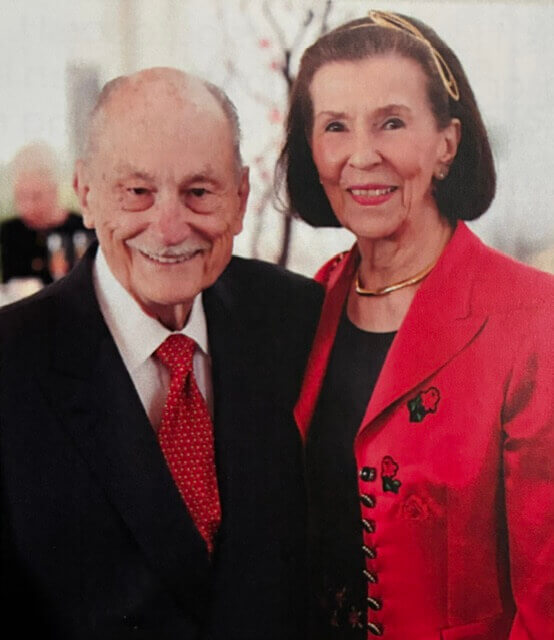
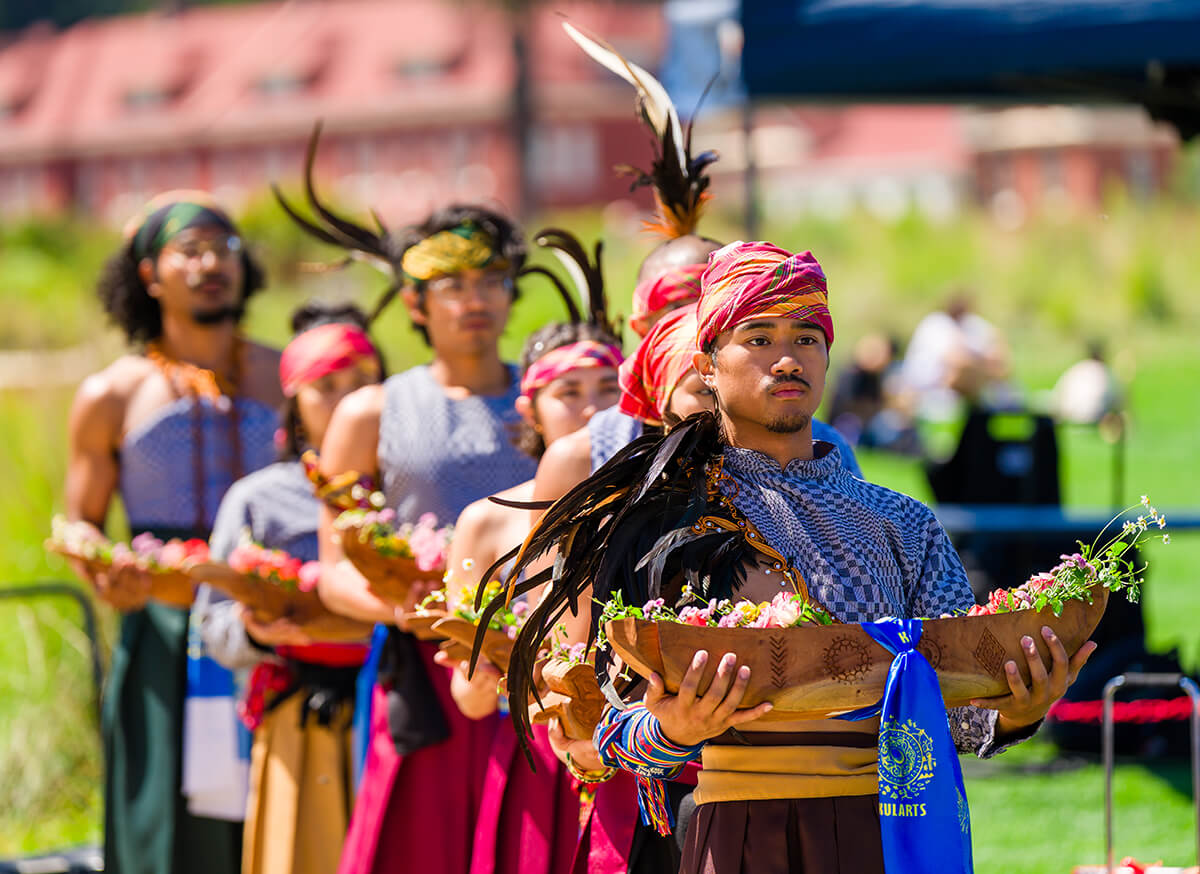
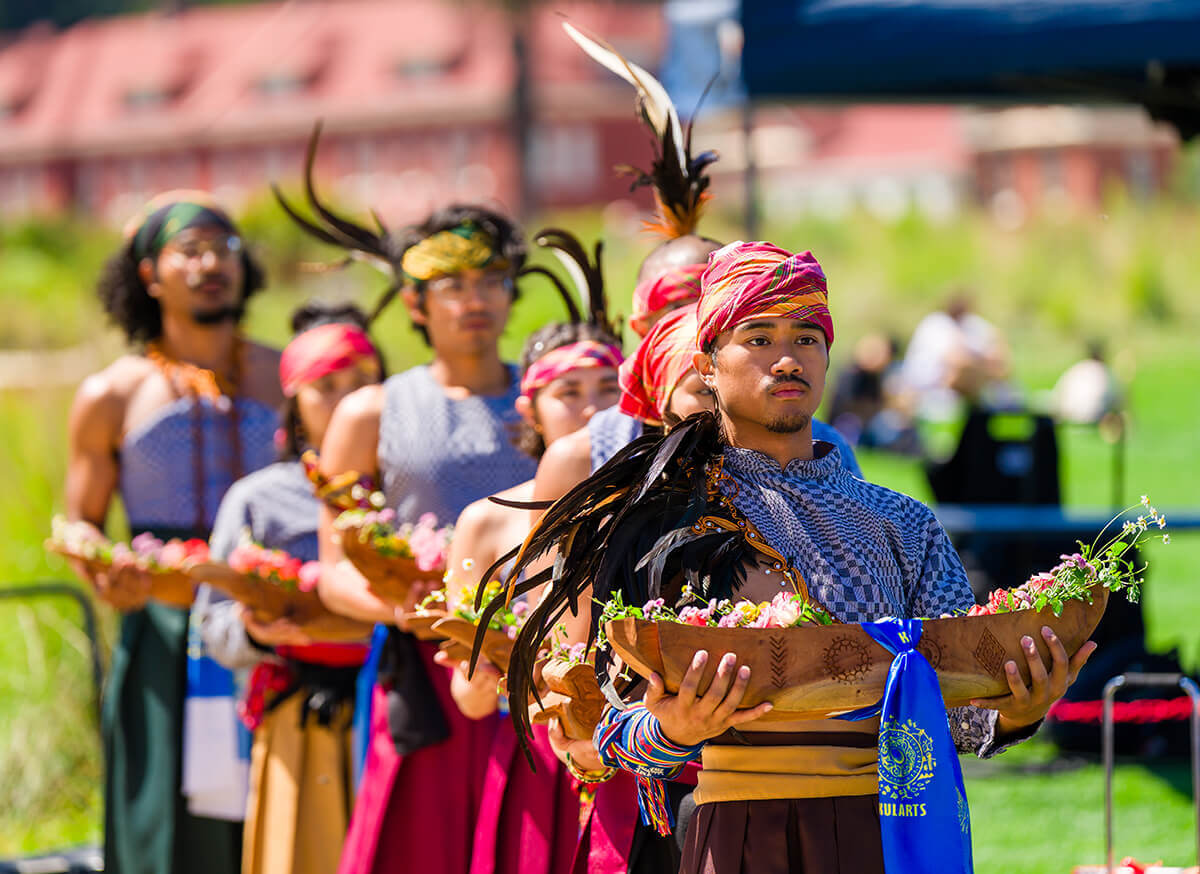
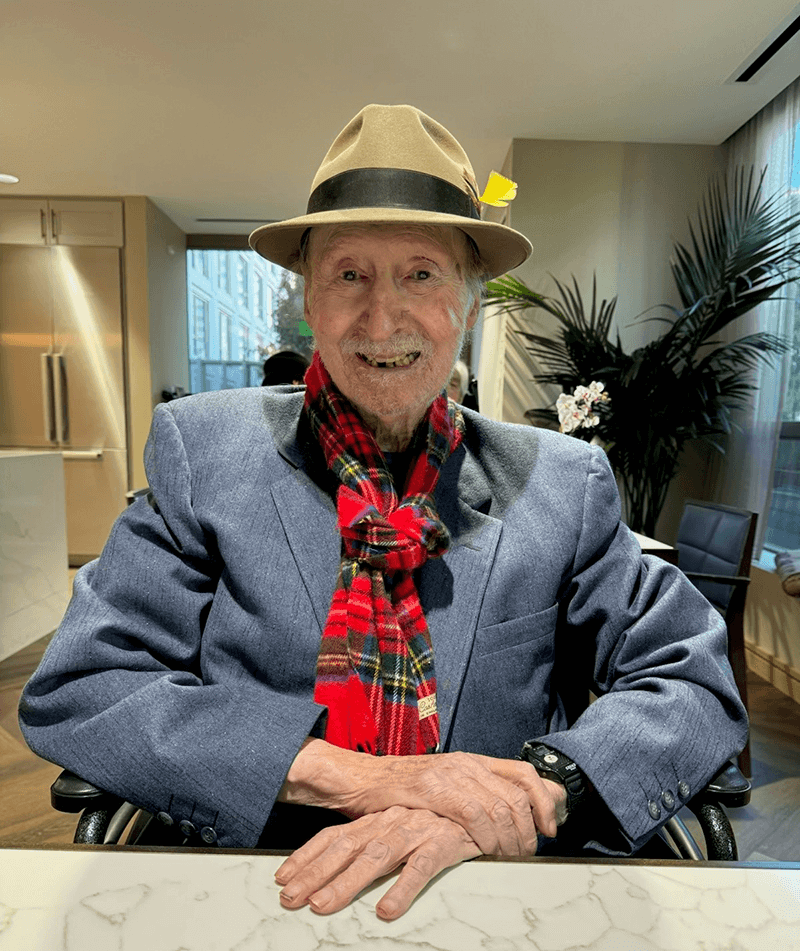
John and Marie Zderic established a charitable remainder trust that provided income during their lifetimes while also ensuring that the causes they cared about would continue to benefit long into the future. Following their passing, a portion of their trust was used to create an unrestricted endowed fund at the San Francisco Foundation, providing flexible resources to strengthen communities for generations to come, and making it possible for SFF to support organizations like World Arts West, which hosts an annual dance festival featuring hundreds of Bay Area ethnic dance troupes and provides a career pathways program for artists.
Fueling Trusted Media in a Critical Moment
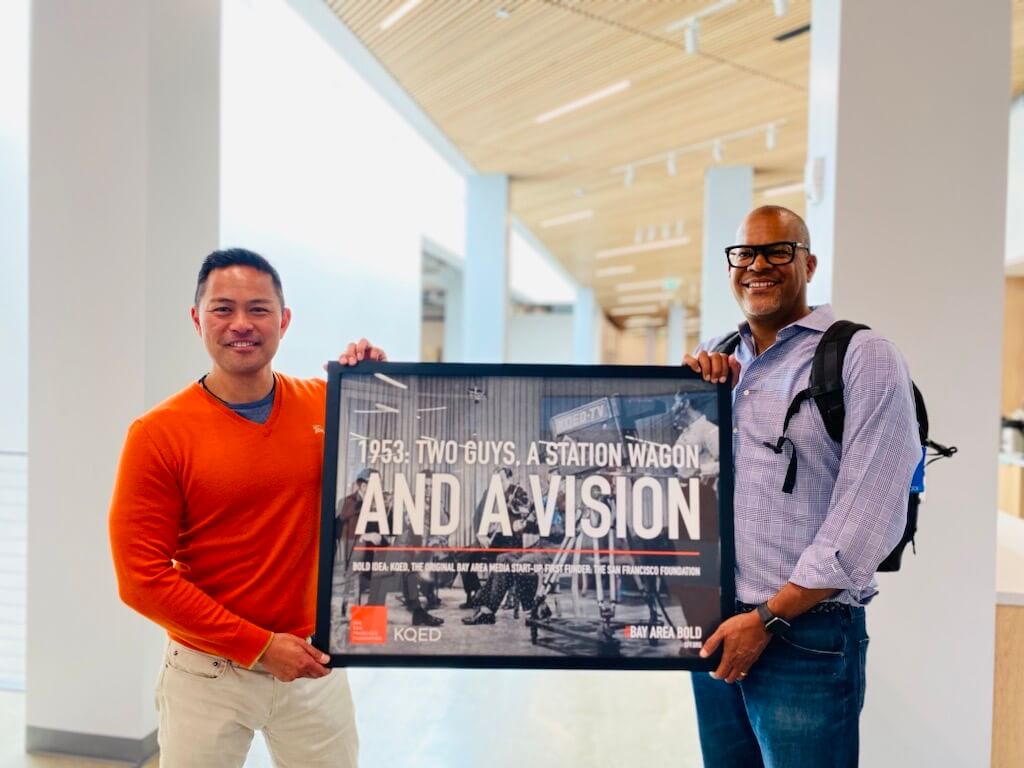
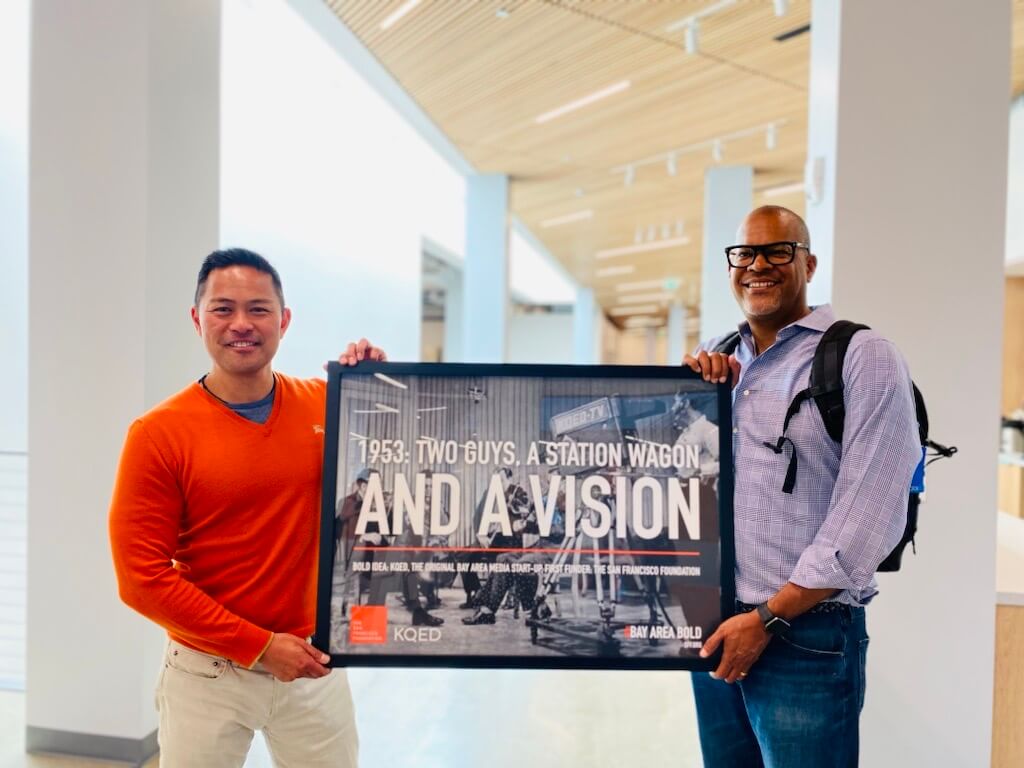
At a moment of federal funding cuts, community support helped sustain KQED, a trusted public resource. A one-day match on donations to KQED by the San Francisco Foundation sparked an extraordinary response from more than 800 donors and raised $450,000 for the Bay Area public radio station. The donations will help KQED continue to deliver reliable journalism, educational programming, and community storytelling. As KQED’s very first funder in 1953, SFF is proud to support journalism as a pillar of democracy.
A Trusted Lifeline for Black Immigrant Communities
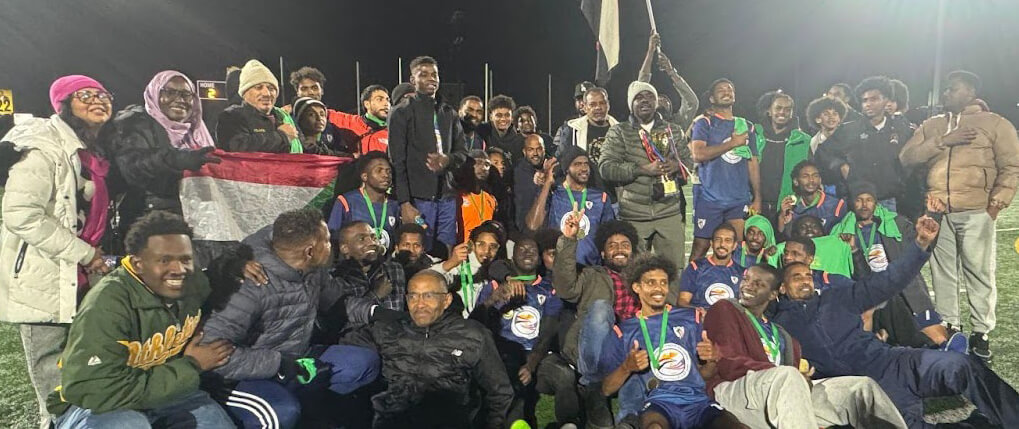
Black and African immigrant families in the Bay Area are gaining faster access to the support they need to stay together and thrive. With support from the San Francisco Foundation, Priority Africa Networkis connecting individuals and families to legal aid, mental health services, and culturally responsive care through a trusted community network. Over the past year, they’ve helped more than 3,000 individuals and families access services, find belonging, and build a path forward.
A Legacy of Generosity That Supports What Matters Most
John and Marie Zderic established a charitable remainder trust that provided income during their lifetimes while also ensuring that the causes they cared about would continue to benefit long into the future. Following their passing, a portion of their trust was used to create an unrestricted endowed fund at the San Francisco Foundation, providing flexible resources to strengthen communities for generations to come, and making it possible for SFF to support organizations like World Arts West, which hosts an annual dance festival featuring hundreds of Bay Area ethnic dance troupes and provides a career pathways program for artists.
Fueling Trusted Media in a Critical Moment
At a moment of federal funding cuts, community support helped sustain KQED, a trusted public resource. A one-day match on donations to KQED by the San Francisco Foundation sparked an extraordinary response from more than 800 donors and raised $450,000 for the Bay Area public radio station. The donations will help KQED continue to deliver reliable journalism, educational programming, and community storytelling. As KQED’s very first funder in 1953, SFF is proud to support journalism as a pillar of democracy.
A Trusted Lifeline for Black Immigrant Communities
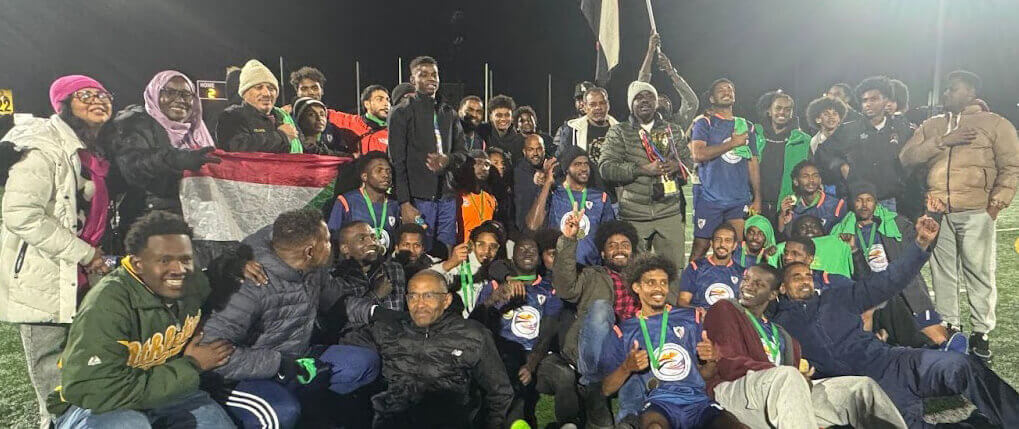
Black and African immigrant families in the Bay Area are gaining faster access to the support they need to stay together and thrive. With support from the San Francisco Foundation, Priority Africa Network connects individuals and families to legal aid, mental health services, and culturally responsive care through a trusted community network. Over the past year, they’ve helped more than 3,000 individuals and families access services, find belonging, and build a path forward.
Building Power to Protect Affordable Housing
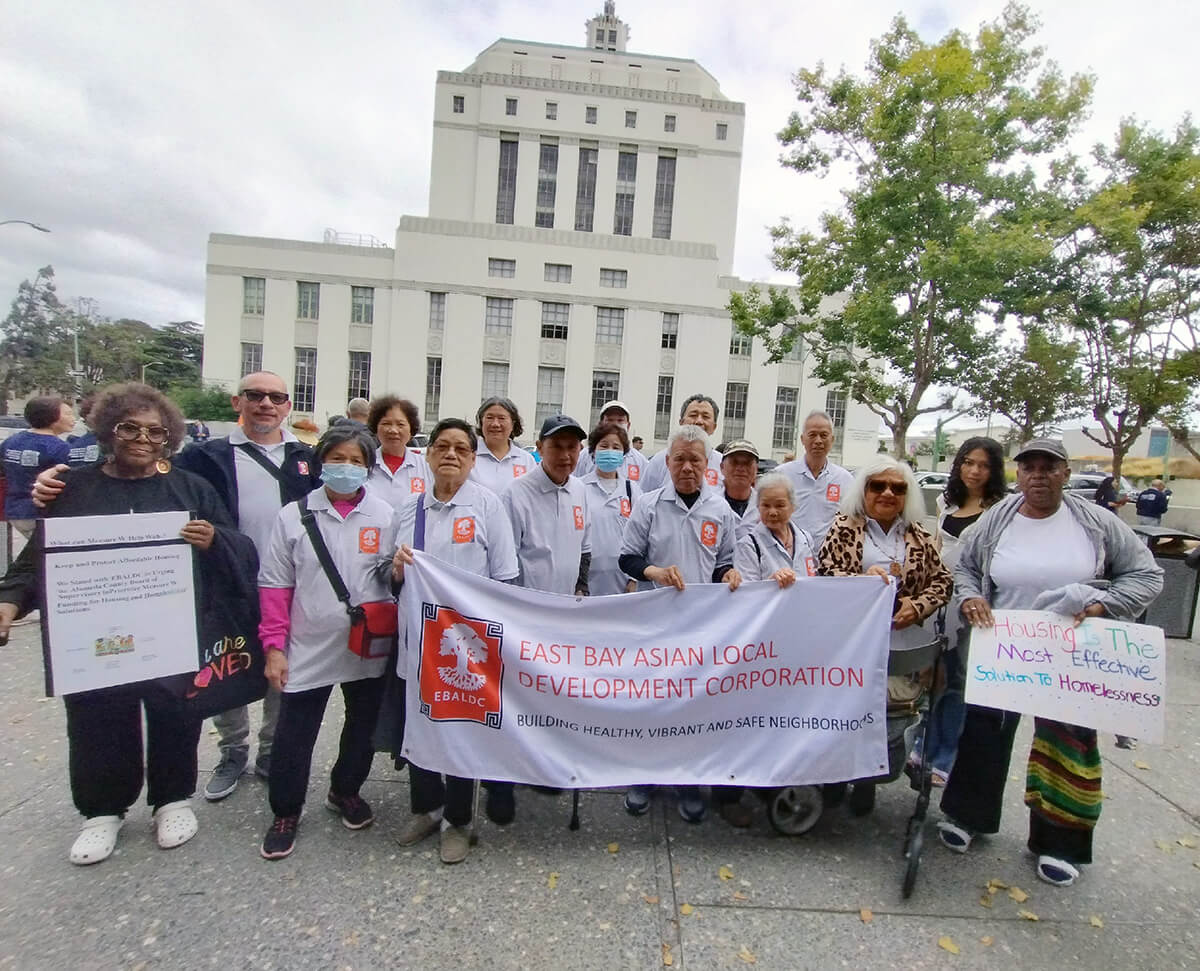
Trusted community anchors like EBALDC and The Unity Council provide affordable homes, essential services, and opportunities for thousands of Alameda County residents. They formed a coalition of nonprofit housing providers and successfully organized to secure critical public support from Alameda County to help affordable housing organizations recover from pandemic-era challenges and rising costs. This powerful collaboration will help preserve affordable homes and strengthen the communities these organizations serve.
Defending Head Start, Defending Families
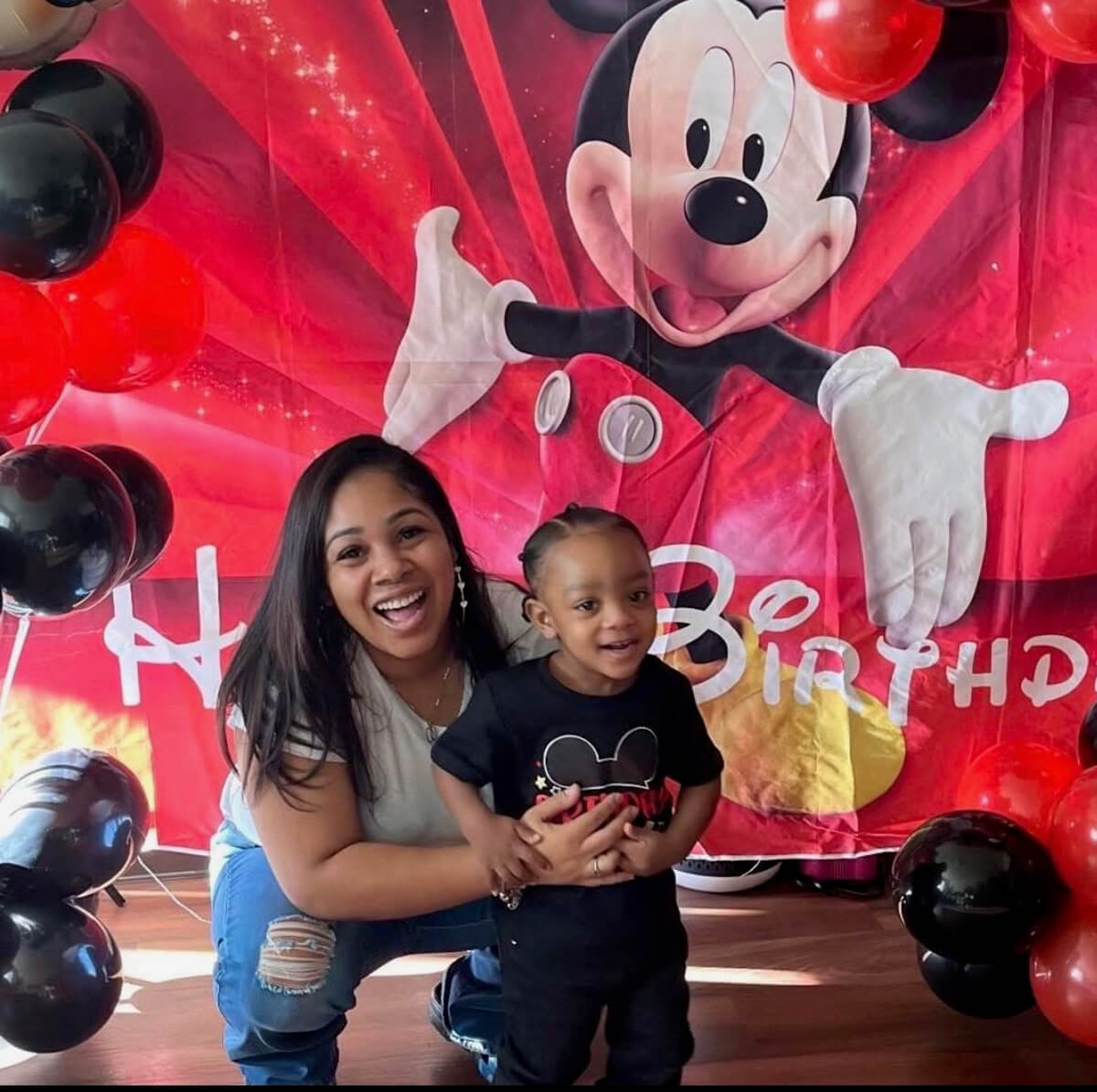
Thanks in part to Parent Voices Oakland and national partners, a federal court halted an unlawful policy that would have barred immigrant families from Head Start. Parents like Osbornique—whose young son found critical speech support, friendship, and a sense of belonging in Head Start—stood at the center of this fight. They spoke up for Oakland families on the record and demonstrated the power of parent-led organizing to protect children’s learning, stability, and future.
Turning Sunlight into Opportunity
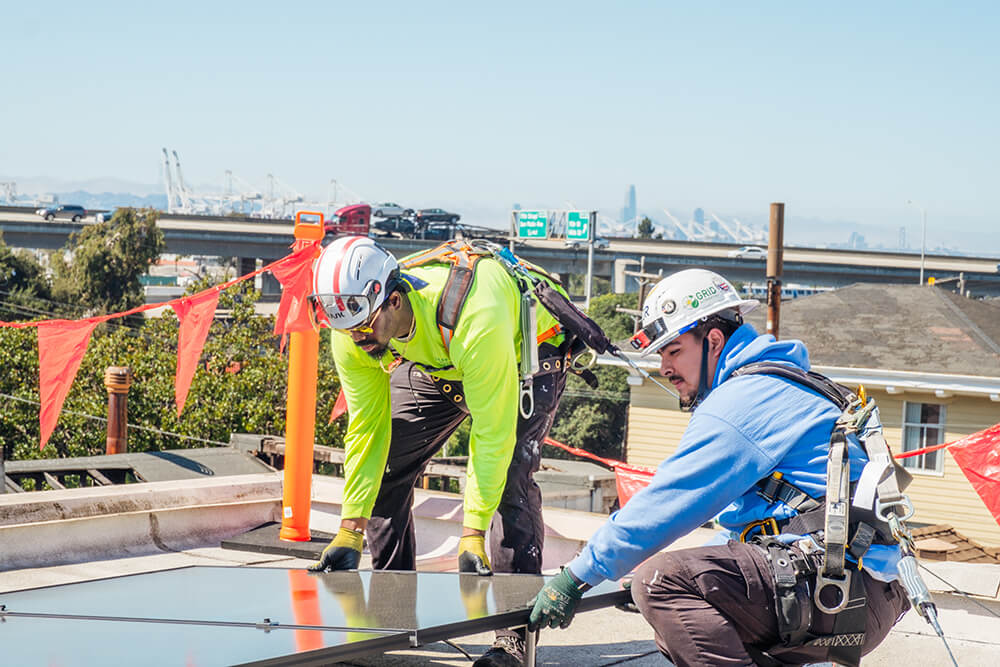
In 2023, SFF became an initial investor in GRID Alternatives’ Energy Resilience Fund with a $1.5 million loan to support commercial, clean-energy projects that benefit disinvested communities and tribal nations. The fund supports projects that build community wealth and support workforce development by helping affordable housing providers and income-qualified homes install solar without upfront costs. To date, the fund has served over 1,100 affordable households. This will provide more than $20 million in lifetime estimated electricity savings and avoid 44 tons of CO2 emissions.
Keeping Arts Alive Through Collective Giving
When arts organizations faced sudden funding cuts from the National Endowment for the Arts, San Francisco Foundation donors moved quickly to protect the cultural life of the Bay Area. With a matching grant from an anonymous donor, SFF donors raised more than $750,000 for Bay Area arts organizations. The funds raised supported 28 arts organizations around the Bay Area, including performing arts organizations like Berkeley-based Luna Dance & Creativity, as well as the San Francisco Gay Men’s Chorus, SF Jazz, and SFMOMA. At a critical moment, donors ensured that arts organizations could continue to present programming that fosters connection, identity, and belonging.
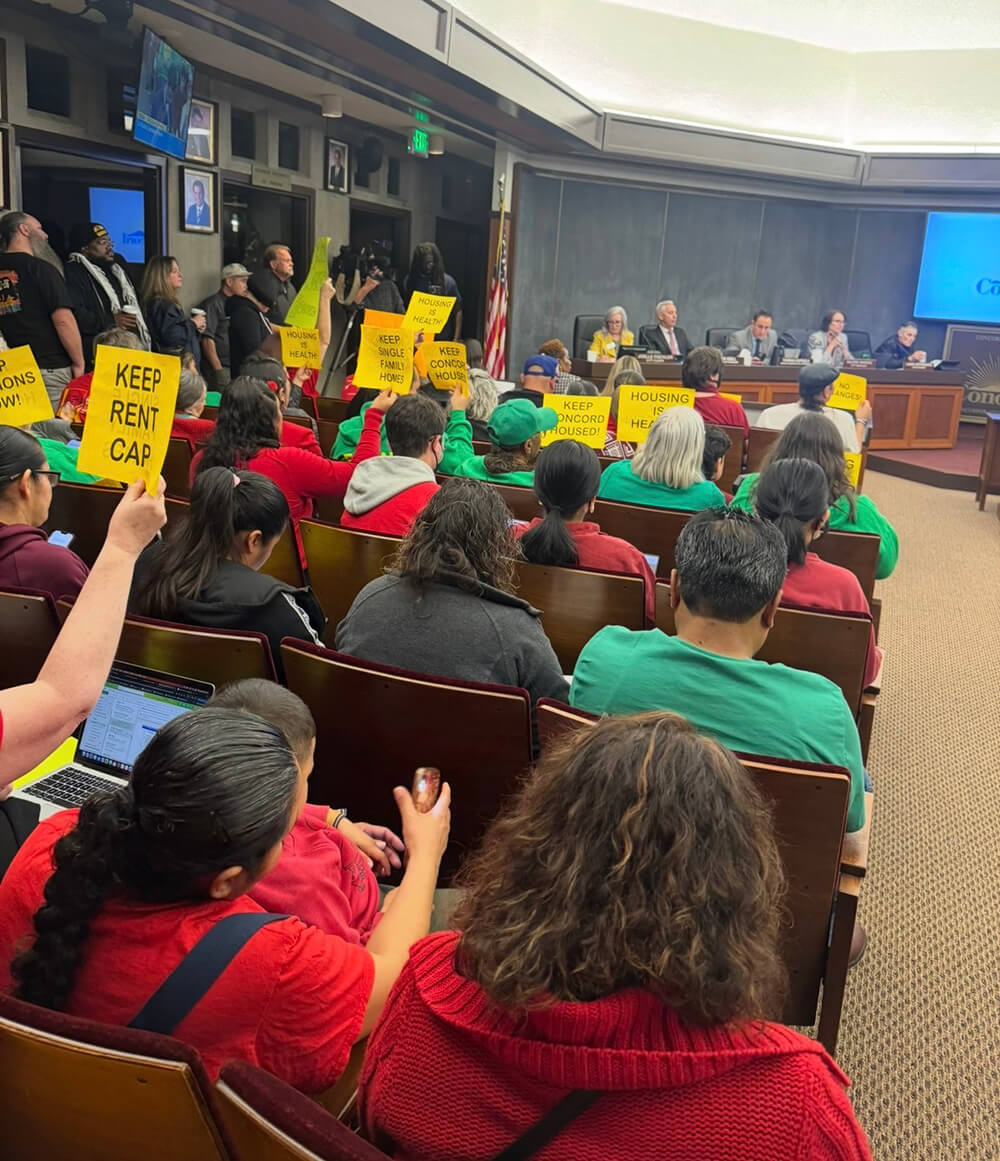
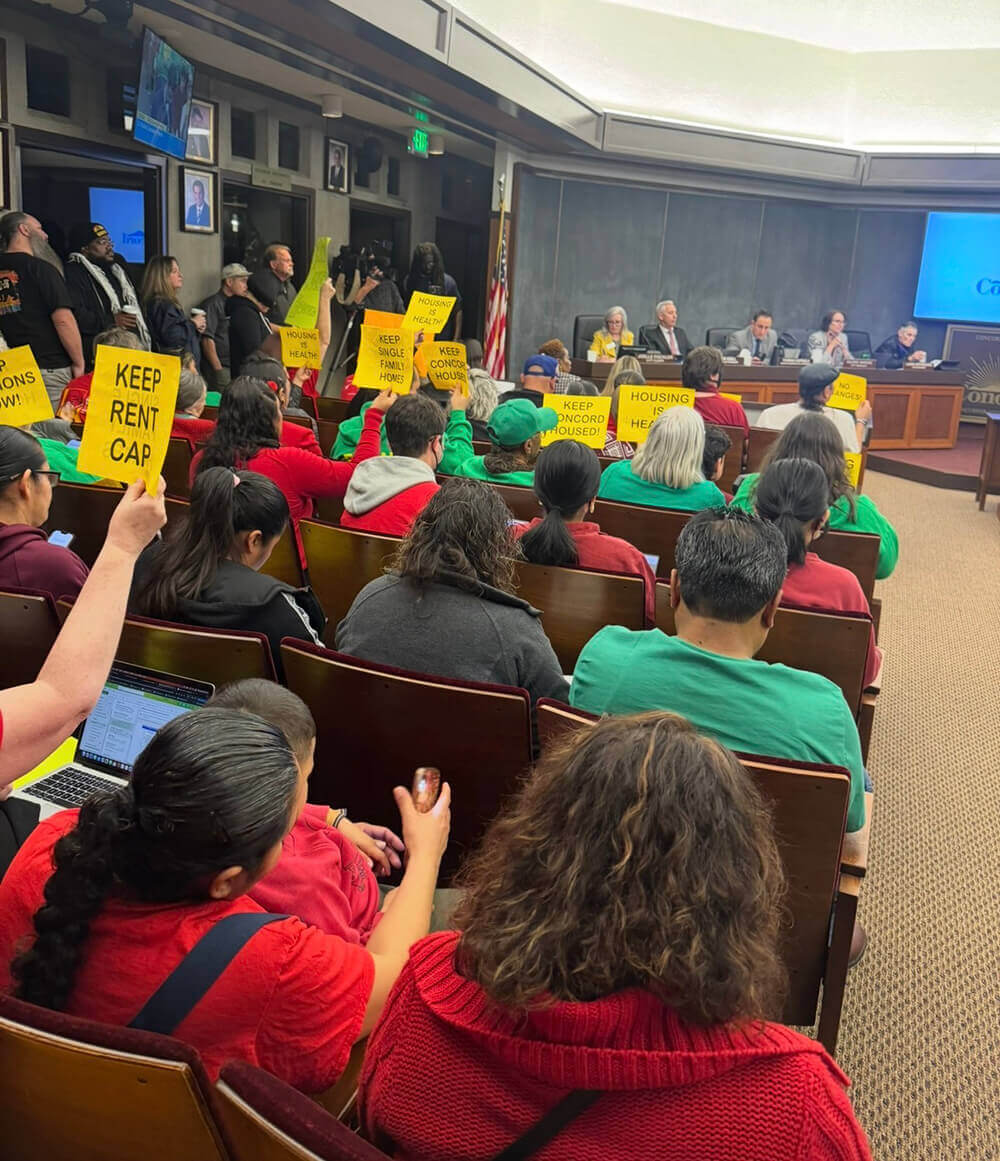
Community Advocacy Secures $14.7M for Critical Investments
Contra Costa families are gaining greater access to food, housing support, and health care through community-led advocacy. The Budget Justice Coalition successfully mobilized residents, service providers, and organizers to help direct remaining federal recovery funds back into the community, including $9.7M for critical services and $5M for community-based nonprofit organizations. These investments reflect community priorities and show how collective action can shape public spending.
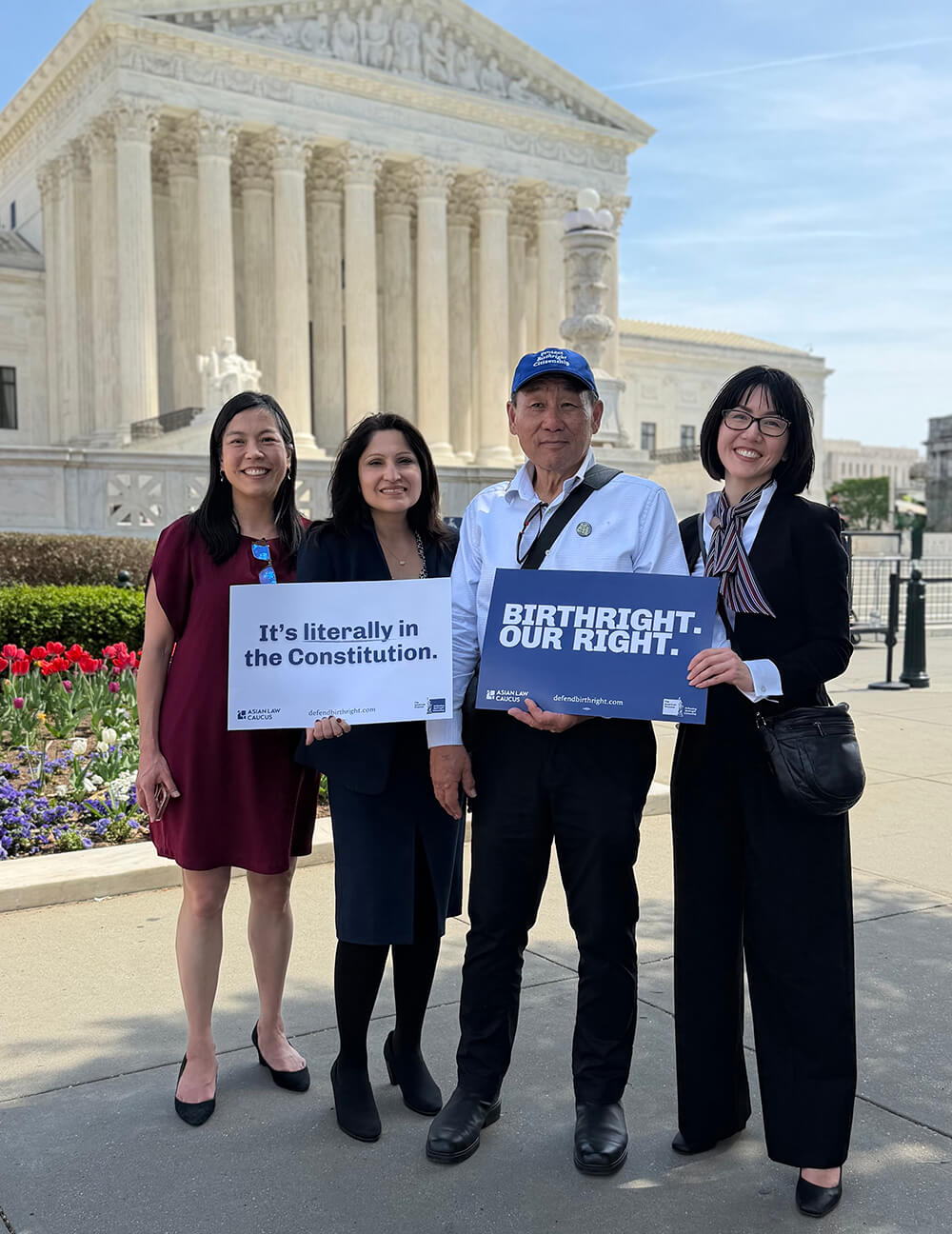
Protecting Birthright Citizenship and Beyond
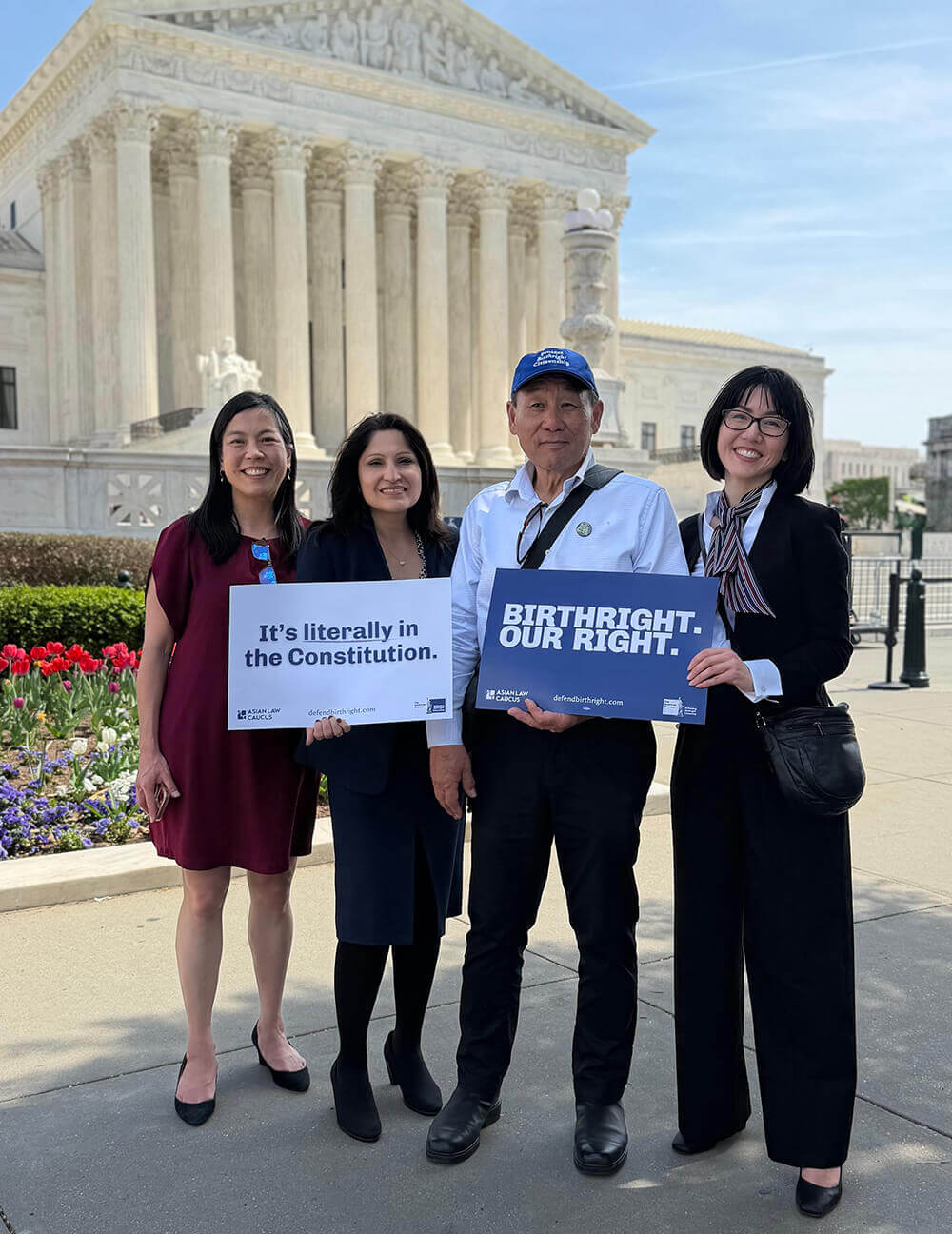
Asian Law Caucus convened a broad coalition of over 200 organizations to stand up for birthright citizenship and ultimately prevailed in front of the Supreme Court. With support from the San Francisco Foundation and other funders, Asian Law Caucus is now channeling that strength into civic engagement and election protection, defending the rights of immigrant communities in the Bay and nationwide.
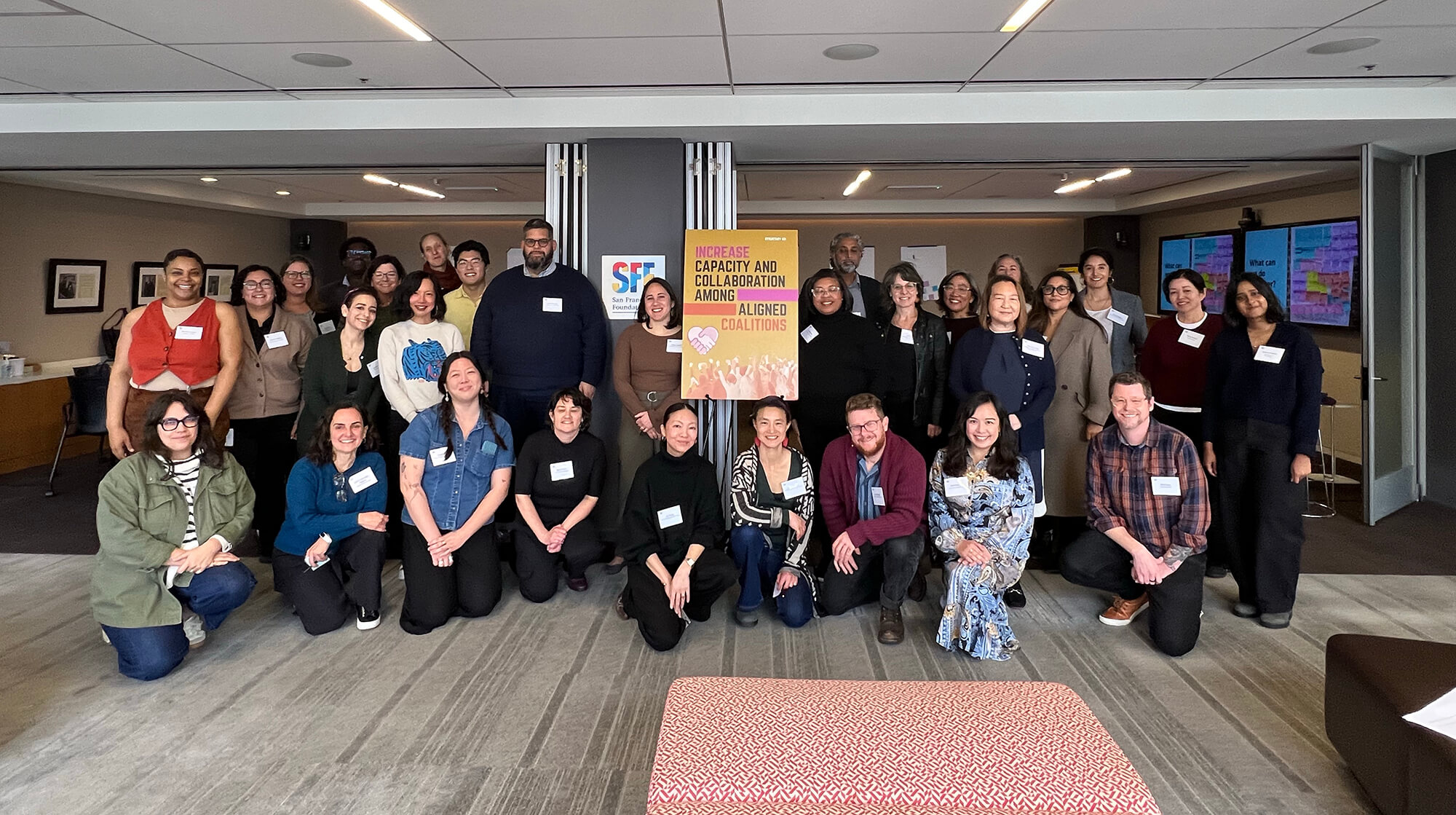
Collaboration is central to achieving lasting, systemic change. We bring together funders, donors, business leaders, policymakers, and nonprofits to pool resources, share expertise, and co-create large-scale, long-term solutions. These collaboratives are vehicles for community power. They ensure that those most impacted by systemic inequities are at the table, actively shaping the agenda. By partnering across sectors and centering community voices, we’re building the infrastructure for durable change and a Bay Area where everyone can flourish.
A Pathway Home for North Richmond Residents
North Richmond families are gaining new opportunities for homeownership through the redevelopment of Las Deltas, a former public housing community. Supported by SFF’s Partnership for the Bay’s Future, residents and advocates helped secure a policy giving former Las Deltas residents (and others with ties to North Richmond) priority to purchase homes before they reach the open market. These residents purchased 16 of the 17 homes sold so far. As one resident shared, “Them caring about us is real.” The redevelopment will add 240 homes, including 28 below-market-rate homeownership opportunities.
Building a Community Care Workforce
Along with a coalition of care providers and advocates, SFF’s ReWork the Bay helped launch the Community Care Initiative, which recognizes caregiving as essential, skilled work. 70 caregivers from historically excluded communities in San Francisco will receive paid training and support to provide culturally responsive care for older adults and people with disabilities. By expanding caregiving career pathways, this initiative is advancing economic opportunity, health equity, and community well-being.
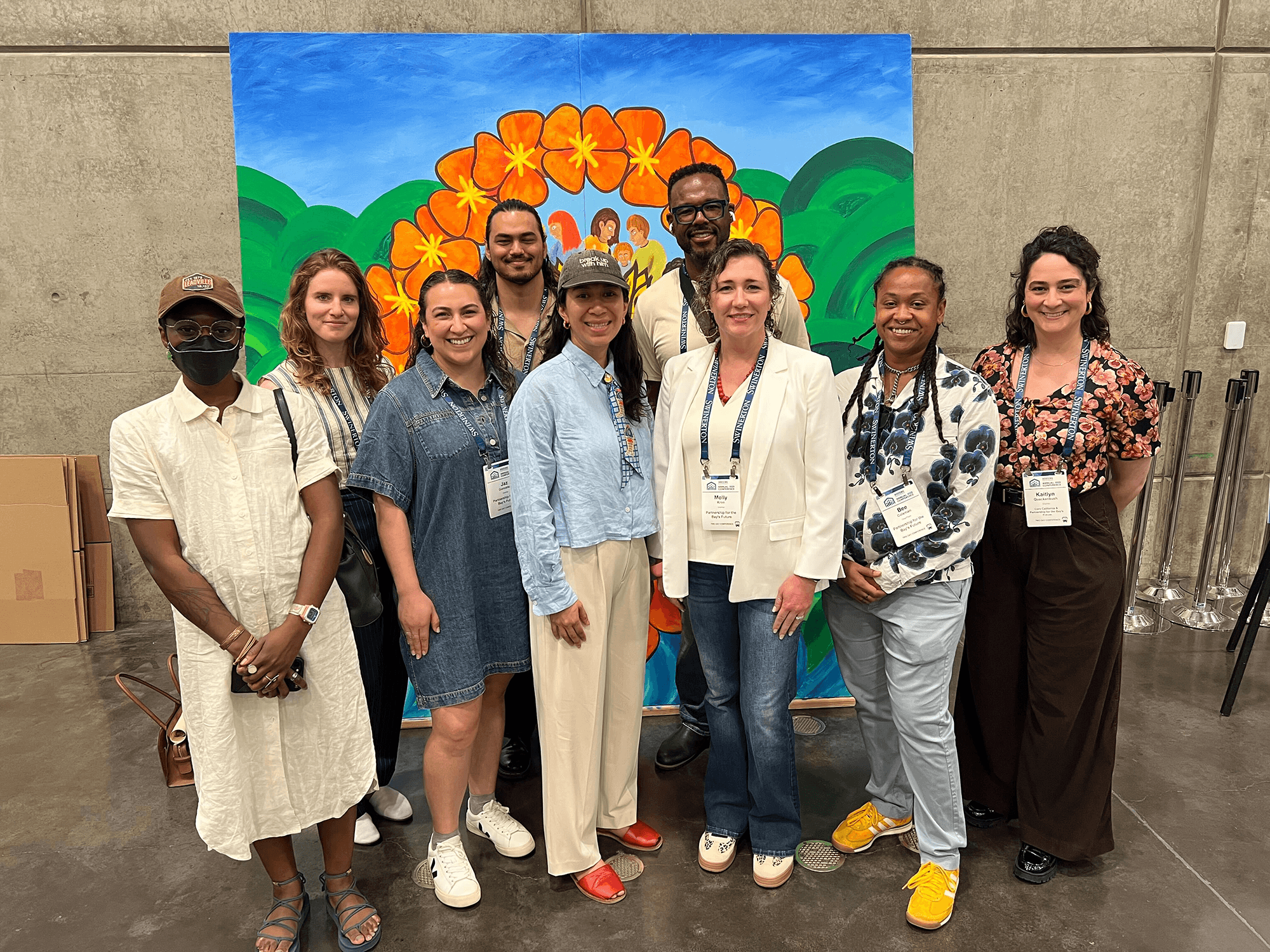
The Policy cohort of the Partnership for the Bay’s Future brought together local governments, community organizations, and fellows to expand housing opportunities across the Bay Area.
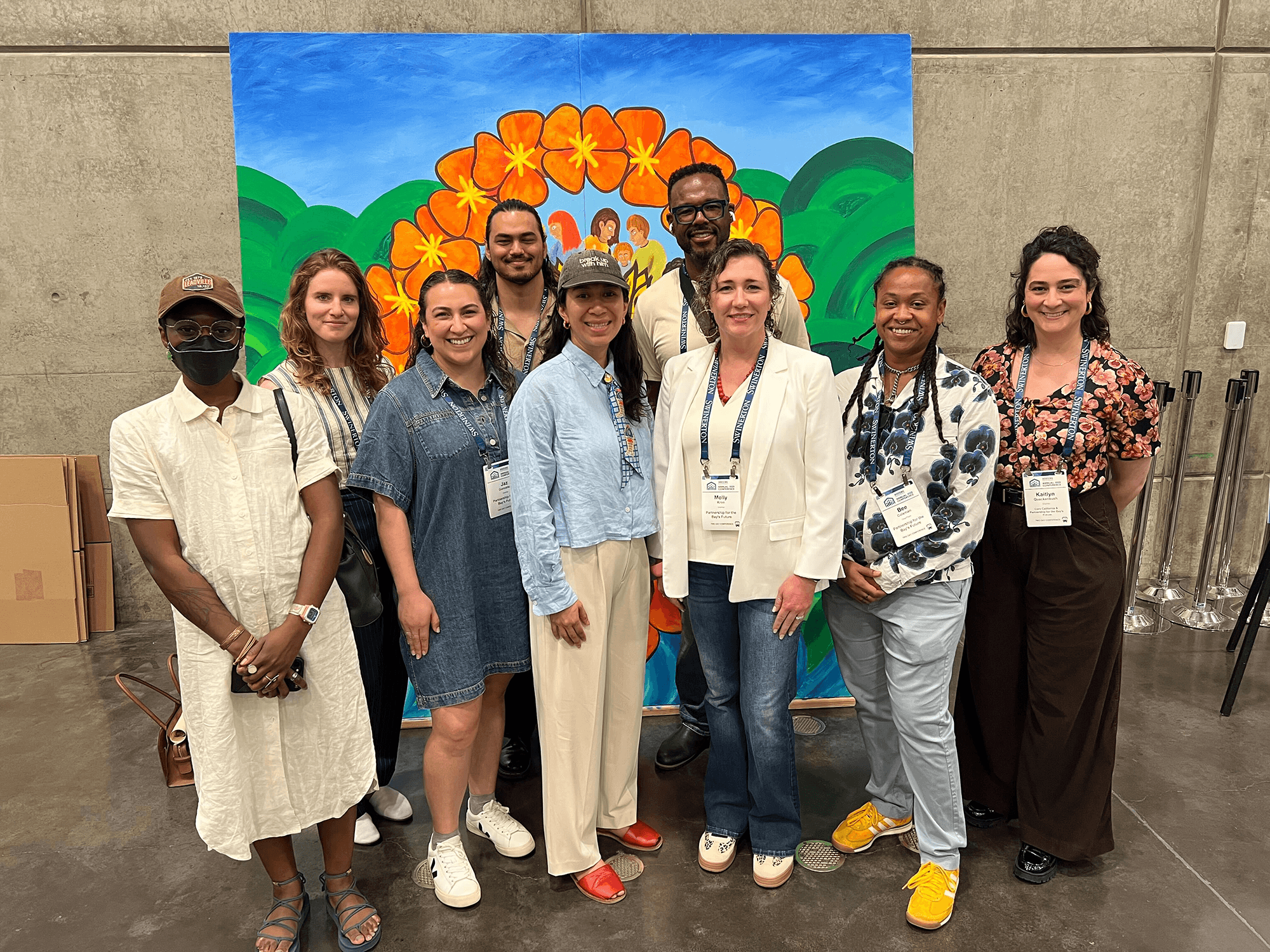
Partnership for the Bay’s Future
Led by SFF, the Partnership for the Bay’s Future supports community-driven, equity-centered solutions to preserve and produce affordable housing, protect tenants, and shift how local policy is made through powerful collaborations that build systems rooted in justice.
2025-2030 Koshland Program fellows from Antioch and Pittsburg (East Contra Costa County).
Daniel E. Koshland Civic Unity Awards Program
SFF’s Daniel E. Koshland Civic Unity Awards Program has supported more than 500 neighborhood leaders in 35+ Bay Area communities with funding and professional development to help them advocate for their own communities. The program uplifts unsung heroes and strengthens neighborhood improvement efforts.
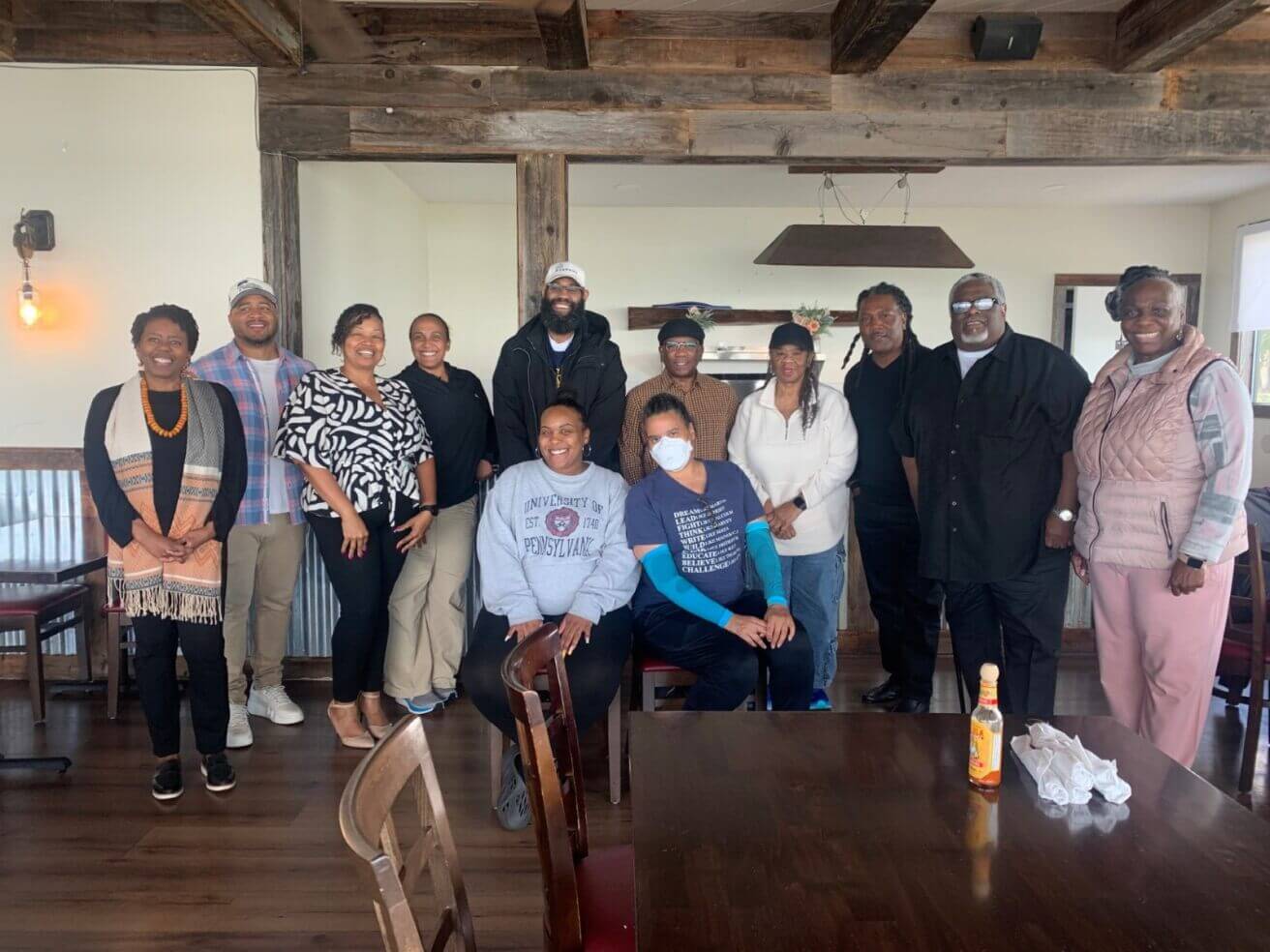
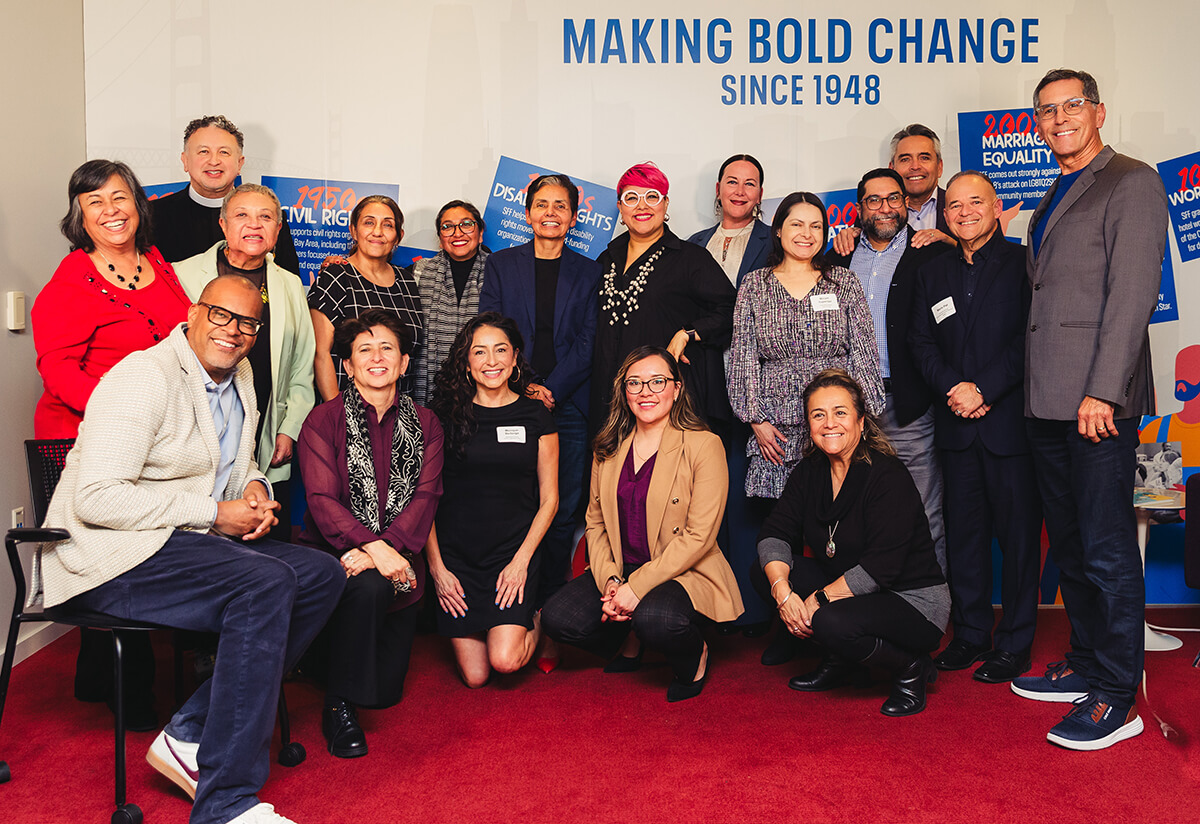
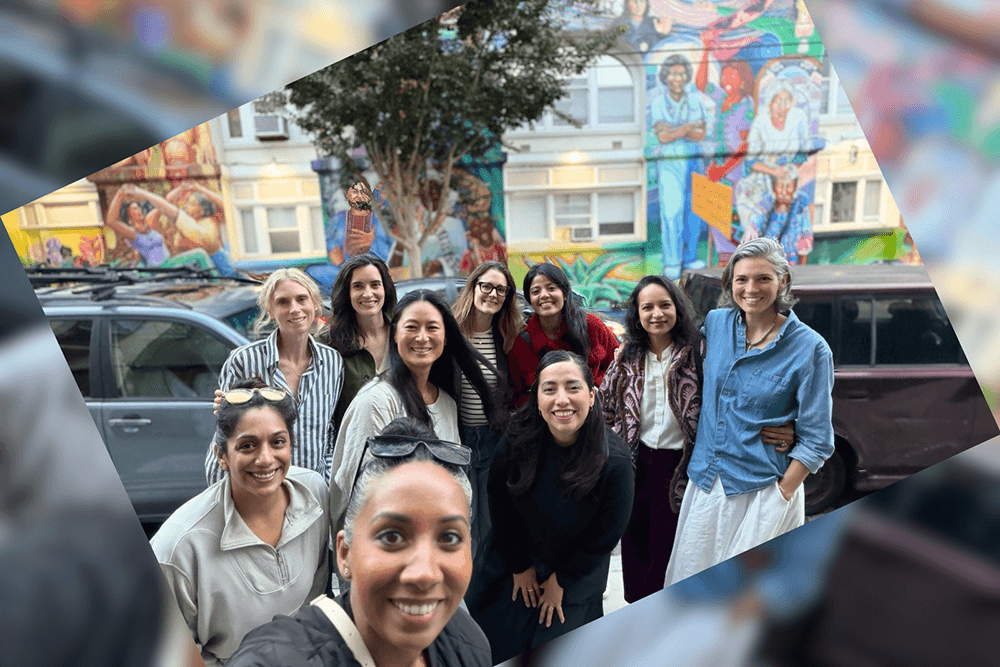
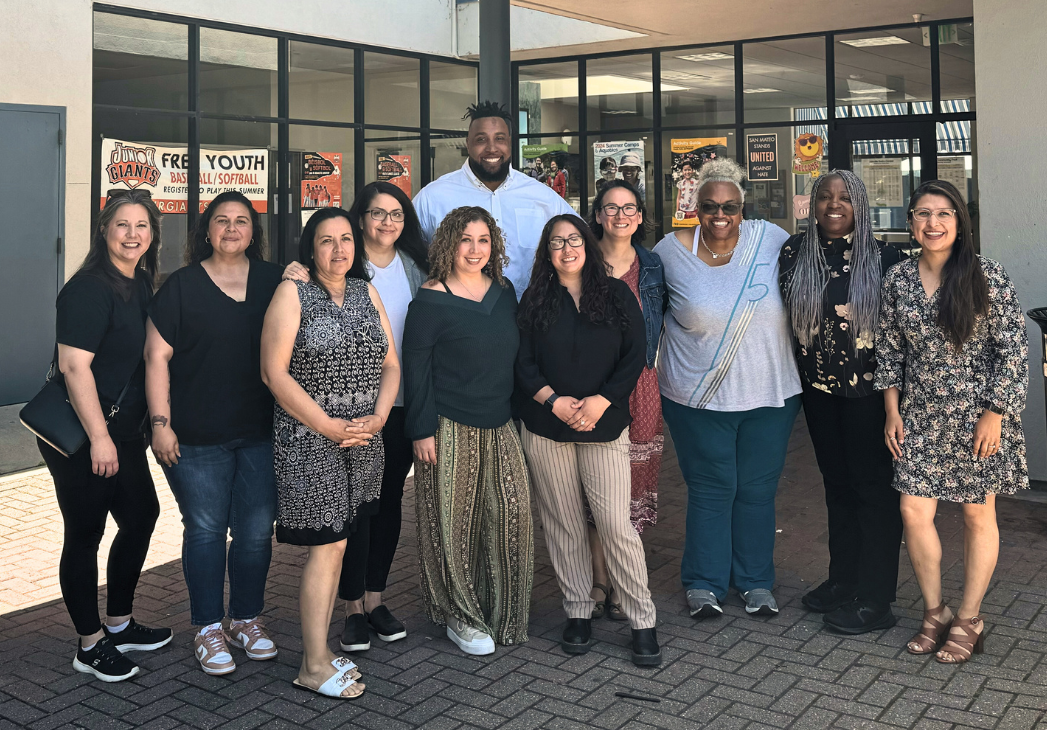
The Latine Kitchen Cabinet brings together community leaders to help shape SFF’s work in partnership with the Bay Area’s Latine community.
Latine Kitchen Cabinet
Composed of 28 Latine-led and -serving organizations, SFF’s Latine Kitchen Cabinet meets with San Francisco Foundation leadership to raise key issues for the Bay Area’s Latine communities, improve policies and systems, and ultimately ensure that the Latine community thrives.
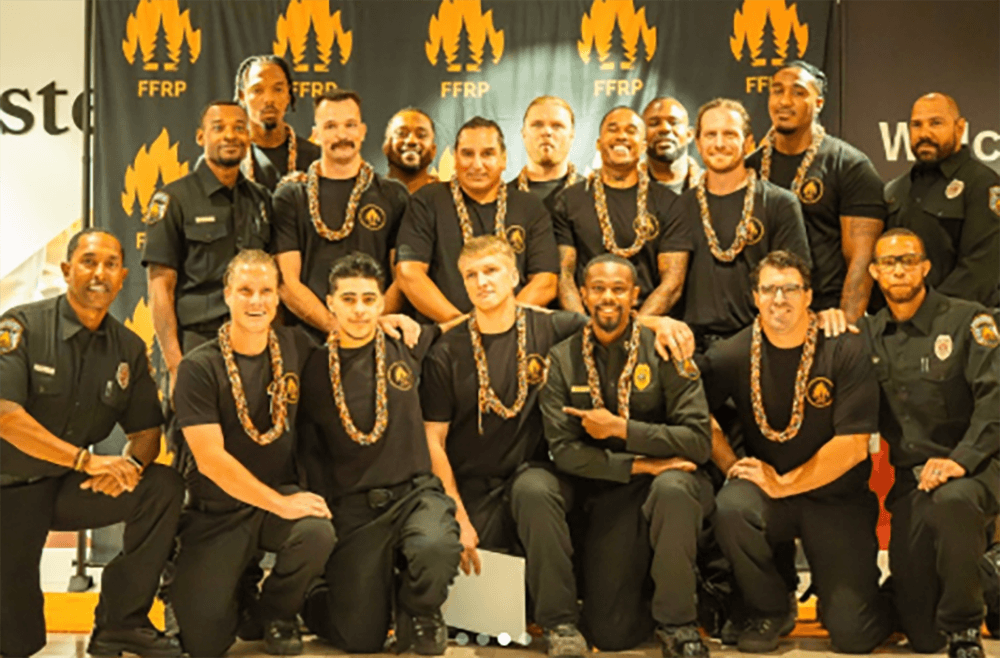
Supported through ReWork the Bay’s statewide job quality project, graduates of the Forestry & Fire Recruitment Program are building pathways to careers in wildfire prevention, forestry, and land stewardship.
ReWork the Bay
Led by SFF, ReWork the Bay incubates a more just and effective Bay Area workforce system. As a funder collaborative, they center and amplify the expertise of those impacted by economic inequities to design, pilot, and scale innovative multi-sector systemic solutions.
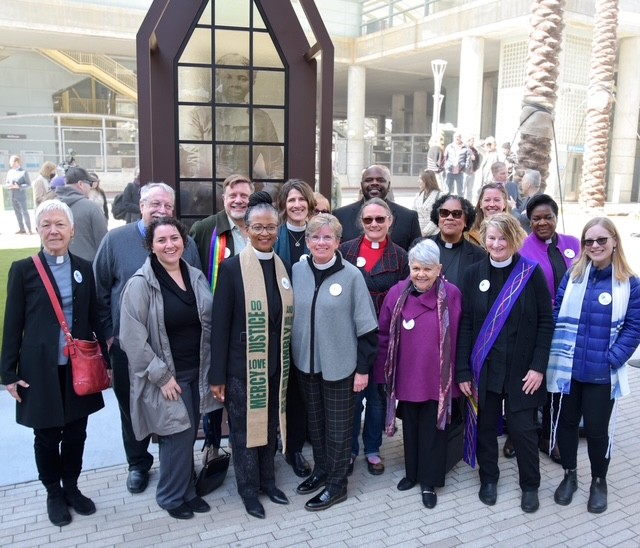
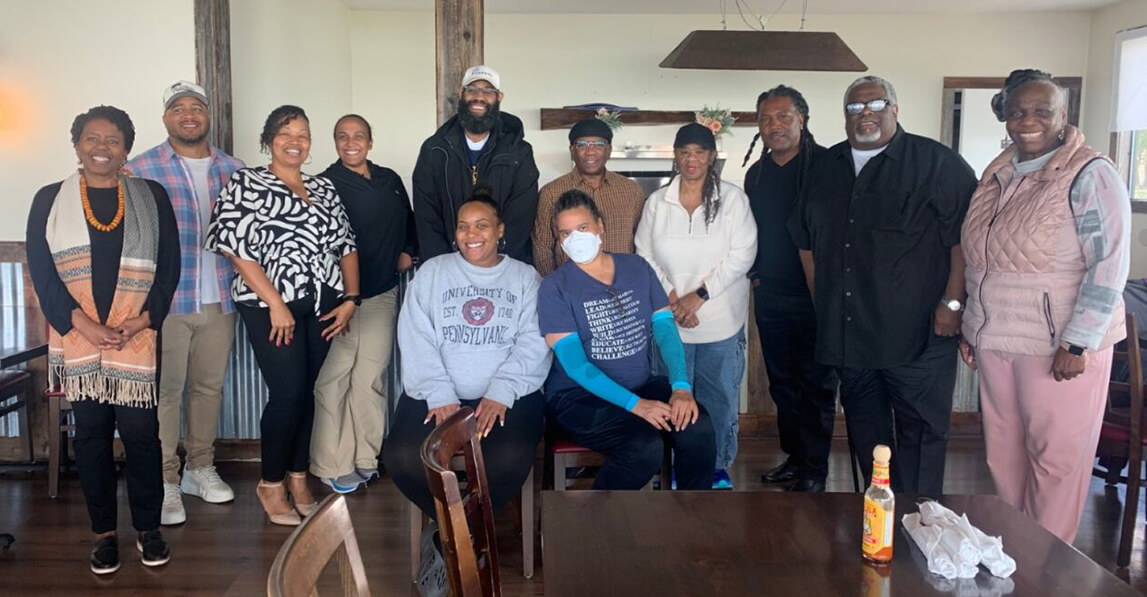
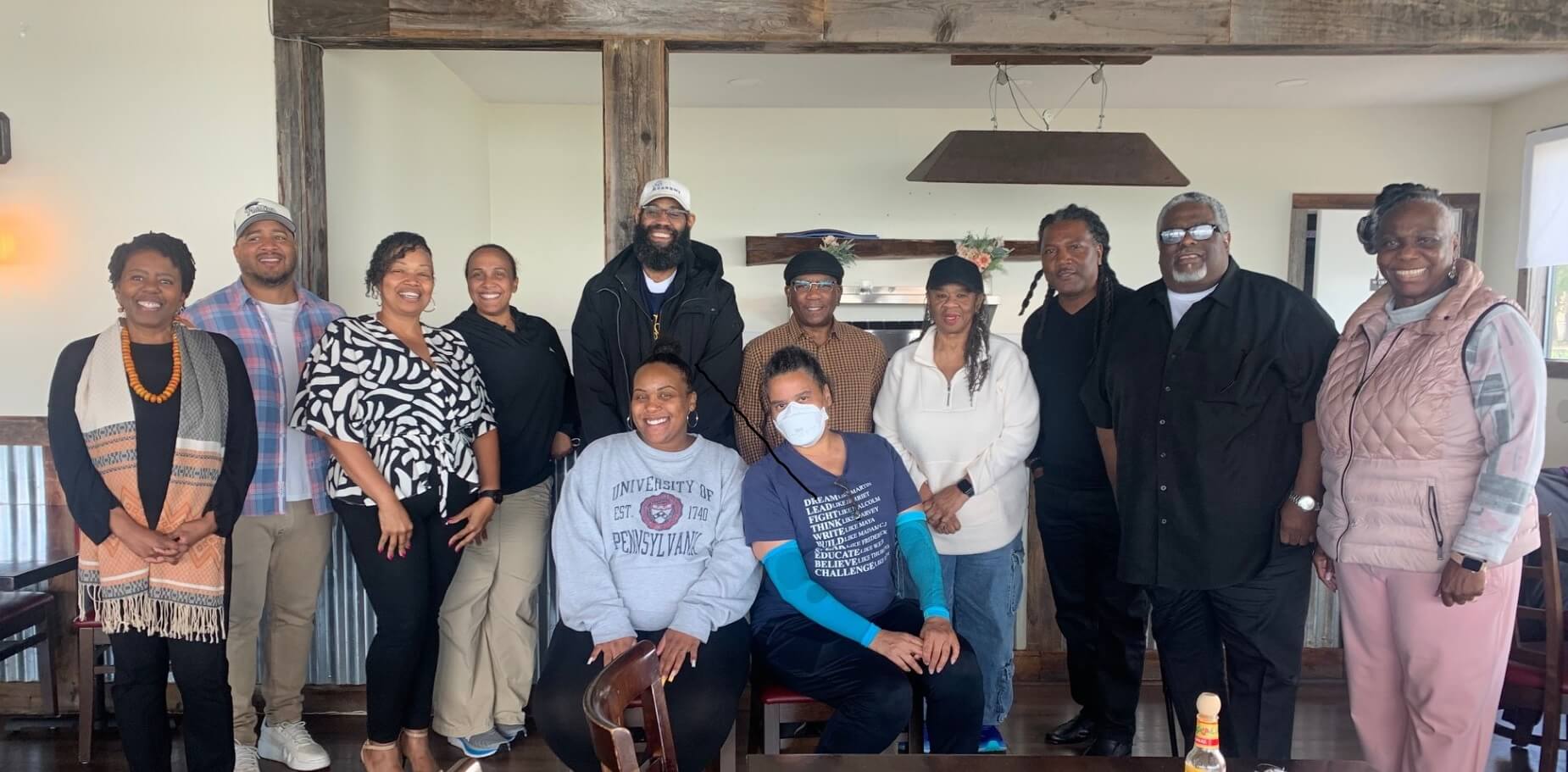
Members of the FAITHS Peninsula Solidarity Cohort gather as part of a growing network of faith leaders working together.
FAITHS
SFF’s FAITHS (Foundation Alliance with Interfaith to Heal Society) is a multi-faith network of over 600 congregations, faith-based agencies, and community organizations. They strengthen interfaith relations, develop leaders, and organize communities to advocate for more just policies.
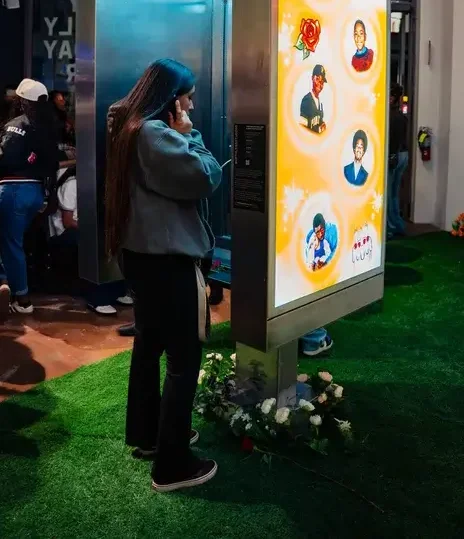
HOPE SF residents participated in 1-800 Happy Birthday, an interactive art exhibit where visitors can listen to birthday messages for people whose lives were lost in encounters with law enforcement. The project celebrates their lives and preserves their legacies.
HOPE SF
HOPE SF is a public-private partnership addressing multi-generational poverty in four public housing communities in the southeast area of San Francisco. HOPE SF centers resident voice to invest in healthy, vibrant, and thriving neighborhoods.
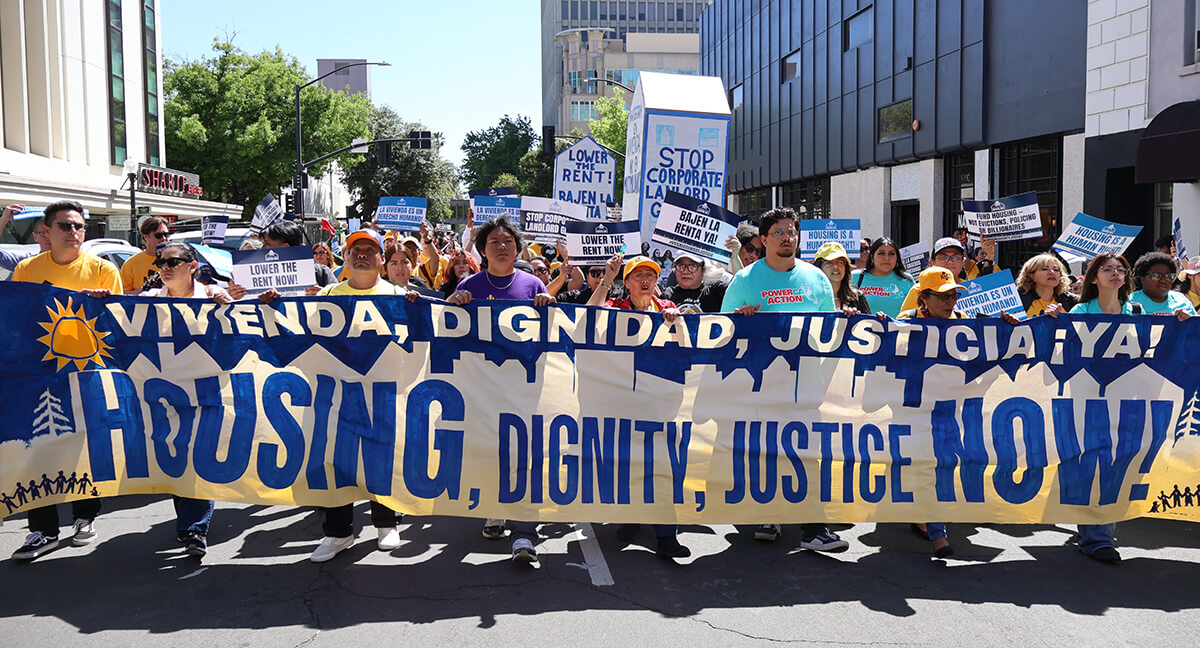
Statewide housing advocacy coalition member, Housing Now, organizing to increase affordable housing for all.
The California Alliance for Fair Living Standards
SFF supports a statewide housing advocacy coalition of 15+ organizations that is building unity across California’s housing sector to advance shared policy priorities and expand affordable housing. In 2026, the coalition marked a major milestone with the launch of the Roadmap Home, creating a shared framework for advancing housing solutions across California.
Partnership for the Bay’s Future
Le by SFF, the Partnership for the Bay’s Future supports community-driven, equity-centered solutions to preserve and produce affordable housing, protect tenants, and shift how local policy is made through powerful collaborations that build systems rooted in justice.
The Policy cohort of the Partnership for the Bay’s Future brought together local governments, community organizations, and fellows to expand housing opportunities across the Bay Area.
Daniel E. Koshland Civic Unity Awards Program
SFF’s Daniel E. Koshland Civic Unity Awards Program has supported more than 500 neighborhood leaders in 35+ Bay Area communities with funding and professional development to help them advocate for their own communities. The program uplifts unsung heroes and strengthens neighborhood improvement efforts.
2025-2030 Koshland Program fellows from Antioch and Pittsburg (East Contra Costa County).
Latine Kitchen Cabinet
Composed of 28 Latine-led and -serving organizations, SFF’s Latine Kitchen Cabinet meets with San Francisco Foundation leadership to raise key issues for the Bay Area’s Latine communities, improve policies and systems, and ultimately ensure that the Latine community thrives.
The Latine Kitchen Cabinet brings together community leaders to help shape SFF’s work in partnership with the Bay Area’s Latine community.
ReWork the Bay
Led by SFF, ReWork the Bay incubates a more just and effective Bay Area workforce system. As a funder collaborative, they center and amplify the expertise of those impacted by economic inequities to design, pilot, and scale innovative multi-sector systemic solutions.
Supported through ReWork the Bay’s statewide job quality project, graduates of the Forestry & Fire Recruitment Program are building pathways to careers in wildfire prevention, forestry, and land stewardship.
FAITHS
SFF’s FAITHS (Foundation Alliance with Interfaith to Heal Society) is a multi-faith network of over 600 congregations, faith-based agencies, and community organizations. They strengthen interfaith relations, develop leaders, and organize communities to advocate for more just policies.
Members of the FAITHS Peninsula Solidarity Cohort gather as part of a growing network of faith leaders working together.
HOPE SF
HOPE SF is a public-private partnership addressing multi-generational poverty in four public housing communities in the southeast area of San Francisco. HOPE SF centers resident voice to invest in healthy, vibrant, and thriving neighborhoods.
HOPE SF residents participated in 1-800 Happy Birthday, an interactive art exhibit where visitors can listen to birthday messages for people whose lives were lost in encounters with law enforcement. The project celebrates their lives and preserves their legacies.
The California Alliance for Fair Living Standards
SFF supports a statewide housing advocacy coalition of 15+ organizations that is building unity across California’s housing sector to advance shared policy priorities and expand affordable housing. In 2026, the coalition marked a major milestone with the launch of the Roadmap Home, creating a shared framework for advancing housing solutions across California.
Statewide housing advocacy coalition member, Housing Now, organizing to increase affordable housing for all.
Standing With Families in Need
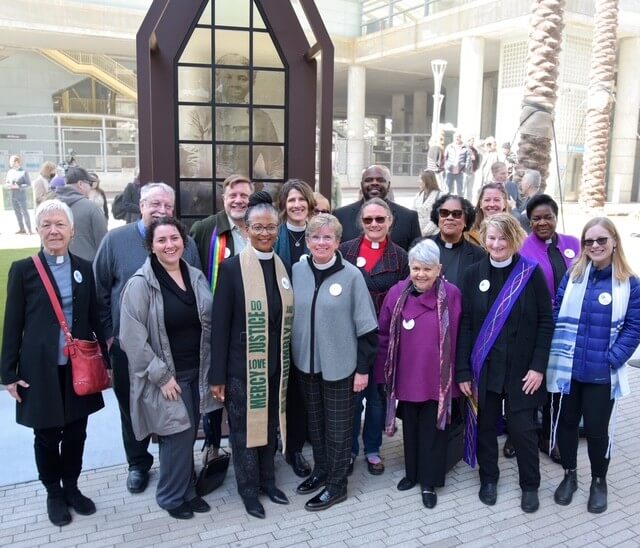
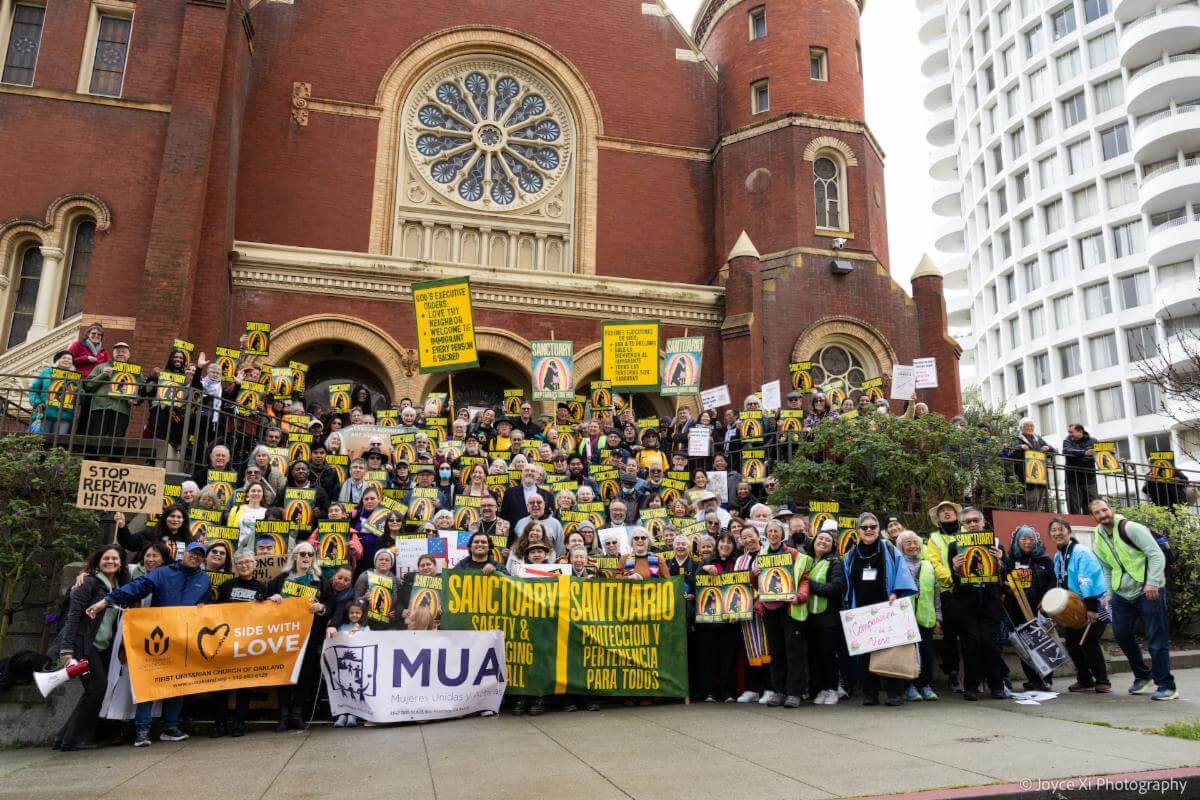
Interfaith Movement for Human Integrity brought together more than 200 people from different faith traditions and communities across California. Together, they embarked on a three-day pilgrimage to the Central Valley in support of immigrant families impacted by detention. Through prayer, vigils, music, art, and collective action, participants honored human dignity, strengthened community bonds, and advanced a shared vision of justice, compassion, and belonging.
Over the past decade, the foundation has worked to increase the alignment of our assets with our values, delivering strong financial returns while expanding opportunity, strengthening communities, and advancing lasting solutions across the Bay Area.
We’ve taken deliberate steps to reduce implicit bias when selecting fund managers across our portfolios. 30% of the firms we invest with are majority-owned by women or people of color. These firms manage 40% of our assets—outpacing the global average of just 2% and helping shift who holds power in the financial system.
40%
Our assets managed by women or people of color, compared to 2% globally
Mission-Aligned Investments Pool: Investing for Impact
With $160 million in assets, including $60 million from donors, SFF’s Mission-Aligned Investments Pool delivers strong returns (+9.2% since inception) while building a more equitable Bay Area. It uses a variety of investment strategies, such as social screens and Environmental, Social, and Governance (ESG) considerations, as well as proactively making impact investments that support the climate, affordable housing, and reducing income inequality.
One of the pool’s most impactful strategies is investing in mission-aligned venture capital funds. For example, ResilienceVC uses our $2 million commitment to make seed-stage investments into startups that support low- and moderate-income consumers and small businesses.
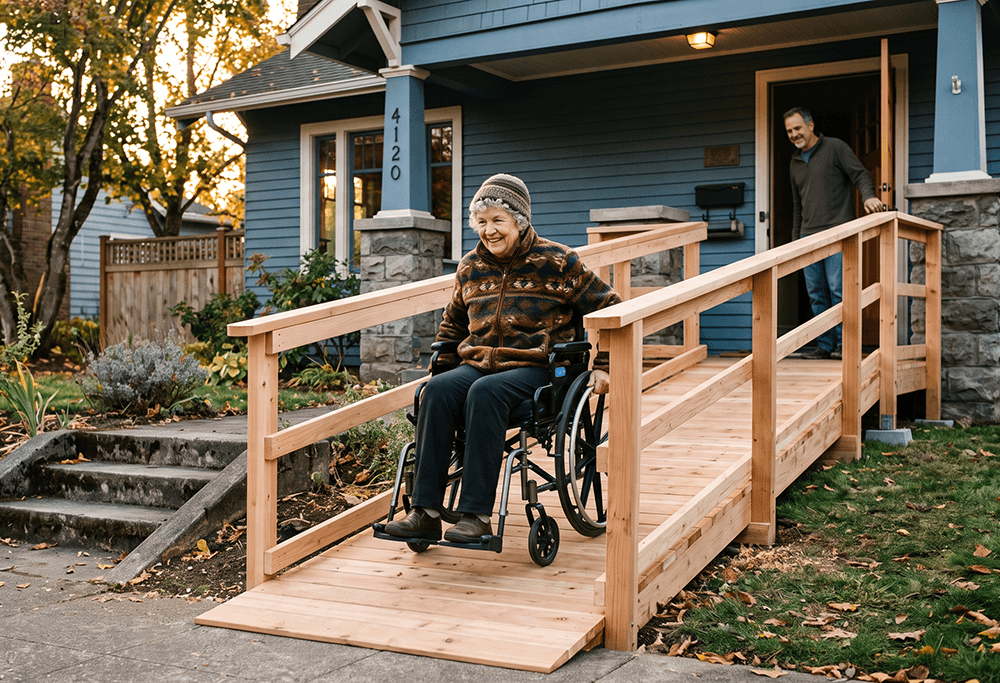
One such investment is Rosarium Health, which helps low- and middle-income seniors and people with disabilities remain safe and independent at home by quickly coordinating simple home modifications that can prevent falls, hospitalization, or premature move into institutional care.
Catalytic Capital, Expanding Opportunity
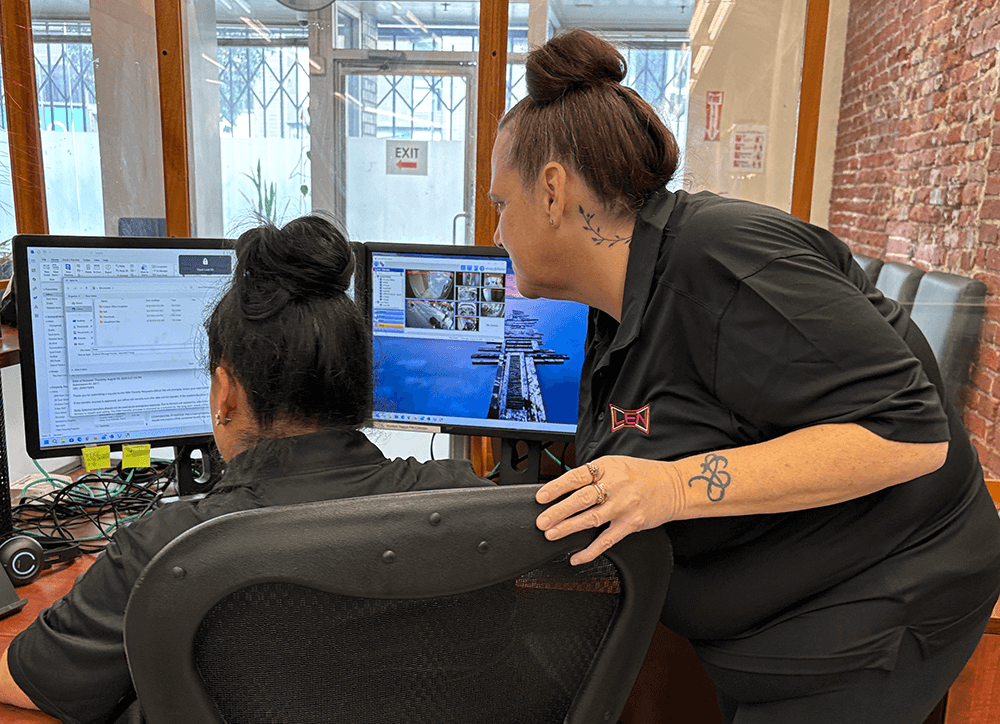
In 2019, the San Francisco Foundation made a $500,000 loan to REDF Impact Investing Fund, a San Francisco-based CDFI, becoming its first investor. The Fund has since raised an additional ~$35 million to date. This fund provides critical capital and technical assistance to social enterprises focused on employment, which help community members overcome employment barriers. One beneficiary is LEN Staffing, which provides training, professional development, and employer partnerships to help individuals start careers in the affordable housing industry, some of whom are residents of affordable housing.
Bay Area Community Impact Fund
SFF’s Bay Area Community Impact Fund makes the Bay Area a better and more inclusive place through low-interest loans to community-based organizations that create and preserve local jobs, affordable housing, and sustainable communities. As loans are repaid, we recycle capital back into communities by making new investments.
Overall Impact*
7,729
Affordable homes for families and individuals
65,441
Permanent jobs created or retained
919,241
Sq. ft. of community non-profit space built or improved
* Impact made in combination with other financing sources. Numbers cumulative calendar years 2009-2026
Custom Impact Investing
San Francisco Foundation provides custom impact investments, enabling donor advised funds to provide much-needed capital to organizations creating positive change in communities across the U.S. and around the world. These investments help organizations grow, seize new opportunities, and expand their impact, while also generating financial returns.
Recent examples include an investment in Advance Global Capital, which helps small businesses in underserved communities access financing, a deposit with CNote, which channels capital to community lenders supporting entrepreneurs and homebuyers in underbanked communities, and a loan to YES Nature to Neighborhoods that helped launch construction of a new youth-focused community center in Richmond.
SFF impact investments help organizations like YES Nature to Neighborhoods, which used a custom loan to help launch construction of a new youth-focused community center in Richmond.
The San Francisco Foundation helps donors from across the Bay turn their values into meaningful impact. SFF pairs flexible giving options, such as donor advised funds and legacy gifts, with deep, on-the-ground knowledge of the region’s most pressing challenges and opportunities. The result is giving that’s not only easier to manage, but more responsive, informed, and impactful.
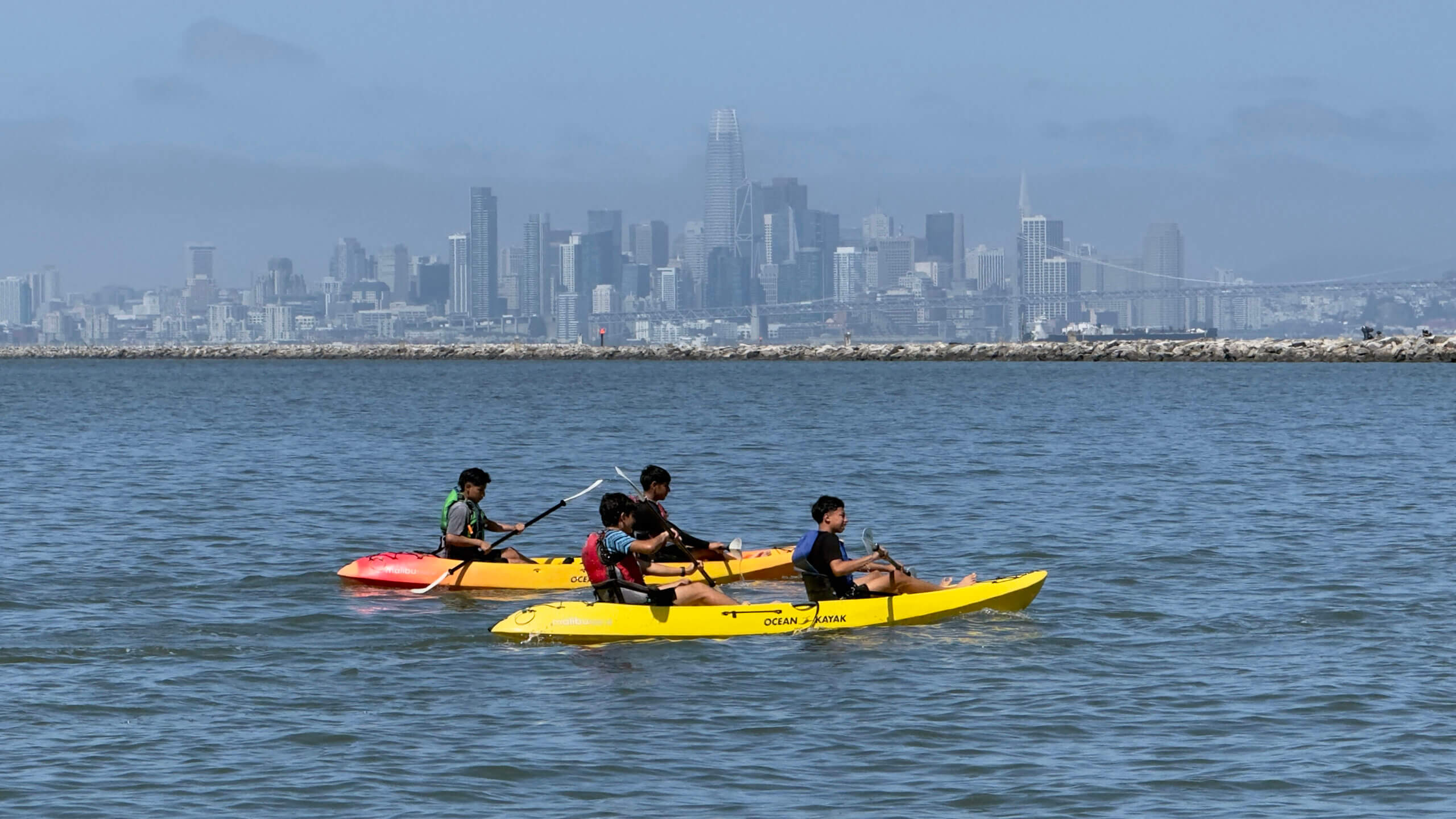
With support from SFF donors, including the Ganyard Nutting family, Oakland Goes Outdoors helps more young people to build lasting connections to nature and the Bay Area’s outdoor spaces.
Individuals and families choose the San Francisco Foundation to help turn their values into meaningful, lasting support for the causes they care about. We’re proud to partner with donors and steward more than 500 donor advised funds that drive impact across the Bay Area and beyond.
$219.1M
in donor advised funds grants
33%
donor advised fund payout rate*
53%
of donor advised fund grants went to organizations headquartered in the Bay Area
* The payout rate, as calculated by the IRS, is based on the amount distributed collectively by our donor advised funds.
Personalized Advising
Every fund holder at San Francisco Foundation has access to a philanthropic advisor who offers personalized giving recommendations aligned with their interests and values. SFF’s expert staff curate opportunities for engagement, learning, and action around the issues that each donor cares about most.
Connection
SFF builds a community of individuals, families, grassroots leaders, elected officials, and businesses who all believe in investing in the Bay Area.
Meeting the Moment
At SFF, we help donors respond to the Bay Area’s most urgent needs with clarity and confidence by leveraging our deep regional expertise and trusted relationships. Our curated give guides offer tailored recommendations, making it easier to take meaningful action on the issues that matter most.
Turning Insight into Philanthropic Action
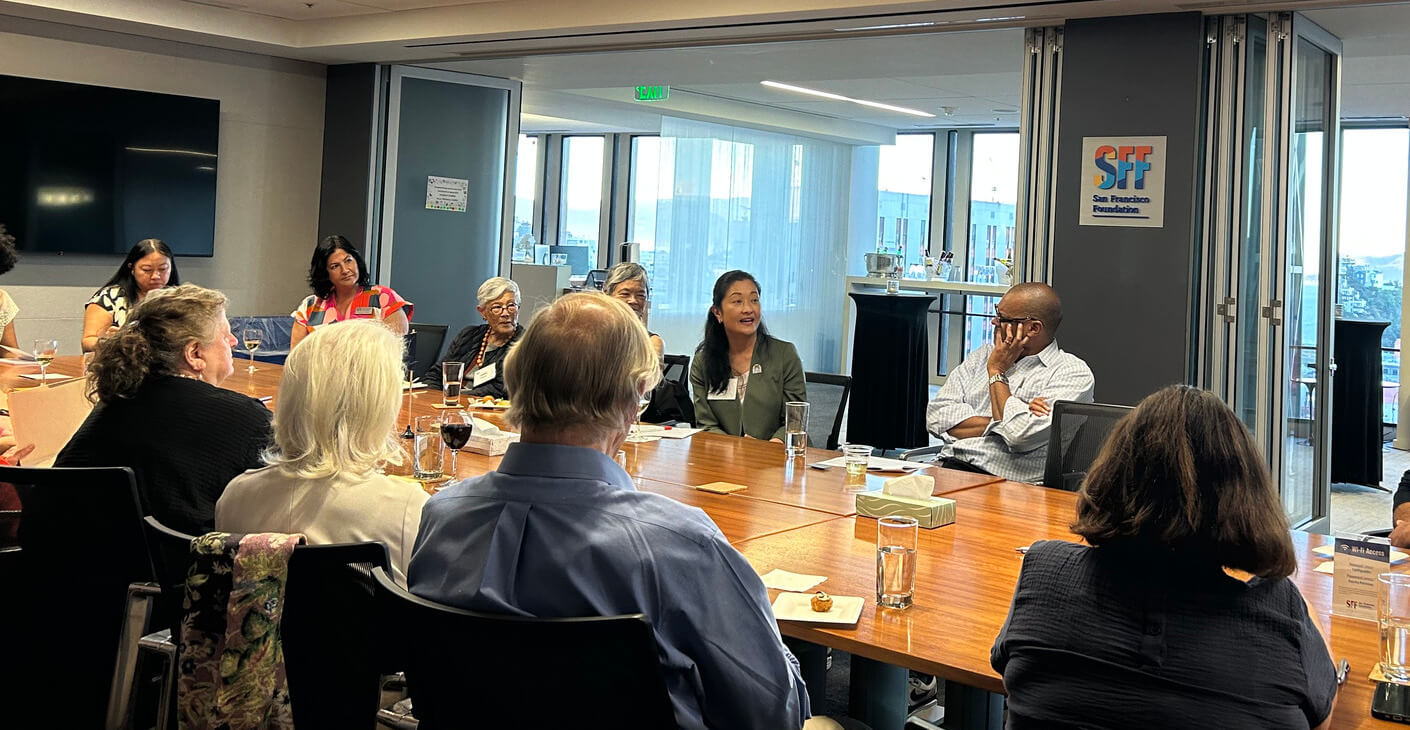
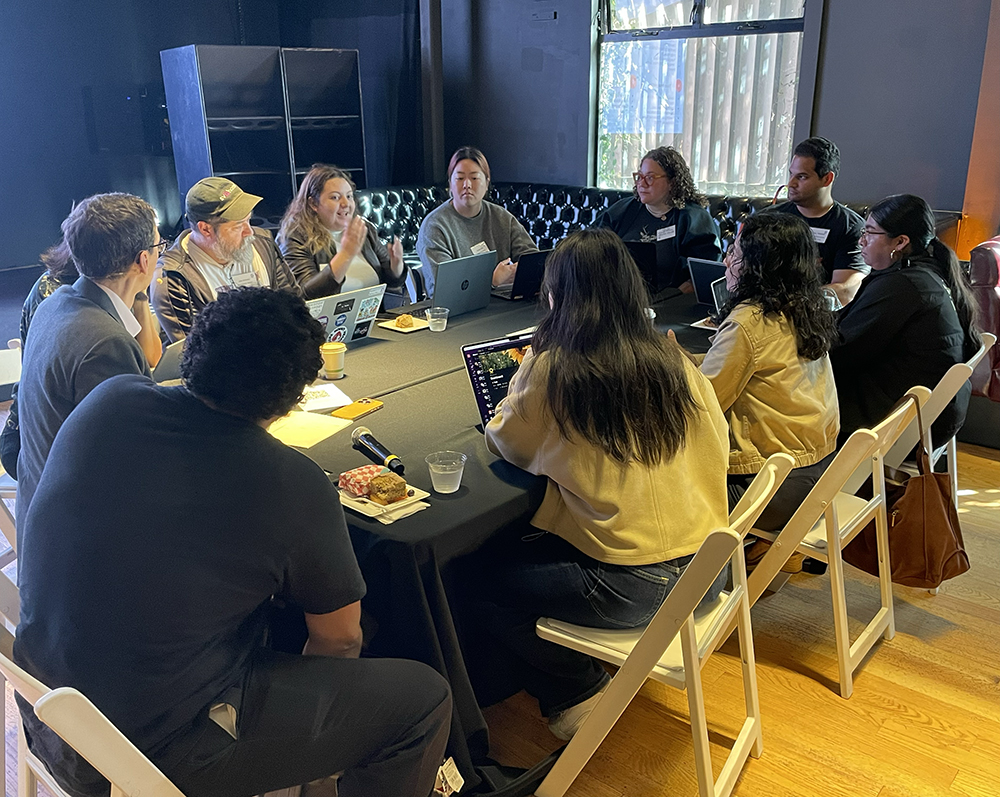
SFF helps individual donors engage in the issues they care about with clarity and confidence. Through small, intimate conversations with public leaders, like San Francisco Unified School District Superintendent Maria Su, donors deepen their understanding of how public systems serve young people and where the most urgent needs are. Just as important, donors have space to reflect with peers on how they want to show up and how SFF can support their giving and engagement in ways that feel values‑aligned and effective.
Expanding Access to Nature for Bay Area Youth
The Ganyard Nutting family’s support for Oakland Goes Outdoors reflects a deep commitment to both environmental stewardship and equal access to the outdoors. Inspired by their Bay Area roots and a family legacy of social justice and connection to nature, they see the organization’s mission as a natural fit. As family member Taylor Gurbacs shared, “The healing properties of simply getting outside cannot be understated, and providing underserved communities with this kind of experience represents a perfect fit for our family history.” Their gift is helping make that experience possible for the next generation.
Where Conversation Sparks Impact
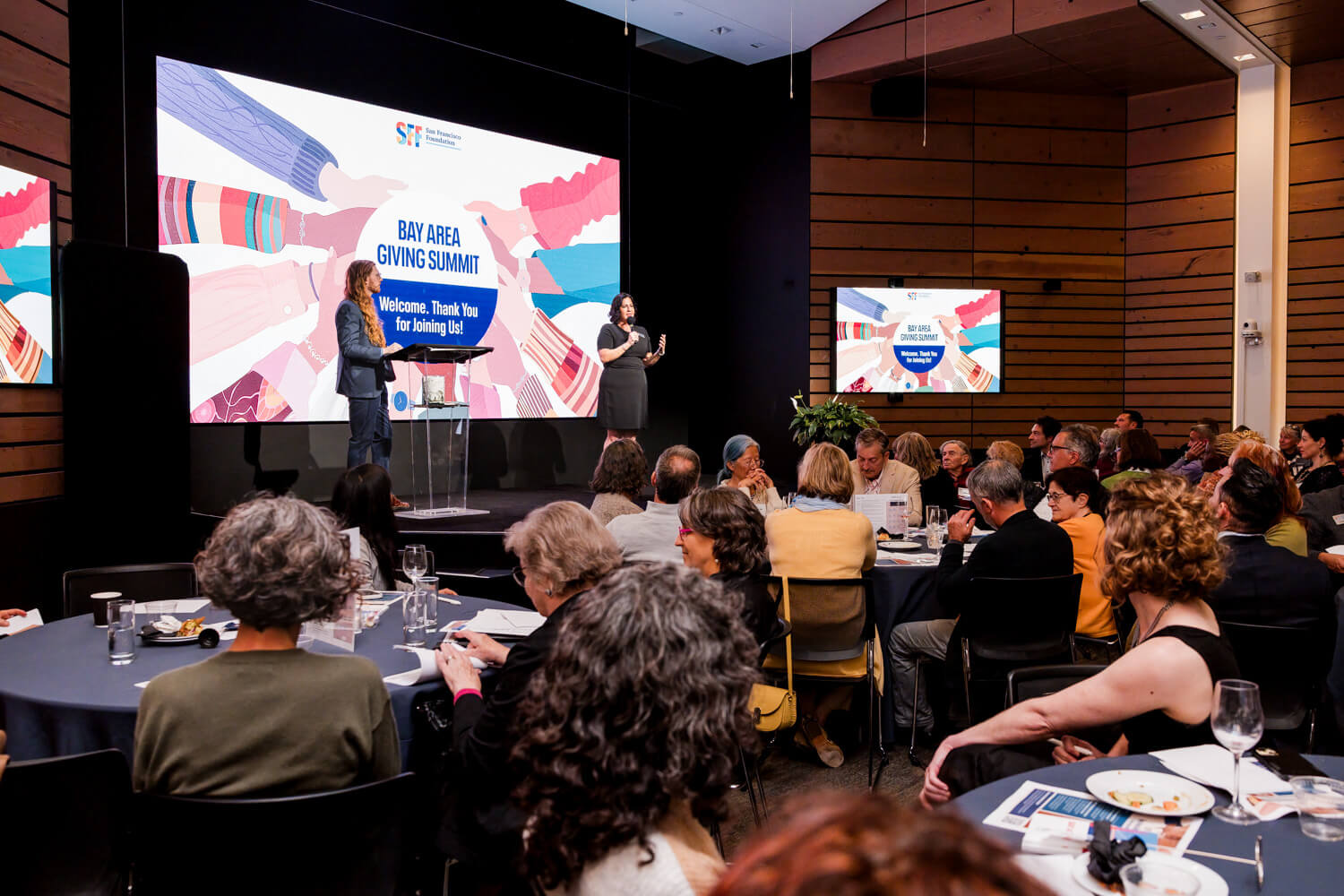
Last April, nearly 100 donors from across the region joined us for our third annual Bay Area Giving Summit, where donors are in conversation with each other to discuss the issues they care about most. This event underscores the power of connection and the role of local action in challenging times. Building on last year’s momentum, donors deepened relationships, shared knowledge, and sparked new ideas on topics including education, housing, democracy, arts and culture, and more. One donor shared how this community of donor peers helps them: “What I value the most about this group is that everyone brings different experiences and knowledge, so together we can build a bigger picture and understanding of the issue.”
Donors Provide Nearly Two Million Meals for Bay Area
When federal food assistance cuts increased food insecurity for thousands of individuals and families across the Bay Area, SFF’s donor community responded quickly. The San Francisco Foundation stepped up to provide $50,000 matching grants to each of our region’s four largest food banks. Donors met the challenge and directed nearly $1 million to these food banks – a 166% increase to these four organizations over the same period as the year before. In total, from SFF’s own grantmaking and SFF donor advised funds, SFF granted $1.2M that provided close to 2 million meals for Bay Area families facing food insecurity.
Sustained Giving, Stronger Communities
Bay Area families are gaining access to housing, food, and stability through the sustained commitment of donors like Mark and Susan Stutzman. Over decades, their philanthropy has grown from small contributions to deep, long‑term support for organizations such as Insight Housing. Through both giving and board leadership, they are helping expand services that provide immediate relief while building lasting solutions to homelessness and housing insecurity. With SFF’s partnership, donors like the Stutzmans are able to align their values with meaningful action, meeting urgent needs today while investing in long‑term opportunity and dignity.
Mark and Susan Stutzman believe meaningful philanthropy includes both time and resources, a commitment reflected in decades of service and giving.
Philanthropy Rooted in Lived Experience
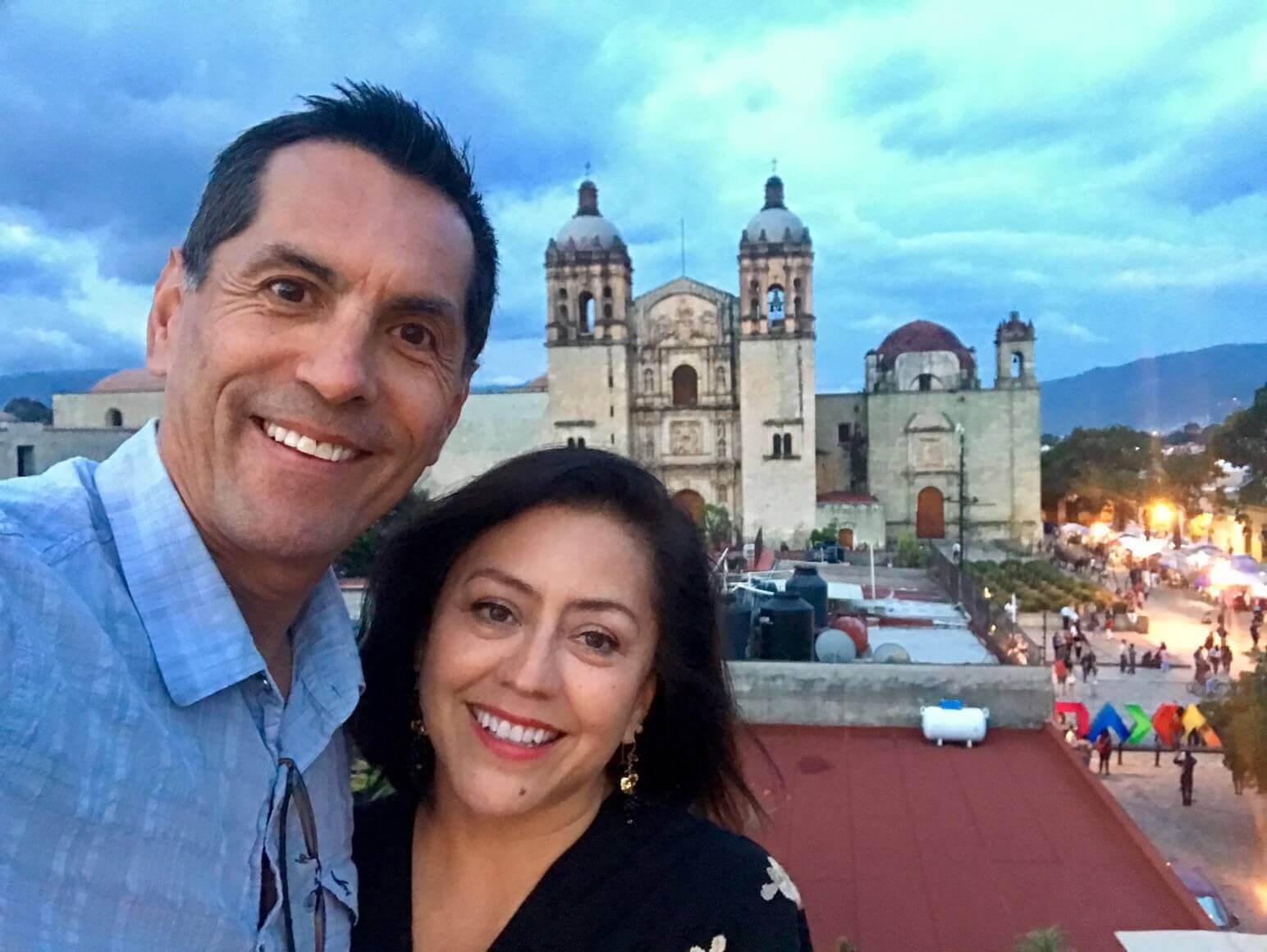
Grounded in their working‑class roots, SFF Trustee Sergio Garcia and Amelia Gonzalez are directing philanthropy toward immigrant‑serving and frontline organizations that meet urgent needs and build long‑term stability. Participating in San Francisco Foundation’s community is central to their approach to giving as they view collaboration as crucial to meeting the evolving needs of the Bay Area. They bring a strategic focus on supporting nonprofits that provide critical services, like legal assistance, to the most vulnerable immigrant families in our community.
SFF donors Sergio Garcia and Amelia Gonzalez believe in the power of collective giving to strengthen communities and support those facing the greatest challenges.
Donors Pool Resources to Support Families
Families receive vital services through the collective power of SFF donors. Through the Hera Giving Circle Fund, a group of donors are pooling their resources to support organizations serving women, children, and families—translating shared values into meaningful action. One grantee is The Women’s Building, a women-led community space. The Women’s Building advocates for self-determination and gender equality through a range of services, including a food pantry, job-search assistance, and financial and legal support. The Hera Giving Circle shows how groups of donors can have an outsized impact when they give strategically and together.
Members of the Hera Giving Circle, which opened a Donor Advised Fund at SFF, are pooling their resources to support organizations like The Women’s Building, which provides vital services and opportunities for women, children, and families.
Investing in Care and Opportunity Across Generations
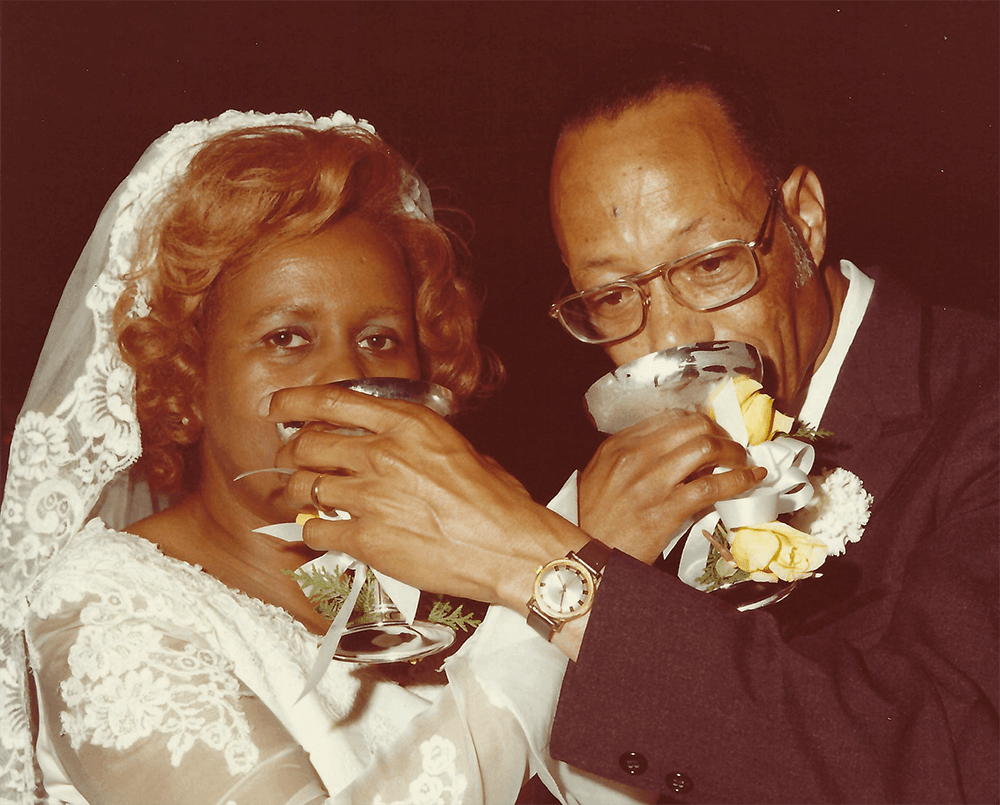
Bay Area communities continue to benefit from the generosity of Frankie and Maxwell Gillette. Frankie and Maxwell were long-time SFF donor advised fund holders, and when Frankie passed in 2022, their bequest created an endowed fund to support our community’s evolving needs. Today, their legacy lives on through distributions to organizations such as Jobs with Justice San Francisco, which brings together workers and communities across race and issue areas to advance economic justice and improve the lives of working families.
SFF donors Frankie and Maxwell Gillette built a lasting legacy of giving that continues to invest in Bay Area communities.
Building a Stronger Reproductive Justice Movement
SFF Donor Gretchen Sisson, a nationally recognized leader in reproductive justice, has partnered closely with SFF as a donor event speaker, give guide co-author, and topic expert at SFF’s Giving Summit. These collaborations have mobilized hundreds of thousands of dollars from the SFF donor community to support access to reproductive health, including to the Abortion Bridge Collaborative Fund (ABC), which Gretchen helped launch in response to the Dobbs decision, the 2022 U.S. Supreme Court decision overturning Roe v. Wade. The ABC fund has moved over $14 million to 100 organizations to help clinics stay open, improve services, and strengthen national coordination across the movement for reproductive justice.
SFF donor Gretchen Sisson, a nationally recognized reproductive justice leader, has partnered with SFF to help donors deepen their understanding of reproductive health access and support organizations advancing reproductive justice.
Two Funds, One Lasting Legacy
George Landucci was a lifelong San Franciscan whose bequest established two funds at SFF. One supports Alzheimer’s research at UCSF while the other fund benefits underserved children through organizations such as the Booker T. Washington Community Service Center, providing academic enrichment and wraparound support to K-12 students and transitional-age youth through the Freedom School model. Together, these funds reflect George’s deep commitment to care, dignity, and opportunity.
George Landucci’s legacy lives on through investments in Alzheimer’s research and programs that help young people learn, grow, and thrive.
Sustained Giving, Stronger Communities
Bay Area families are gaining access to housing, food, and stability through the sustained commitment of donors like Mark and Susan Stutzman. Over decades, their philanthropy has grown from small contributions to deep, long‑term support for organizations such as Insight Housing. Through both giving and board leadership, they are helping expand services that provide immediate relief while building lasting solutions to homelessness and housing insecurity. With SFF’s partnership, donors like the Stutzmans are able to align their values with meaningful action, meeting urgent needs today while investing in long‑term opportunity and dignity.
Mark and Susan Stutzman believe meaningful philanthropy includes both time and resources, a commitment reflected in decades of service and giving.
Philanthropy Rooted in Lived Experience
Grounded in their working‑class roots, SFF Trustee Sergio Garcia and Amelia Gonzalez are directing philanthropy toward immigrant‑serving and frontline organizations that meet urgent needs and build long‑term stability. Participating in San Francisco Foundation’s community is central to their approach to giving as they view collaboration as crucial to meeting the evolving needs of the Bay Area. They bring a strategic focus on supporting nonprofits that provide critical services, like legal assistance, to the most vulnerable immigrant families in our community.
SFF donors Sergio Garcia and Amelia Gonzalez believe in the power of collective giving to strengthen communities and support those facing the greatest challenges.
Donors Pool Resources to Support Families
Families receive vital services through the collective power of SFF donors. Through the Hera Giving Circle Fund, a group of donors are pooling their resources to support organizations serving women, children, and families—translating shared values into meaningful action. One grantee is The Women’s Building, a women-led community space. The Women’s Building advocates for self-determination and gender equality through a range of services, including a food pantry, job-search assistance, and financial and legal support. The Hera Giving Circle shows how groups of donors can have an outsized impact when they give strategically and together.
Members of the Hera Giving Circle Fund, which opened a donor advised fund at SFF, are pooling their resources to support organizations like The Women’s Building, which provides vital services and opportunities for women, children, and families.
Investing in Care and Opportunity Across Generations
Bay Area communities continue to benefit from the generosity of Frankie and Maxwell Gillette. Frankie and Maxwell were long-time SFF donor advised fund holders, and when Frankie passed in 2022, their bequest created an endowed fund to support our community’s evolving needs. Today, their legacy lives on through distributions to organizations such as Jobs with Justice San Francisco, which brings together workers and communities across race and issue areas to advance economic justice and improve the lives of working families.
SFF donors Frankie and Maxwell Gillette built a lasting legacy of giving that continues to invest in Bay Area communities.
Building a Stronger Reproductive Justice Movement
SFF Donor Gretchen Sisson, a nationally recognized leader in reproductive justice, has partnered closely with SFF as a donor event speaker, give guide co-author, and topic expert at SFF’s Giving Summit. These collaborations have mobilized hundreds of thousands of dollars from the SFF donor community to support access to reproductive health, including to the Abortion Bridge Collaborative Fund (ABC), which Gretchen helped launch in response to the Dobbs decision, the 2022 U.S. Supreme Court decision overturning Roe v. Wade. The ABC fund has moved over $14 million to 100 organizations to help clinics stay open, improve services, and strengthen national coordination across the movement for reproductive justice.
SFF donor Gretchen Sisson, a nationally recognized reproductive justice leader, has partnered with SFF to help donors deepen their understanding of reproductive health access and support organizations advancing reproductive justice.
Two Funds, One Lasting Legacy
George Landucci was a lifelong San Franciscan whose bequest established two funds at SFF. One supports Alzheimer’s research at UCSF while the other fund benefits underserved children through organizations such as the Booker T. Washington Community Service Center, providing academic enrichment and wraparound support to K-12 students and transitional-age youth through the Freedom School model. Together, these funds reflect George’s deep commitment to care, dignity, and opportunity.
George Landucci’s legacy lives on through investments in Alzheimer’s research and programs that help young people learn, grow, and thrive.
We partner with the advisors that donors trust—estate planning attorneys, CPAs, financial planners, and wealth managers—to help make giving more strategic, tax-efficient, and aligned with long-term goals.
Through our advisor networks, we support both donors and advisors in navigating complex decisions and maximizing impact. Our Professional Advisors Council brings together experienced experts who help shape effective giving and outreach strategies, while our Emerging Advisors Network equips newer professionals to integrate philanthropy into their work.
As a result, donors can more easily structure gifts, such as through donor advised funds or estate plans, often increasing their giving, reducing their tax burden, and supporting the causes and communities they care about for generations.
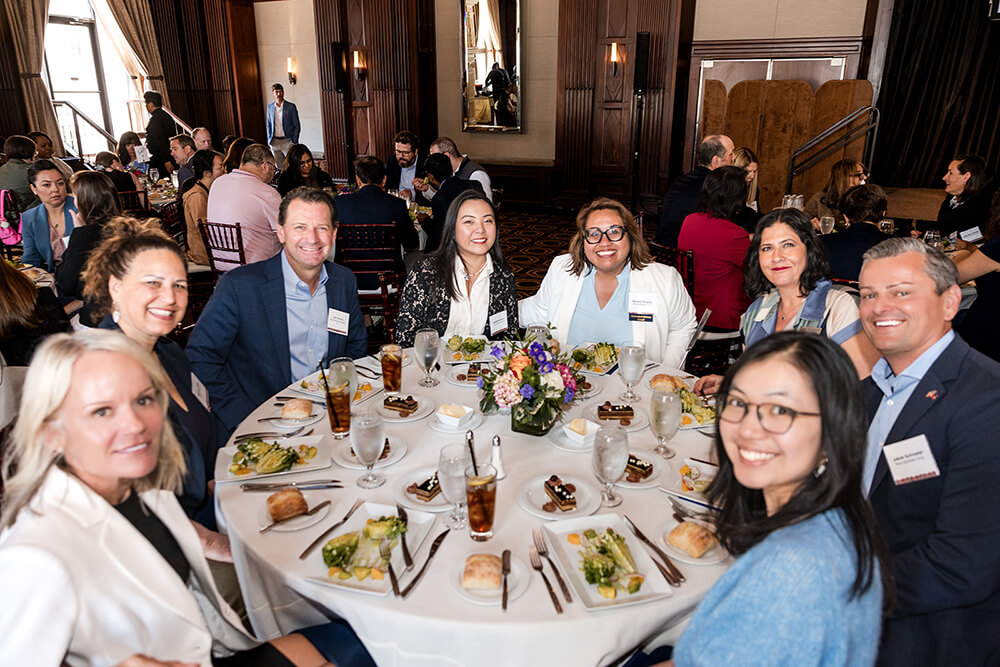
SFF’s annual Professional Advisors Luncheon brings together estate planning attorneys, financial planners, CPAs, and wealth managers to explore charitable giving strategies and community impact.
Advisor Profile
Helping clients turn their values into lasting impact
Michael J. Firestone, CFA, founder and managing partner of Fire Capital Management, believes philanthropy is an important part of helping clients turn their values into lasting impact and advance the causes they care about most. Working with families across generations and foundations pursuing enduring missions, he helps clients align their charitable giving and investments with their values and long-term goals.
“Enabling our clients to positively impact others is one of the ways we craft our own legacy,” Michael says. “For me personally, I want my kids to be proud of how their dad approached life and business.” A member and former Co-Chair of the foundation’s Professional Advisors Council, Michael values the foundation’s role in the community. “Supporting the San Francisco Foundation equates to lifting up the local community in a meaningful way. The foundation always seems to step up to meet the moment.”
By opening a nonprofit agency fund with the San Francisco Foundation, nonprofits can create a fund that is restricted for their benefit and supports their operations and programs. An agency fund at SFF allows nonprofit leaders to focus on their core mission while SFF administers and helps the assets grow through top-notch investment management.
Agency Fund Holders
Bethel Heritage Foundation of San Francisco
Black Freedom Fund
Buen Dia Family School
Children’s Book Project
Code Tenderloin
Greater Richmond Interfaith Program
Lyon-Martin Community Health Services
Metropolitan Community Church of San Francisco
Mission Neighborhood Centers, Inc.
Multidisciplinary Association for Psychedelic Studies (MAPS)
Patriots Jet Team Foundation
PACT, Inc
Point Reyes Bird Observatory
Raphael House of San Francisco
Sacramento Ballet Association
San Francisco Achievers
San Francisco Boys Chorus
San Francisco Interfaith Council
Tandem, Partners in Early Learning
Tenants Together
West Contra Costa Public Education Fund
YWCA Golden Gate Silicon Valley
Powering the Next Generation of STEM Leaders
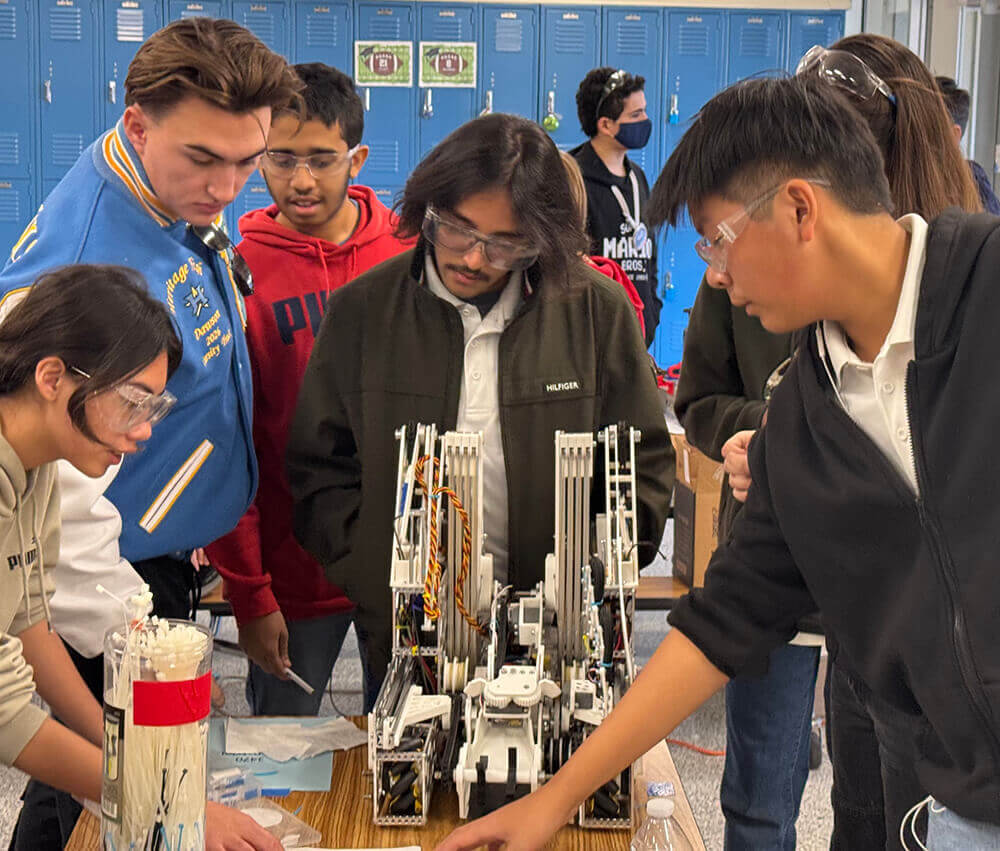
The Patriots Jet Team Foundation, which has an agency fund with San Francisco Foundation, is expanding access to hands-on STEM learning experiences for thousands of Bay Area students. Reaching 5,000 students each year across 30 schools, the all-volunteer organization offers free programs that spark interest in aviation, space, and STEM subjects and careers while building skills in leadership, teamwork, and service. The Patriots Jet Team Foundation investments managed by the San Francisco Foundation help support the PJTF Aviation & College Engineering Scholarship Programs, along with its STEM Grants, primarily awarded to high school robotics programs. By partnering with educators, families, and corporate leaders, along with offering scholarships, they are creating pathways for young people to explore new possibilities and helping the next generation take flight.
We gratefully acknowledge the generous support of the following donors this year. Thank you for sharing our vision to make the Bay Area a better place for all.
Bay Area Leads Donors
Bay Area Leads Fund of the San Francisco Foundation allows us to respond quickly, thoughtfully, and in alignment with our values. Flexible funding gives SFF the ability to meet urgent needs as they emerge, support community-led solutions, and invest where the moment calls for action.
Anonymous (11)
Karolo Aparicio
Charles B. Arnold
Ryan Avery
Ophelia Basgal
David F. Becker Charitable Fund
Gwen Bell Charitable Fund
Rachel Benditt
Paula Blank
Jennifer Braun and Raymond Ryan Charitable Gift Fund
Brickyard Family Fund (C)
Brickyard Family Fund (V)
Brown Advisory Charitable Foundation
Callan Family Fund
Jackson Chou
Coalesce Fund
Community Investment Project LLC
Pamela Doherty
John C. Donaldson
Lisa Erdberg and Dennis Gibbons
Five Arts Fund
Molly Q. Ford
Eleanor Friedman
David Friedman and Paulette J. Meyer
Robert Friedman
Ginnie and Peter Haas, Jr.
Celia Hamman-Cueto
Hearthill Family Foundation
Hellman Foundation
Katie and Christopher Knight
Koshland Innovation Fund
Ling Woo Liu
Catherine Liu
Samantha Luks
Manjukumar Harthikote Matha
Ed and Betsy McDermott
Meadow Fund
Leonard T. Mendonca
Lora O’Haver and Randy Rae
Laura Pantaleo and Michael Lukan
Janine Paver and Eric Brown
Casey Peacock
Pinecrest Endowment Fund
Popper Family Social Impact Fund
Yvette Radford
Gertrude Reagan
Ayanna and Carlos Reed
Reservoir Fund
Margaret Rhee
Olivia Sears
Lydia Simmons
Solomon Celeste Fund
Jeff Spitulnik
Ava and John A. St. John
Sarah Stein and Michael Cohn Fund
Roselyne C. Swig
Take-Two Interactive
Tsadik Foundation
Harvey and Leslie Wagner Foundation
Tamara Wallenstein
Susan West and Michael Gold
Kimberly Wicoff
Patrick H. Windham
Wolff Family Giving Fund
Sheryl L. and Robert R. Wong
Corporate and Foundation Donors
Corporate and institutional funders play a vital role by providing resources, strong partnerships, and a shared commitment to strengthen communities across the Bay Area.
Akonadi Foundation
Arrow Impact
Blue Shield of California Foundation
California Healthcare Foundation
California Wellness Foundation
Clarence E. Heller Charitable Foundation
Crankstart
East Bay Community Foundation
Evelyn & Walter Haas Jr. Fund
Ford Foundation
Fund for NonViolence
Gerbode Foundation
Golden State Community Foundation
Google.org
Heising-Simons Foundation
Hellman Foundation
Kaiser Foundation Hospital Fund for Community Benefit
A program model supported by the San Francisco Foundation will help thousands of Californians stay in their homes. Building on the success of a pilot program in Oakland, Bay Area Community Services developed Keep People Housed, which prevents homelessness through timely financial assistance and support. It is now being implemented in San Francisco, Contra Costa, Solano, Sonoma, Marin Counties, as well as Oakland.
Leaders in the Field
Rooted in equity and community, the San Francisco Foundation is a thought leader, convener, and catalyst for change across the Bay Area. We bring together donors, community leaders, and partners to advance innovative solutions, elevate community voices, and drive regional progress. By pioneering new approaches, we are helping build a more inclusive and transformative future, creating greater opportunity for generations to come
After some of the largest commercial donor advised fund providers cut off grants to the Southern Poverty Law Center, the San Francisco Foundation continued to honor donor intent and make donor advised grants to the SPLC. By upholding due process and supporting a longstanding civil rights leader, SFF ensures resources reach organizations that protect vulnerable communities and reinforces philanthropy as a force for justice, accountability, and a strong civil society.
AI Helps Housing Advocates Focus on People, Not Paperwork
SFF partnered with Google.org and Project Evident to help 20 Bay Area housing organizations use AI in responsible ways that benefit the people they serve. One tenant protection organization developed an AI agent that streamlines administrative tasks, allowing their small staff to spend more time helping tenants navigate housing challenges. Other organizations are using AI tools to more quickly produce marketing, communications, and organizing collateral, allowing staff to spend more time on higher-impact tasks like relationship-building and advocacy.
Standing Together for Immigrant Families
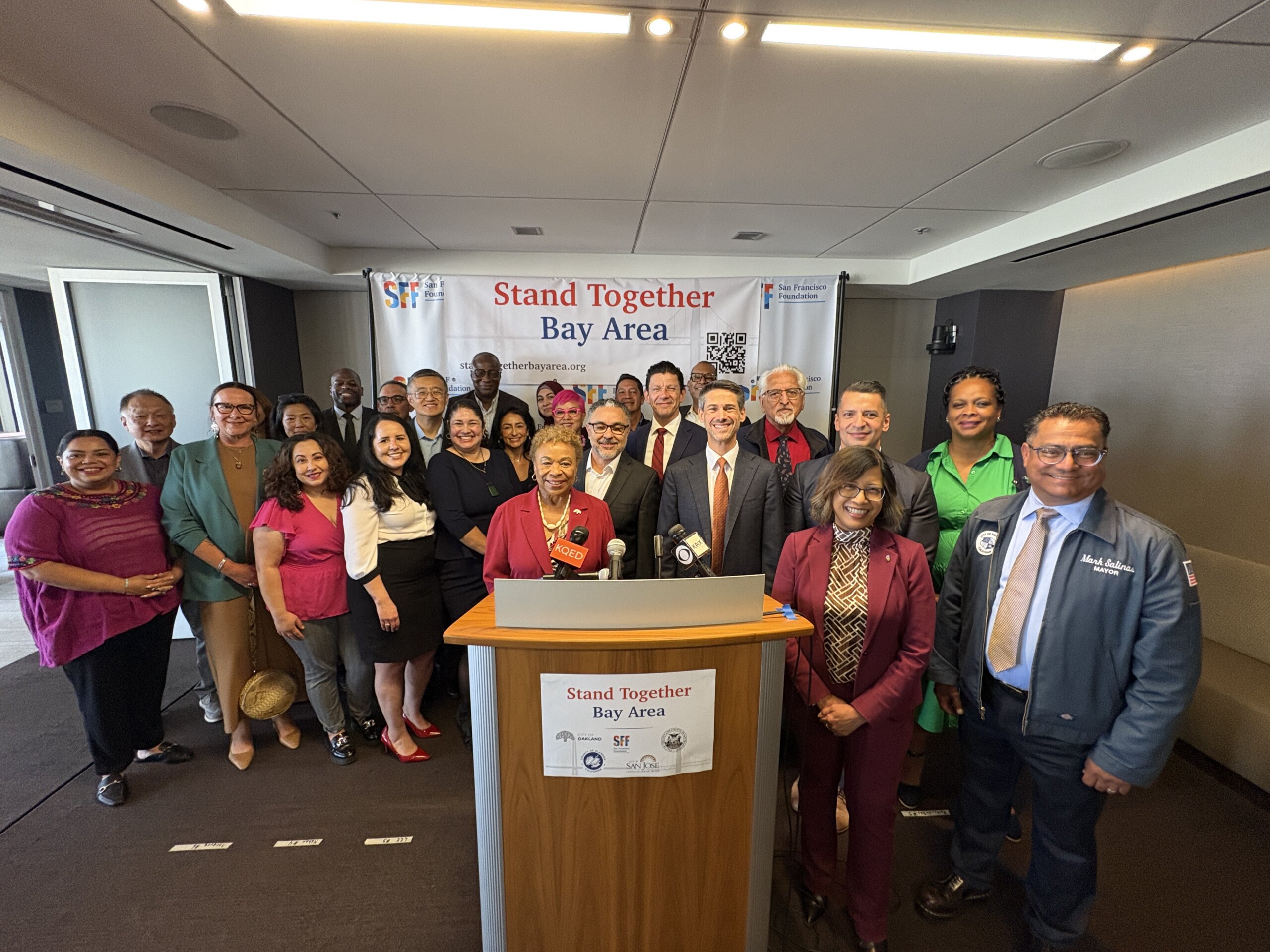
Stand Together Bay Area Fund provides immigrant families with emergency support for rent, food, and other basic needs. The fund helps them stay safe and stable during a time of heightened uncertainty and fear from increased detainment and deportations. SFF launched this fund through a collaborative effort with Bay Area mayors, elected officials, and community leaders.
Fueling a Stronger Democracy Through Collective Giving
SFF brought donors together with Women Donors Network, Solidaire Network, and the Women’s Foundation of California to explore how giving can strengthen a multiracial democracy. In conversation with a local elected official, donors engaged with strategies to support grassroots organizations and local leaders working to protect rights and ensure every voice is heard.
Research That Protects Regional Vitality
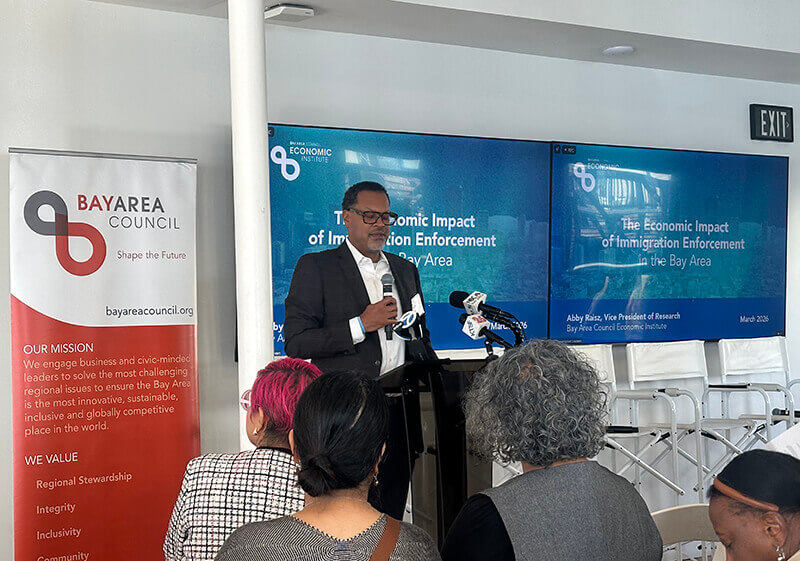
Mass deportation of undocumented workers could cost the Bay Area up to $67 billion annually, according to a report from the Bay Area Council Economic Institute in partnership with the San Francisco Foundation. The report also outlined strategies to protect the region’s economy and communities. This partnership brought business, policy, and community leaders together around shared understanding and interests to advance evidence-based solutions.
Through a $2 million loan from SFF, Housing Trust Silicon Valley is expanding its ability to finance affordable housing. As part of Housing Trust’s Building Impact Initiative, this investment will help create and preserve 7,400 affordable homes and generate $5.7 million in annual rent savings for low-income households, while supporting more sustainable, transit-connected communities across the Bay Area.
We invest our assets in alignment with our values and with the goal of generating strong long-term investment results. Our allocation process leads to long-term success under a variety of market conditions, as evidenced by our top 20% 10-year annualized returns among endowments and foundations.
10 Years Annualized
5 Years Annualized
3 Years Annualized
1 Year
LONG-TERM POOL For donor advised funds intending to make grants over time.
Pool
9.2%
6.3%
12%
12.8%
Benchmark[1]
8.4%
6.7%
13.4%
15.5%
SHORT-TERM POOL For the portion of donor advised funds intended for near-term grantmaking
Pool
2.7%
3.9%
5.3%
4.2%
Benchmark[2]
2.3%
3.5%
4.6%
3.8%
MISSION-ALIGNED POOL For donor-advised funds intending to make grants over time. Funds are invested with a values-based approach that aligns with the Foundation’s commitment to racial equity and economic inclusion
Pool
9.2%*
5.4%
11.6%
15.0%
Benchmark[1]
9.0%
6.7%
13.4%
15.5%
ENDOWMENT POOL For permanent funds intended to maintain grantmaking power in perpetuity
Pool
9.6%
6.4%
12.2%
13.3%
Benchmark[1]
8.4%
6.7%
13.4%
15.5%
[1] 60% MSCI All Country World/40% Barclays Agg Benchmark [2] U.S. Treasuries Benchmark * since inception
Meeting the Moment: Photo by Matthew Lew; Photo courtesy of Trabajadores Unidos Workers United; Photo courtesy of Chinatown Media and Arts Collaborative; Photo by Brooke Anderson; Photo courtesy of The Zderic Family; Photo by Ling Woo Liu; Photo courtesy of Priority Africa Network; Photo courtesy of East Bay Asian Local Development Corporation; Photo courtesy of Parent Voices Oakland; Photo courtesy of GRID Alternatives; Photo by Darryl Kelly; Photo courtesy of Budget Justice Coalition; Photo courtesy of Asian Law Caucus; Photo by Denny Khamphanthong; Photo courtesy of the Forestry & Fire Recruitment Program; Photo courtesy of Faith Communities Housing; Photo courtesy of Erick Salazar from “Happy Heavenly Birthday Oscar” exhibit at Black Panther Party Museum led by artist Mohammad Gorjestani (Even/Odd) and curator Benjamin “BJ” McBride (Worthlessstudios); Photo by Joyce Xi; Photo courtesy of REDF Impact Investing Fund; Photo courtesy of YES Nature to Neighborhoods
Promoting Philanthropy: Photo courtesy of Oakland Goes Outdoors; Photo courtesy of Oakland Goes Outdoors; Photo by Adriana Oyarzun Photography; Photo courtesy of San Francisco-Marin Food Bank; Photo courtesy of The Gillette Family; Photo by Liz Corman; Photo by Adriana Oyarzun Photography; Photo courtesy of the Patriots Jet Team Foundation
Leaders in the Field: Photo courtesy of Keep People Housed; Photo by Project Evident
Financials: Photo courtesy of Mission Housing Development Corporation
Years of community advocacy are becoming reality through La Maravilla, a major affordable housing development in San Francisco’s Mission District. This community-led development will create more than 350 affordable homes for families, seniors, and people transitioning out of homelessness. Co-developed by Mission Housing and Mission Economic Development Agency, La Maravilla will help longtime residents stay rooted in the neighborhood they call home, beginning in March 2027.
Explore the impact and reach of the Koshland Program, which was established in 1982. Read about Kathy Sloane, the community photographer who captured many of the powerful images in this timeline.
1980s
1982
A Donation Becomes a Community Program
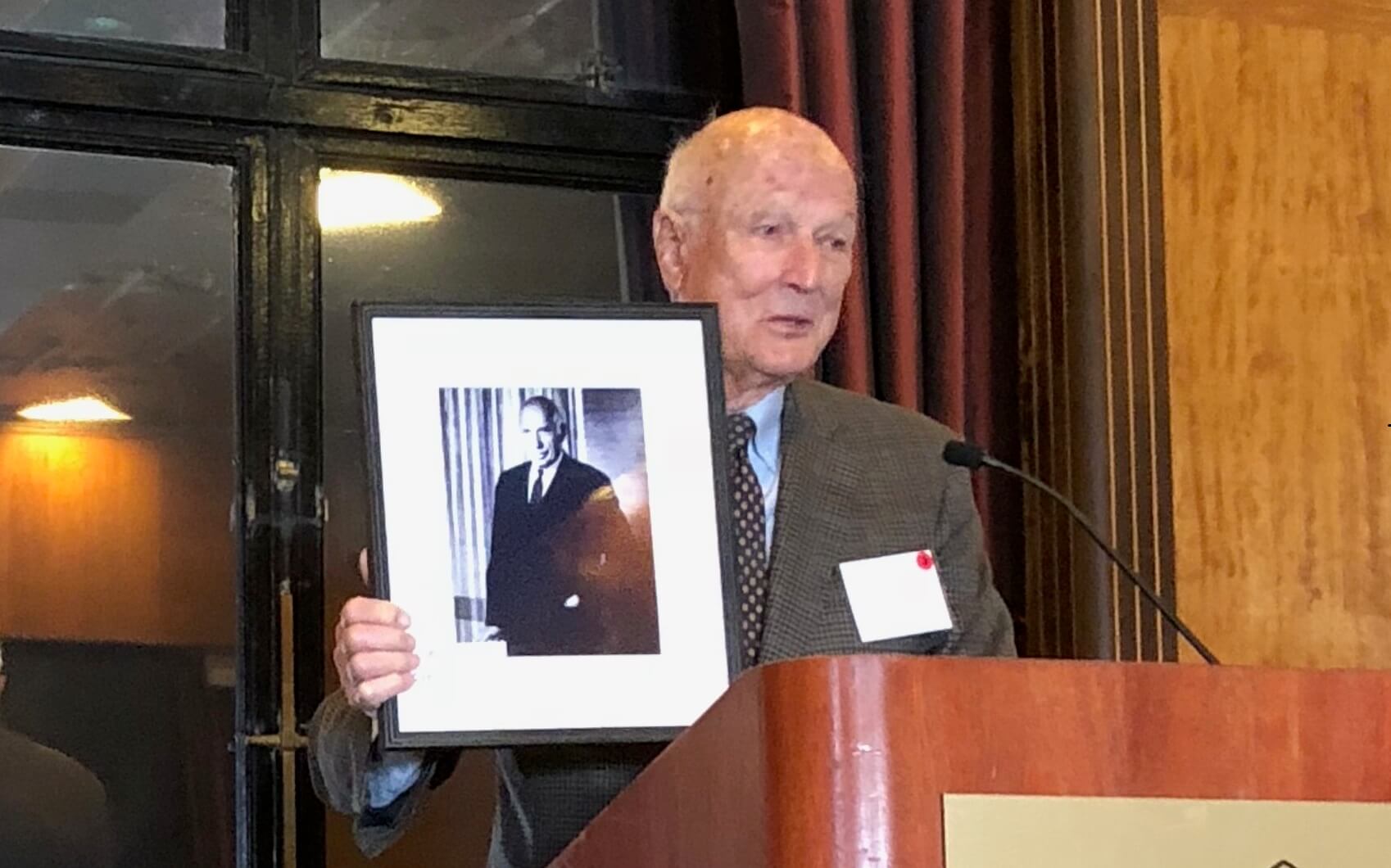
Daniel E. Koshland Sr., a noted Bay Area businessman, philanthropist, and co-founder of the San Francisco Foundation, leaves an unrestricted gift of $35 million to SFF upon his death in 1979. A group of SFF stakeholders, civic leaders, and Koshland’s friends approach SFF’s CEO and Board to use part of the generous gift to create a program that will honor his legacy and dedication to community-based philanthropy. After careful consideration and thoughtful planning and discussion, the Daniel E. Koshland Civic Unity Awards Program is established in 1982 as part of SFF. The program seeks to promote unity and help solve problems in Bay Area communities by supporting individuals at the local level with funding and professional development and networking opportunities. Photo: SFF archives.
1982 Director Nancy Pietrafasa
A New Program and a New Director
Getting the Koshland Program up and running is no small task. Nancy Pietrafesa, the program’s first director, oversees the program’s staff and works with its governing body, the Koshland Committee, to choose a funding theme. She also assists with the process of identifying “unsung heroes” in Bay Area neighborhoods and is involved with each cohort activity, including the initial awards ceremony, professional development training sessions, the grantmaking process, and awardee follow-up meetings. Photo: SFF archives.
1983-1988 Western Addition (San Francisco)
Bringing Two Communities Together: Harmonizing Japanese American and African American Youth
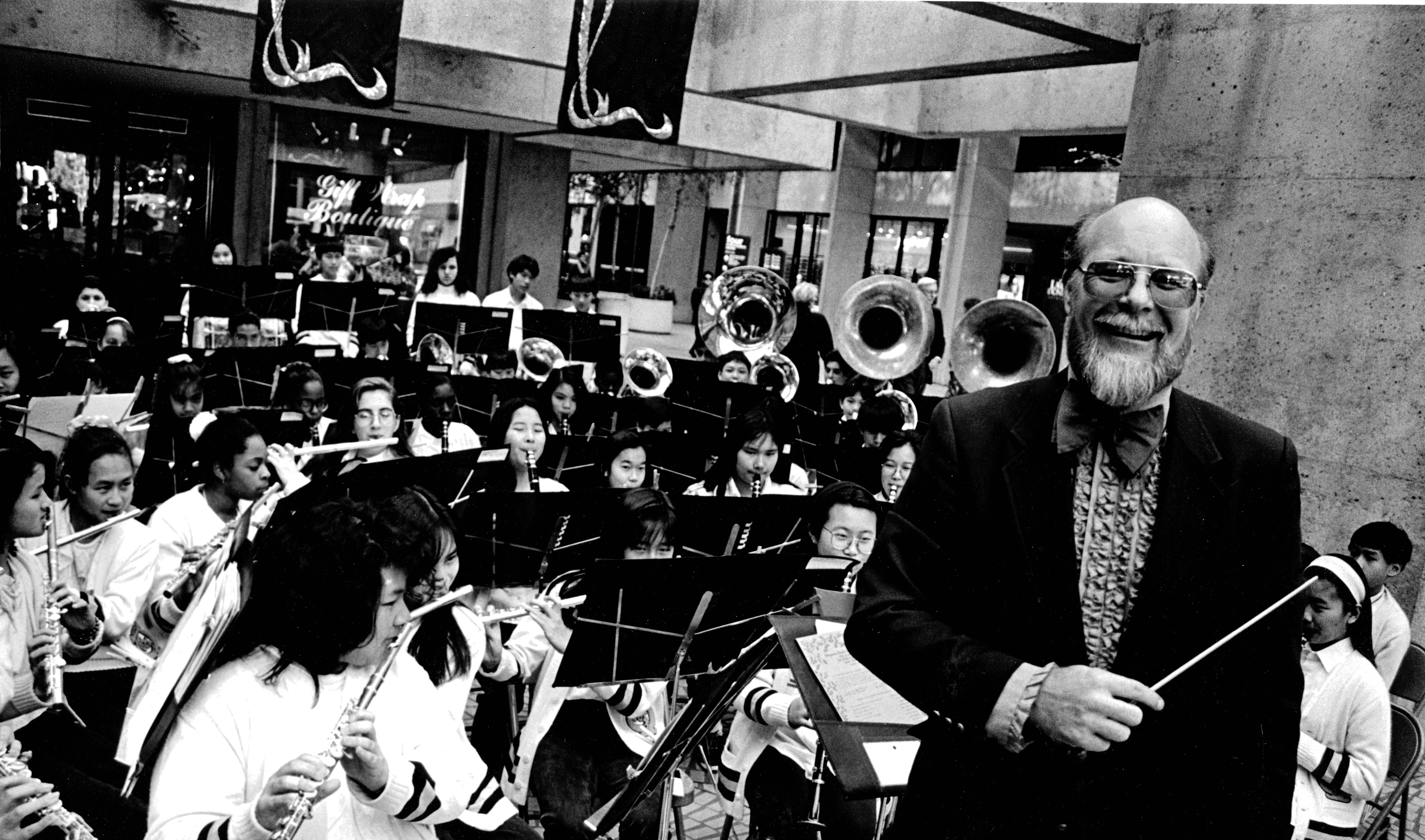
In the first Koshland community, located in the Western Addition of San Francisco, awardee Jack Martens, a dedicated music teacher at Benjamin Franklin Middle School, utilized his award funds to purchase musical instruments for his aspiring young musicians. Recognizing that music has the power to unite young people, Martens established a working band at the school. This initiative led to the formation of “The Band from Ben,” where a diverse group of students came together to create music. Many of these students had no prior musical experience, yet they evolved into a cohesive and highly skilled ensemble. Over time, this group performed at various events throughout the city, showcasing their talent and dedication. “The Band from Ben” continues to thrive today, embodying Martens’ spirit and commitment to children in the community. Learn more. Photo: Fred Mertz, SFF archives.
Western Addition Fellows: Sister Cathryn de Back, Sisters of St. Dominic Community Service Project; Eugene Block, Council for Civic Unity; Althea Foster, Benjamin Franklin Middle School; Louise Harvey, Concerned Black Parents of Galileo High School; Maurice James, Morrisania West; Jack Martens, Benjamin Franklin Middle School; Jeff Mori, Japanese Community Youth Council; Raye & Julian Richardson, San Francisco State University and Marcus Bookstore; Thomatra Scott, Economic Opportunity Council; Lois Sims, John Swett Alternative School; Burl Toler, SF Community College District.
1984-1989 Potrero Hill (San Francisco)
Education not Prison
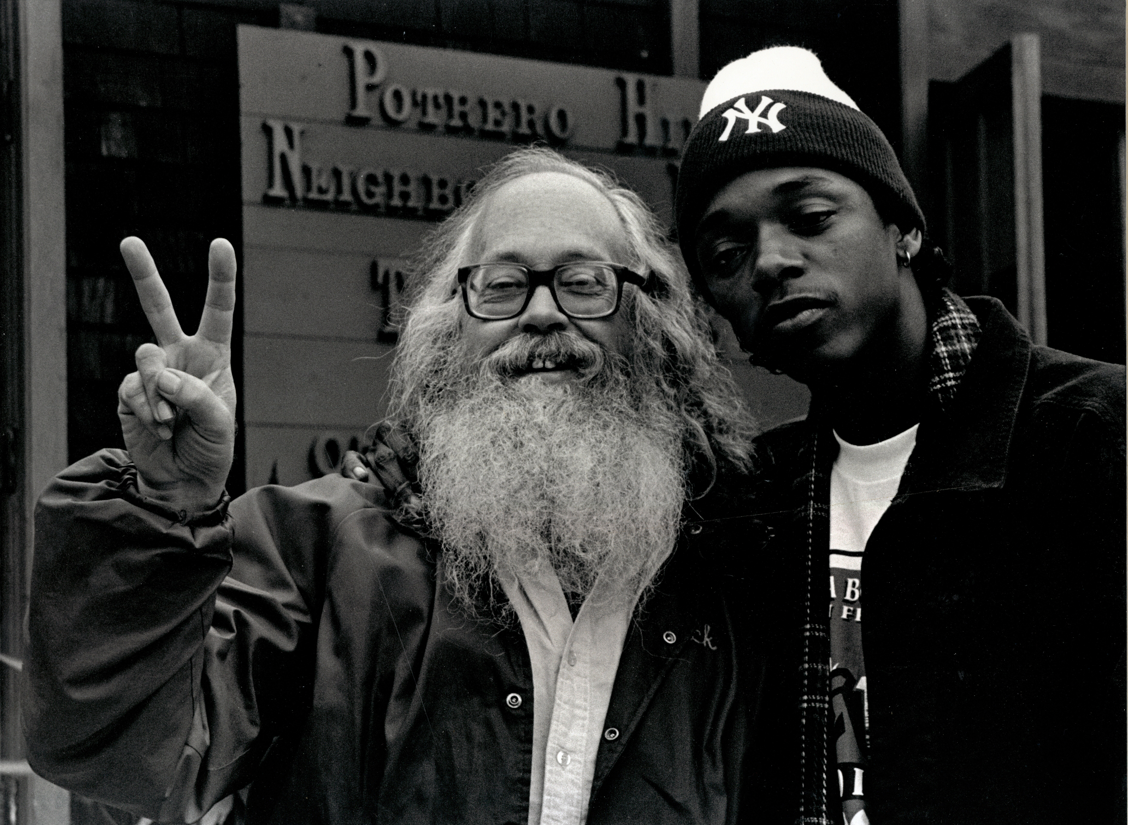
On Potrero Hill, Jack Jacqua co-founded the nationally recognized Omega Boys Club/Street Soldiers (now known as Alive and Free) at the Potrero Hill Neighborhood House. Recognizing youth violence as a public health issue, Jacqua and Joseph Marshall—who was honored with the 2006 SFF Community Leadership Award and is a MacArthur Fellow—expanded their focus beyond tutoring and basketball. They developed effective strategies that guided youth toward socially constructive alternatives to violence. One notable initiative involved organizing annual tours for groups of teenagers to historically black colleges and universities (HBCUs), providing them with exposure to educational opportunities and positive role models. Photo: Fred Mertz, SFF archives.
Potrero HillFellows: Jon Greenberg, Potrero Hill Recreation Center; Barbara Gregory; Jack Jacqua, Omega Boys Club; Enola Maxwell, Potrero Hill Neighborhood House; John Murphy; Ruth Passen, Potrero Hill Neighborhood House; Gus Portocarrero, John O’Connell High School.
1985 Visitacion Valley (San Francisco)
Lifting Up Our Youth: A Safe and Supportive Space for Young People
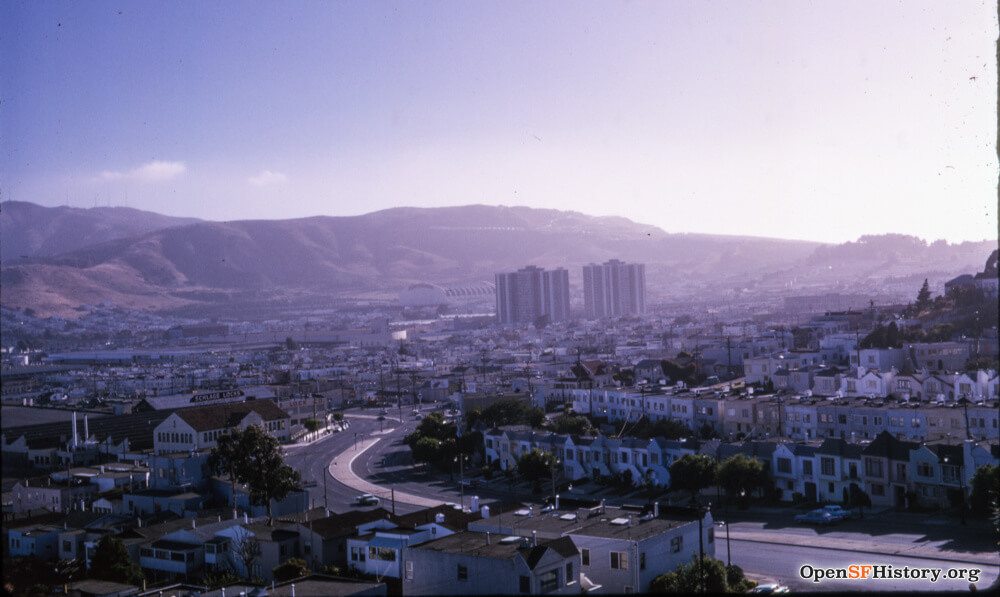
In the 1980s, Visitacion Valley, a diverse working-class San Francisco neighborhood, faces challenges including high crime rates and poverty. Despite these hardships, the community maintains a strong sense of spirit and commitment to improvement. The “Lifting Up Our Youth” program provides a safe and supportive space for young people, contributing to the overall well-being of the community and fostering hope and resilience. Photo: OpenSFHistory/wnp25.2434
Visitacion Valley Fellows: Sam Ho., M.D., HealthAmerica Rockridge Medical Center; Anne Kaartunen, Visitation Includes Parent Strength; Kim Kelly, R.N., HealthAmerica Rockridge Medical Center; Vernon Long, Geneva Towers Recreation Program; Carlos Magana, Coffman Pool Recreation Program; Pastor Jim Pittman, Valley Baptist Church; Toussaint Streat, M.D., HealthAmerica Rockridge Medical Center.
1986
A Unfortunate Pause
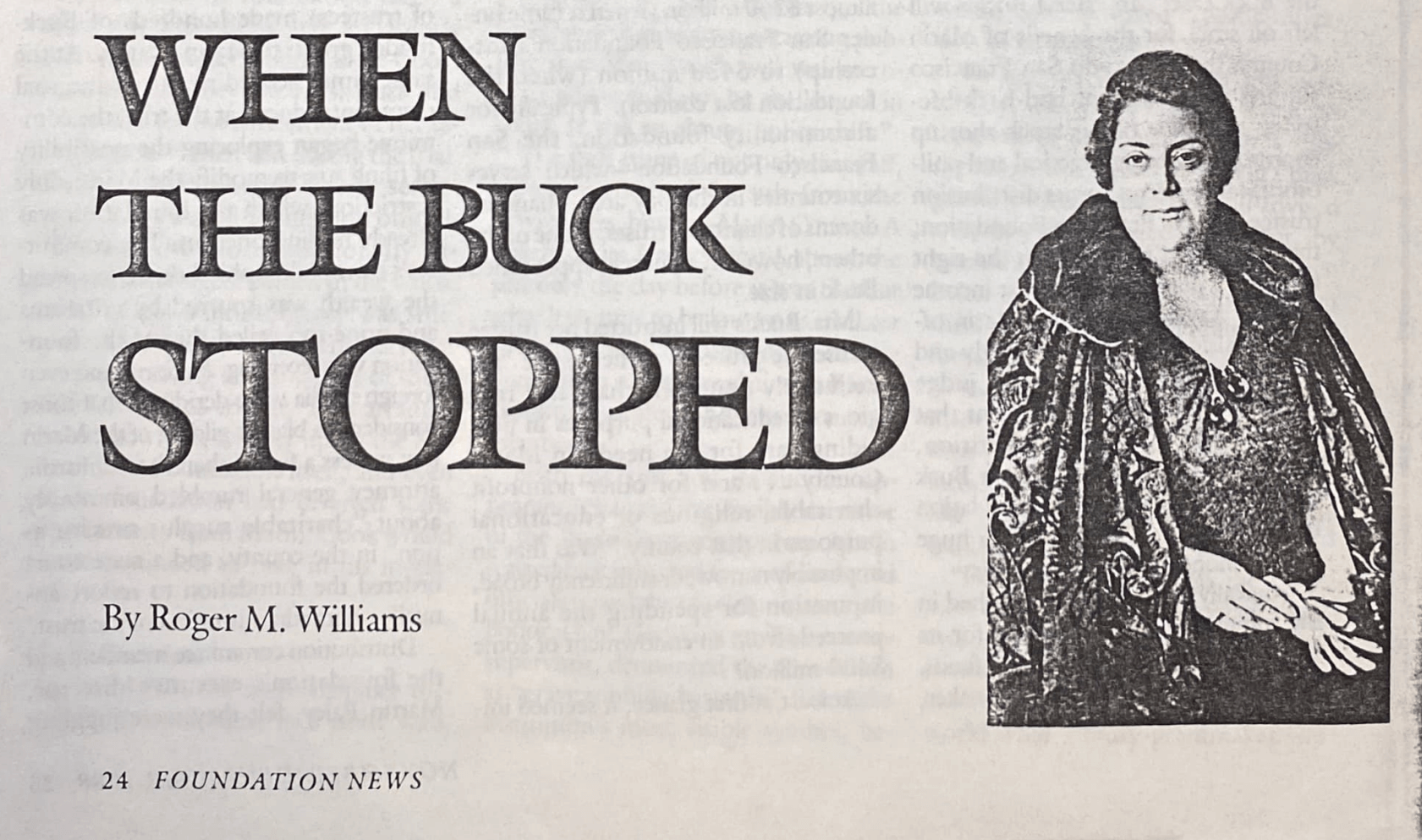
SFF is required to resign the Buck Trust, a donor gift of $360 million, as part of a legal settlement. The Koshland Program is paused, and SFF is forced to lay off numerous staff, including Koshland Program Director Nancy Pietrafasa. The trust, established by Beryl Hamilton Buck in the 1970s, included the stipulation that the funds be used exclusively for organizations within Marin County. In 1979, when the assets of the trust grew exponentially after Buck’s death, SFF leaders sought to modify the trust and direct some of the funds to less affluent Bay Area communities. The attempt failed. Though this is a painful time in SFF’s history, the foundation emerges with a renewed commitment to fulfilling donors’ charitable vision while at the same time advancing social justice in the Bay Area. By 1988, the Koshland Program is back to full stride. Photo: Foundation News, 1988.
1986 Director Arnold Perkins
Arnold Perkins Sharpens the Program’s Focus
After a challenging period for SFF and the Koshland Program, Arnold Perkins, a dedicated community activist with experience in community development, education, criminal justice, and youth development, becomes the program’s second director. A dynamic and inspiring leader who was previously an SFF Multicultural Fellow, he brings new energy and ideas, including a sharper focus on collaboration and community. Under the program’s new structure, which remains in place today, Koshland Fellows are still recognized and receive small monetary awards, but the program’s five-year funding is provided to a single project or organization that the Fellows collectively identify and implement. Photo: SFF archives.
1989-1994 Elmhurst (Oakland)
Individuals Make a Difference: Intergenerational Community Programming
Elmhurst Fellows: Eddie Abrams, Family Resource House of Unity; Henry Allen, Elmhurst Food Pantry; Oral Lee Brown, Realtor; Lonnie Dillard, Housing Advocate; Stanley Garcia, East Oakland Boxing Association; Charles Hill, Economic Opportunity Advocate; Lee Nell Jennings, Castlemont High School; Ira Jinkins, Elmhurst Day Parade Committee; Eddie Mae Jones, Neighborhood Improvement Advocate; Lawrence Joyner, Community Advocate; Henry Perry, Bikes Unlimited; Willie Porter, East Oakland Recovery Center; Armistice Powell, East Oakland Credit Union; Phebia Richardson, Richard Allen Institute; Napoleon Sims, Scoutmaster; James Sweeney III, Neighborhood Revitalization Advocate; Ann Bouie Wilson, Project Interface.
1990s
1990-1995 Tenderloin (San Francisco)
Movers and Shakers Work Together
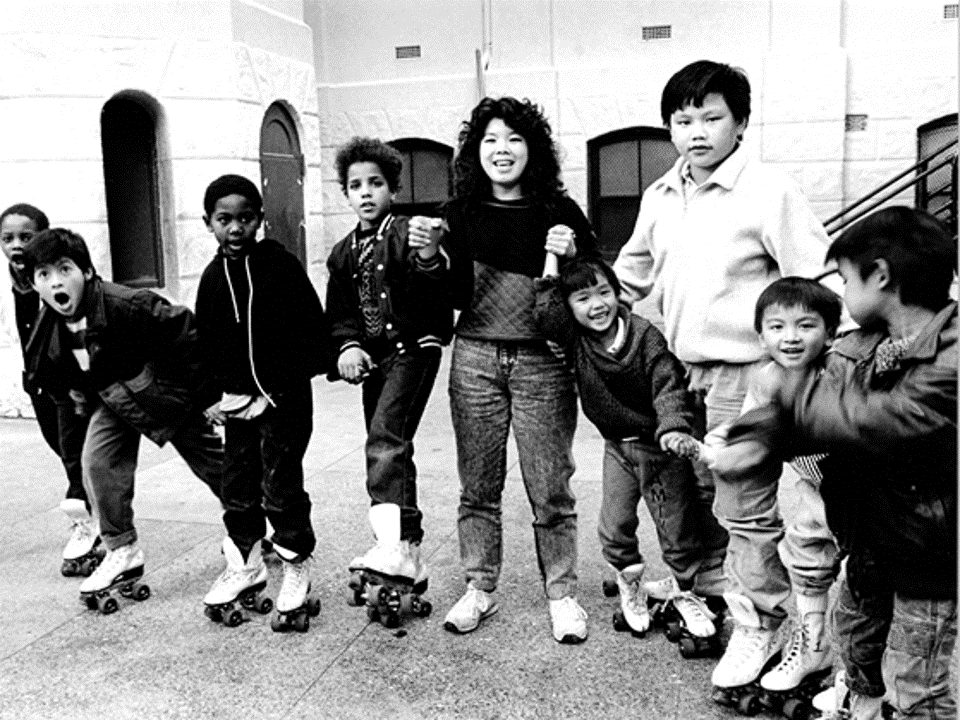
In 1990, the Tenderloin – a neighborhood that had virtually no children residents until the influx of Southeast Vietnamese families in 1975 – suddenly found itself with 5,000 children, no schools, and only one playground. Koshland Fellows founded the Tenderloin Neighborhood Scholarship Fund, ensuring that over 300 low-income students living in the Tenderloin can pursue higher education with college scholarships. Photo of Diane Wong Chin by Kathy Sloane.
Tenderloin Fellows: Puthara Chuop, Vietnamese Youth Development Center; Sara Colm, The Tenderloin Times; Kelly Cullen, Tenderloin Neighborhood Development Corp.; Mary Dickey, Crossing Guard; Keith Grier, Boedekker Park; Louella Lee, Vietnamese Youth Development Center; Richard Livingston, Realty House; Nancy Ong, Bay Area Women’s Resource Center; John Philbrook, San Francisco Public Library; David Tran, Tenderloin Youth Advocates; Midge Wilson, Bay Area Women’s and Children’s Resource Center; Diane Wong Chin, Tenderloin Recreation Center.
1990-1995 West Oakland
Supporting Families Through Schools
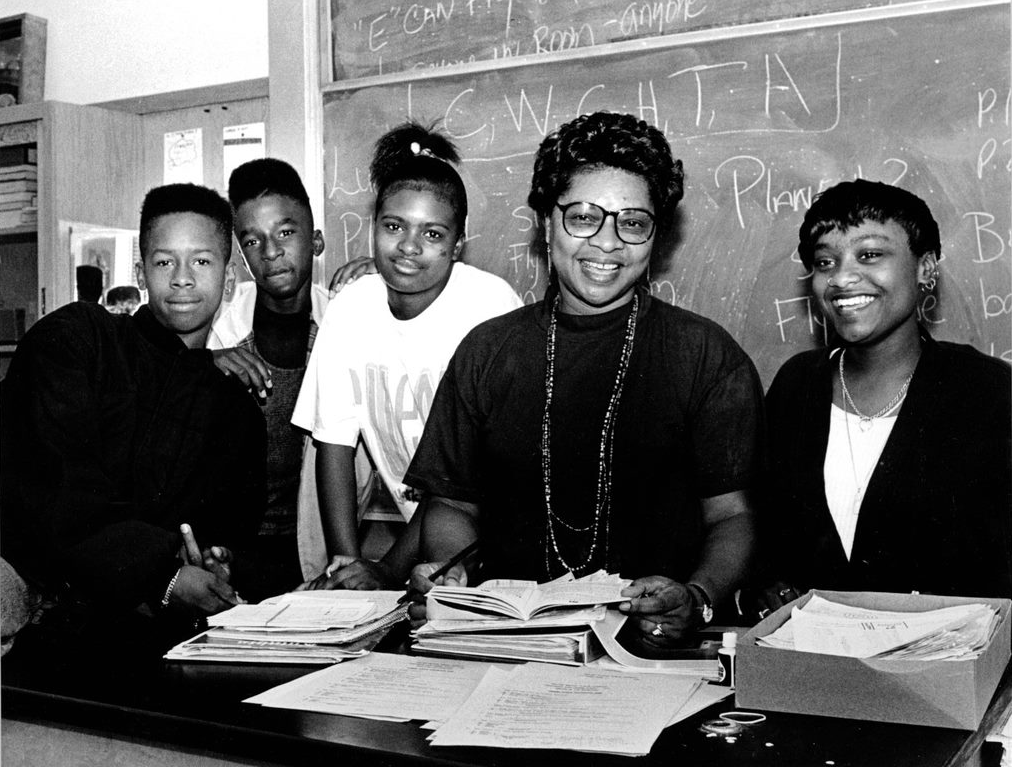
After the Loma Prieta Earthquake of 1989, the Koshland Program supported capacity building to strengthen participating organizations such as Prescott Elementary School, West Oakland Health Center, Stepping Stones Growth Center, and Healthy Babies. Photo of Bonnie Noble by Kathy Sloane.
West Oakland Fellows: Bill Belford, McClymonds High School; Francis Calpotura, Center for Third World Organizing; Maria Distler, Stepping Stones; Robin Edwards; Frances Harris, Crossing Guard; Gurret Lee Hayes; William McDavid, Defremery Recreation Center; Patricia Nelson Doyle, Scotlan Youth & Family Center; Bonnie Noble, Oakland Unified School District; Gayle Quinn, West Oakland Health Center; Majeedah Rahman, Healthy Babies Project; Dr. Isaac Slaughter, West Oakland Health Center.
1990-1994 Koshland Youth Fellowship Program
Investing in Youth
Recognizing the continual need for new leadership, the Koshland Youth Fellowship Program was a one-year leadership and development training program for up to 12 youth ages 16 to 19 years old. The program focused on amplifying the strengths of youth with a commitment to providing them with a wide range of options for the future. The goals of the program were to expand the horizon and visions of each fellow by exposing them to many positive experiences that they would not ordinarily encounter. The fellowship also provided the fellows with the necessary skills to achieve their own goals, and to strengthen their leadership skills to become successful leaders in their communities. “Our youth became lawyers, doctors, teachers, and nurses,” said Perkins. “I think to this day, if you ask any one of them, they’ll tell you that summer and that year made a difference in their lives. It was an outstanding program.” Photo: Koshland Youth Fellows on a trip to the mountains. SFF archives.
Youth Fellows: Jabari Anderson, Mark Anderson, Sonya Bridges, Leybi Cali, Gerardo Campos, Hodari Davenport, Antoine Davis, Benita Davis, Kenan Delgado, Denale Drumgo, Toni Dula, Tyler Eison, Nicole Flowers, Marshell Foggy, Kahlil Greer, Brandy Hamilton, Kaleas Johnson, Samantha Knight, Noukoun Lattanaphom, Keith Lau, Allen Lui, Gia Lujan, Kevin Mangelsdorf, Kenneth Miller, Tamekia Mosley, William Newhouse, Cindy Nguyen, Everett Patton, Bryan Patton, Katie Powell, Miles Scott, Sheryl Simmons, Deanna Simms, Tytus Taylor, Demetria Titus, Tamika Titus, Otmar Van Tholl, Richard Vargas, Shawn Walker, Yeulita Wallace, Michale White, Arthur Williams, Angela Williams, Erika Woodson, Cindy Wu, Henry Zhou.
1991-1996 Mission (San Francisco)
Celebration of Cultures
The Mission District, once primarily Latinx, saw a surge of Southeast Asian immigrants in the late 1970s and 1980s – a result of the Vietnam War and Cambodian genocide. This cultural shift led to challenges, including gang violence. Koshland Fellows launch the “Celebration of Cultures” program to bridge these divides. By supporting youth programs, it offered safe spaces, mentorship, and educational opportunities, helping to combat negative influences and foster a stronger community. Photo of Abby Rodriguez by Kathy Sloane.
Mission Fellows: Ray Balberan, Real Alternatives Program; Esperanza Echavarri, Mission Children & Family Service Center; Martha Estrella, Cesar Chavez School; Johnetta Johnson, Childcare Provider; Abby Rodriguez, Mission Childcare Consortium; Santiago (Sam) Ruiz, Mission Neighborhood Centers; Concha Saucedo, Instituto Familiar De La Raza; Emmanuel Stewart, SF Boys & Girls Club; Collette Sweeney.
1992-1997 Central and North Richmond
Grassroots Leadership
In the 1990s, Central and North Richmond are plagued by HIV/AIDS, drugs, and violence. The “Grassroots Leadership” program empowers residents to address these issues. Through initiatives focused on environmental justice and community development, the Koshland Fellows establish a needle exchange, unite diverse seniors, and implement various environmental programs. These efforts contribute to improved health, social justice, and a more sustainable community. Photo of Bobby Bowens by Kathy Sloane.
Central and North Richmond Fellows: Bobby Bowens, Opportunity West; Richard Bowley, Our Savior Lutheran Church; Henry Clarke, West County Toxics Coalition; Rev. Sheila Cook, Unity Church of Richmond; Robert Creer, East Bay Perinatal Council; Claudette Garner, Healthy Tomorrows; Arthur “Bubba” Godfrey, Neighborhood House of North Richmond; Taalia Hasan, West Contra Costa Youth Service Bureau; Annette Lerma, Familias Unidas; Jackie Marlbrough, Neighborhood House of North Richmond; C.A. Robertson, Richmond Police Activities League; Choy Saephan, Laotian Education Council; Martha Watson, Center for Human Development; Margery “Miss Pie” Woodward, Community Activist.
1993 Director Elaine Lee
Elaine Lee Strengthens the Program
Continuing Arnold Perkins’ work, Elaine Lee becomes the third director of the Koshland Program. Her experience in law and nonprofit management makes her a strong leader and a source of valuable support for program staff, Fellows, and committee members. During her tenure, the Koshland Program launches its first annual newsletter, helping increase awareness of the program and connect awardees. Photo: SFF archives.
1995-2000 Oceanview-Merced-Ingleside – OMI (San Francisco)
We Stand Up, We Fall Down: Keep Your Eye On OMI
Once a middle-class neighborhood, OMI faces challenges including disenfranchised youth and rising crime. In response, Vision 2000, a collaborative initiative, brings together community organizations to address these issues. Through this effort, the community establishes essential services, fosters engagement, and celebrates cultural diversity, improving the overall quality of life. Photo: OMI residents gather to plan the future of their neighborhood, SFF archives.
Oceanview-Merced-Ingleside Fellows: Richard Rubio Bowley, Multicultural Center for Well Being; Toney Chaplin, SFPD; Larry Chew, OMI Community Association; Audrey Davis, Sheridan Elementary School; Darlene Franklin, OMI Community Association; Gil Gordon, Ingleside Community Center; Marcell & Lenneal Henderson, OMI Neighbors in Action; Doris Machen, Machen Center; Ronald Madson,OMI Neighbors in Action; Jim Mayo, OMI Neighbors in Action; Rev. Richard Miller, Our Savior Lutheran Church; Agnes Morton, OMI Wellness Center; Rev. Roland Gordon, Ingleside Presbyterian Church; Robert Sams, Community Activist; Deborah Sims, Jose Ortega Elementary School; Ahimsa Sumchai, OMI Wellness Center; James Threat, SF Park & Rec. Department; Peter Vaernet, OMI Neighbors in Action; Lovie and Minnie Ward, Community Activists.
1996 Memorandum of Understanding
A Promise for the Future
As the Koshland Program evolves and continues to provide valuable community support, Elaine Lee and the Koshland Committee think back to 1986, when the Koshland Program had to be paused due to the loss of the Buck Trust—a very large SFF bequest—and subsequent staff and funding cuts. They work to create a memorandum of understanding (MOU) between the Koshland Committee and SFF’s Board of Trustees, clarifying and defining the relationship between the two and establishing the Koshland Program as an integral part of SFF and a program that will never again be paused. Photo by Ling Woo Liu, SFF archives.
1996- 2001 Chinatown (San Francisco)
Leaving a Legacy: Coming Together to Get Things Done
Poverty and language barriers are prevalent in Chinatown, a historic San Francisco neighborhood. Through initiatives such as technology training for individuals with disabilities and disaster preparedness resources, the cohort seeks to address these issues by empowering residents and serving the diverse needs of the Chinatown community. Photo: SFF archives.
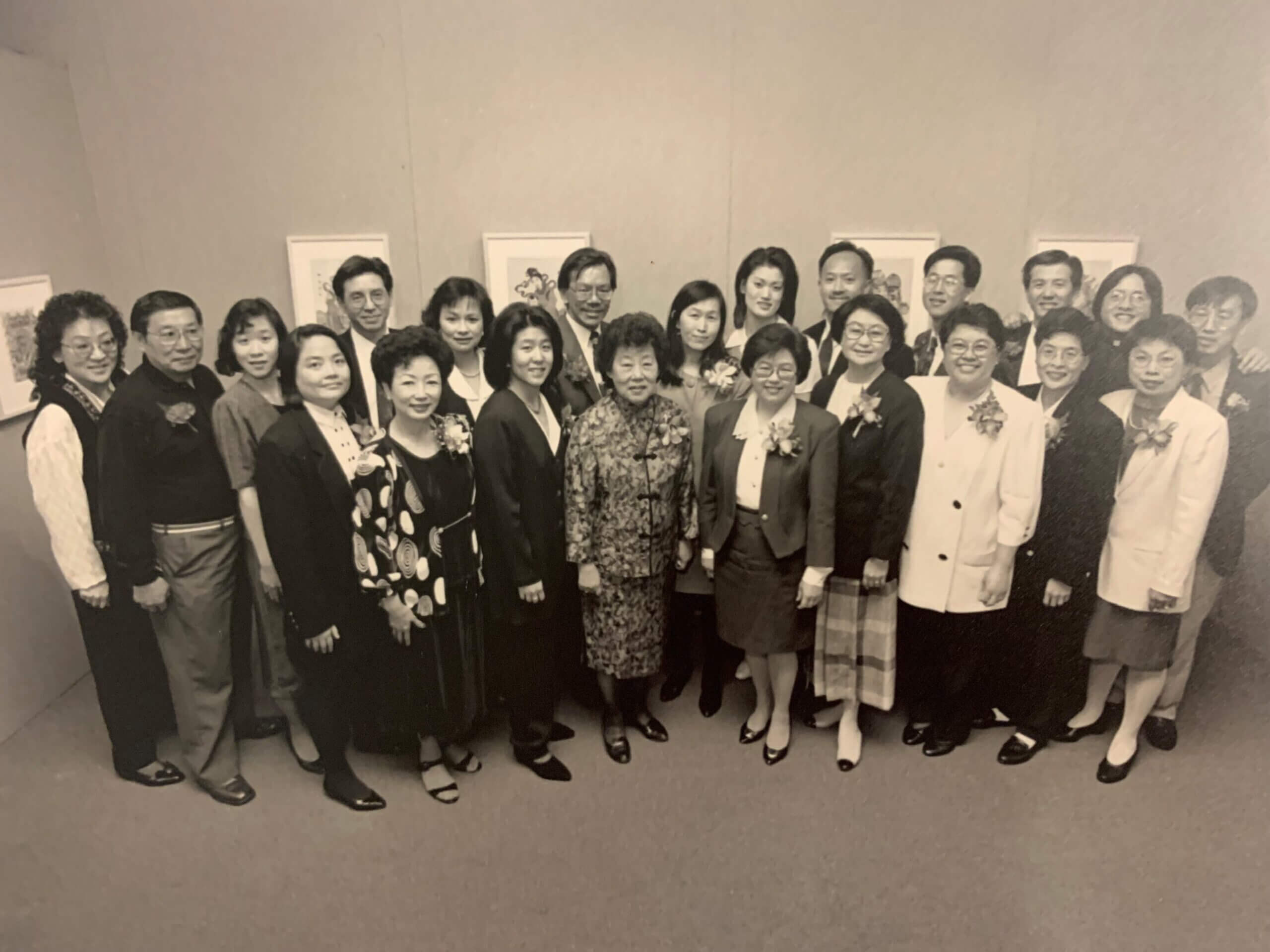
Chinatown Fellows: Vanessa Chan, Asian Women’s Resource Center; Sai-Ling Chan-Sew, Children’s Mental Health Services; Harry Chuck, Cameron House; Norman Fong, Chinatown Resource Center; Mai Mai Ho, Asian Perinatal Advocates; Mei Hom, Chinatown Y Girls Camp; Gilbert Jue, Chinatown Youth Center; Rosalyn Koo, Friends of the Chinatown Library; Marie Lee, Commodore Stockton Children’s Center; Mamie Lee, St Mary’s Chinese School; Kimiko Leong, Chinatown YMCA; Nancy Yim-Lee, Chinatown Child Developoment Center; Harvey Louie, American Cooks School; Peter Ng, Health Center District Four; Darin Ow-Wing, Community Educational Services; Norman Yee, Wu Yee Children’s Services; Greta Yin, Kai Ming Head Start.
1997-2002 San Antonio (Oakland)
Promoting Solidarity, Uplifting Community Leadership
San Antonio is a diverse neighborhood whose challenges include youth violence and cultural clashes. Koshland Fellows play a significant role in addressing these issues through programs supporting at-risk youth, promoting community leadership, and strengthening local businesses. Their involvement helps create a more resilient and vibrant community. Photo: Helen Shor, David Littlecloud Davenport, Mary Biasotti, SFF archives.
San Antonio Fellows: Father Jeff Acebo, St. Anthony’s Church; Rotynia Adams, Mother’s Against Murder & Assault; Mary Biasotti, Harbor House; John K. Chao, Lao Family Community Development; Don “Littlecloud” Davenport, San Antonio Community Development Corp.; Sonia Del Toro, La Clinica De La Raza; Olive Freeman, Harbor House; John Gruntfest, East Lake Merchants Association; Darren Masayesva, American Indian Child Resource Center; Chandy May, East Bay Asian Youth Center; TyRenae McCowan, San Antonio Park Advisory Council; Les Miller, Intertribal Friendship House; Helen Shor, East Bay Asian Local Dvelopement Corp.; San Sun, East Bay Asian Youth Center.
1998-2003 West Boulevard, El Pueblo, Parkside, and Downtown (Pittsburg)
Celebrating Community Diversity
The diverse and growing region of East Contra Costa County faced challenges related to social inequality and cultural preservation. Koshland Fellows’ efforts revitalized the arts and cultural scene. Through the Pittsburg Multicultural Resource Center and various programs, they promoted multicultural relations, supported youth, and provided opportunities for artistic expression. By offering grants, sponsoring events, and supporting mentorship, they empowered individuals and organizations to contribute to the community’s cultural vibrancy and social cohesion. SFF: SFF archives.
West Boulevard, El Pueblo, Parkside and Downtown (Pittsburg) Fellows: Joyce Adams, Keys to Success; Nohemi Beitzel, Latino Family Stress Center; Jeff Bentley, El Pueblo Tenants Council; Jaime Bolanos, Teatro L.O.C.O.S.; Juanita Dailey, Central Jr. High School; Arthur Fernandez, Teatro L.O.C.O.S.; Patricia Firpo, Pittsburg Historical Sociaety; Frances Greene, Pittsburg Preschool Coordinating Council; Raul Herrera, Mentoring Youth at Risk; Paulette Lagana, Community Abatement of Pollution-Industrial Toxins (CAP-IT); James Logan, Delta 2000; Yolanda Marquez, Ujima Family Recovery Services; Guillermo “Bill” Muniz , Restaurateur/Philanthropist; Carmen Aguilar-Ochoa, Give Always to Others; Abigail Perez, Healthy Neighborhood Project; Ruby Raju, Southeast Asian Youth Organization; Dr. Jerry Rice, Dentist; Mary Rocha, Healthy Start Project; Fatima Romera, “Just Ask” Program; Rose Mary Tumbaga, Pacific Community Services, Inc. /Filipino American Organization Dance Troupe.
1999 Director Retha Robinson
Retha Robinson Brings Heart to the Program
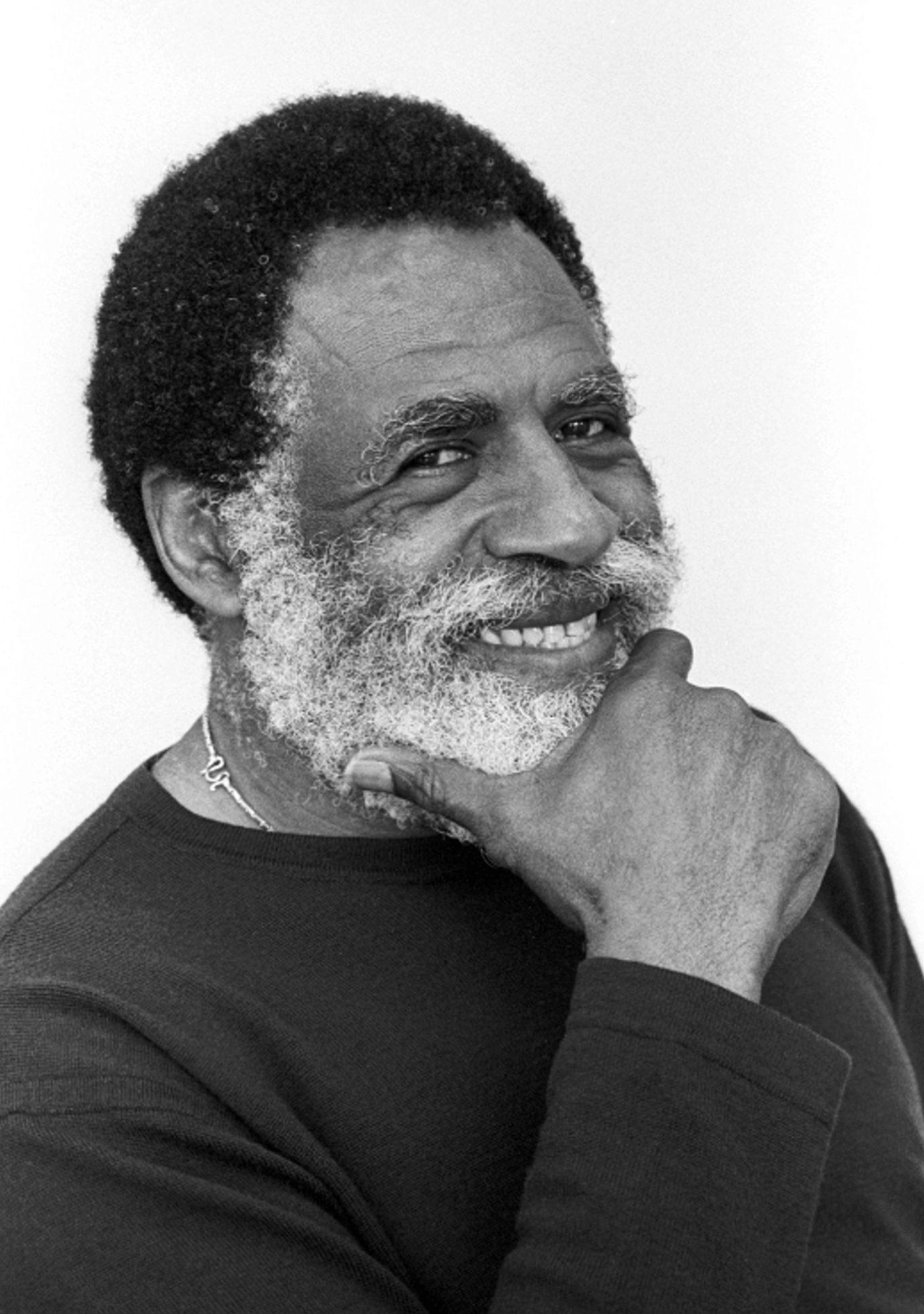
Retha Robinson, an SFF staff member since 1980 and a Koshland Program staff member since 1988, becomes director of the program, a role she continues to hold today. With her extensive knowledge, experience, and skill as a community advocate and collaborator, Robinson oversees the program and supports and celebrates the Fellows with wisdom, guidance, commitment, and warmth. She maintains the program’s commitment to Daniel E. Koshland Sr.’s people-focused style of philanthropy and supporting individuals who are working to make the Bay Area a place where everyone can thrive. Photo by Adriana Oyarzun, SFF archives.
Midway Village, a historically marginalized area, faces significant environmental challenges. With support from the Koshland Program, the cohort establishes programs in local community centers, offering resources to seniors, youth, and families. Initiatives focused on music, computers, and neighborhood beautification improve quality of life, preserve cultural heritage, and promote environmental justice. Photo: SFF archives.
Bayshore Fellows:Irma Anderson, Midway AC; Frank & Leah Berlanga, Crocker Association; Lula & Kenneth Bishop, Midway Village; Mamerto C. (MC) Canlas, Pilipino Bayanian Resource Center; Estella Cirillo, Midway VRA; Nancy Flores, Crocker Association; Carol Forest, Daly City Youth Health Center; Joseph Keh, Bayshore Youth Organization; Kermit Leong, Bayshore Youth Organization; Ivy Mok, BFC/Futures Project; Laura & Edward O’Reilly, Crocker Association; Lorali Palma, Crocker Resident Association; John Pleskach, Bayshore Residents Association; Frances Robinson, Crocker Association; Ruben Urbina, Saddleback Bayshore; LaDonna Williams, Midway Village.
2000s
2000-2005 Canal (San Rafael)
Welcoming Newcomers to the Canal Community
As the Canal neighborhood in San Rafael experiences significant demographic changes, Koshland Fellows play a crucial role in welcoming newcomers and fostering a sense of belonging. Through the Canal Welcome Center—now called the Multicultural Center of Marin—and various programs, Fellows provide essential services and support to immigrants and low-income families, contributing to the social, cultural, economic, and civic well-being of the community. Photo: Canal Fellow Vinh Luu, SFF archives.
CanalFellows: Marjorie Delgadillo, Huckleberry Teen Clinic; David Donery, Pickleweed Park Community Center; Nancy Ducos, The Marin Institute, Programa Conunitario de Alfabetizacion; Kenny Duran, Huckleberry Teen Clinic; J. David Escobar, Marin County Probation Department; Freddy Escobar, Who’s the Man Program, Canal Community Alliance; Mario (Mark) Flores, Canal Community Alliance, Radio Canal; Troy Harris, Canal Community Alliance, Workshop Leader; Cio Hernandez, Women’s Health Services; Ramon Lopez, “400” Canal Street Building; Vinh Luu, Asian Advocacy Project of Catholic Charities; Man Minh Phan, Vietnamese-American Friendship Society of San Rafael, Canal Community Alliance; Evelina Molina, Un Dia Nuevo; John Ortega, Canal Human and Economic Development Association, Vehicles of Change; Carmen Rios-Ramirez, Women’s Health Services; Jeanette Sotomayor, Canal Ministry, Pickleweed Park Community Center; Nancy Travolacci, Bahia Vista Family Center; John Young Jr., Marin County Grassroots Leadership Network.
2001-2006 South of Market (San Francisco)
Residents Unite
San Francisco’s South of Market, or SoMa, neighborhood is home to a vibrant Filipino community threatened by gentrification. Through initiatives like the Resident Organizing and Leadership Program, Koshland Fellows nurture residents as activists, provide resources, and create a platform for community-building. Additionally, they contribute to the growth of SOMCAM, support the annual SoMA Fest, and create “The Southside” newsletter to disseminate information and preserve the neighborhood’s cultural heritage. Photo of Bill Sorro by Kathy Sloane.
South of MarketFellows: Craig Adelman, Tenderloin Neighborhood Development Corp.; Luisa Antonio, Veterans Equity Center; Mary Aylward, Mercy Housing California; Judith Baker, South of Market Child Care, Inc.; Jeanne Batallones, Filipinos for Affirmative Action; Shirley Bierly, Senior Power; Bernadette Borja, Filipin American Development Foundation; Judy Carman, Community Advocate; Jack Davis, SomArts; Patrice Johnson, South of Market Child Care, Inc.; Mary McCue, Yerba Buena Gardens; Ly Nguyen, Oasis, Serving Our Youth and Community; Karen Nolan, South of Market Project Area Committee; Bill Sorro, Mission Housing Development Center; Antoinetta Stadlman, Independent Contractor; Teresa Vergel, Tenants and Owners Development Corp.; Bobbie Washington, Bessie Carmichael Elementary School; Jill Weinberg, Oasis.
2002-2007 West Alameda
Fight the Power
Gentrification and displacement threaten West Alameda, a historically diverse working-class neighborhood, in the early 2000s. Through initiatives like the Share the Wealth Program, Koshland Fellows support local organizations, foster community engagement, and advocate for the neighborhood’s needs. Their efforts contribute to the establishment of Ruby Bridges Elementary School, a significant milestone in West Alameda’s revitalization. Photo of Lester Dixon by Kathy Sloane.
West AlamedaFellows: Tamara Centeno, Even Start Program; Beatriz Cortez, Longfellow Elementary School; Lester Louis Dixon, AC Transit; Dr. Subhan Hatifie, Afghan Cultural Society; Rebecca Holder, Golden Gate Audubon Society; Phil Holt, Alameda Emergency Food Bank; Amanda Kruger, HOME; Vickie Smith, Coalition of Alamedans for Racial Equity; Nielsen Tam, Miller Elementary School; Rev. Michael Yoshii, Buena Vista United Methodist Church.
2003-2008 Monument Corridor (Concord)
Preparing Youth for the Future
“Go Get It” (GGI), an afterschool program in Monument Corridor, Concord, provides academic support and mentorship to youth and their families. It offers college prep, community service, and emergency assistance. GGI also supports families through eviction prevention, immigration assistance, medication purchases, and burial cost coverage. Additionally, it serves seniors, establishes a youth soccer league, and develops leadership for local community groups. Photo of Luz E. Sierra by Kathy Sloane.
Monument CorridorFellows: Benjamin Contreras, Liga Latina; Raquel Diaz, Monument Community Partnership; Diane Kennedy, Outreach Worker; Mary Lou Laubscher, Monument Community Partnership; Virginia Lizarraga, Catholic Charities; Ed Nienow, Harvest House; Ashok S. Patwardhan, Foundation for Understanding and Enhancement; Maria Reyes, Jovenes Unidos a Cristo; Carmen Elena Rodas, Meadow Homes neighborhood action team; Rosalia Salcedo, Oak Grove neighborhood action team; Luz E. Sierra, Cambridge neighborhood action team; Richard Tautuaa, Tongan community center.
2004-2009 Iron Triangle (Richmond)
Preserving Cultural Heritage
The Iron Triangle Legacy Neighborhood Project, created by Koshland Fellows, documented and shared family migrations to Richmond, CA. Historically a shipbuilding and manufacturing center, the Iron Triangle faced challenges like gang violence and poverty. Organizations like Rubicon Programs Inc. provided affordable housing, employment, and other supportive services, contributing to the community’s resilience. Photo of Andre Shumake by Kathy Sloane.
Iron TriangleFellows: Rosa Acosta, West County Toxics Coalition; Faith Chege, Contra Costa County Homeless Youth Continuum Program; Fredrick Franklin, Iron Triangle Neighborhood Collaborative; Sharon Fuller, Ma’at Youth Academy; Susana Garcia, Casa De Esperanza; Arthur Godfrey, Outreach Worker; Michael Henderson, Nevin Community Center; Father Jesus Nieto-Ruiz, St Anthony’s Parish; C.A. Robertson, Richmond Police Activities League; Sang Saephan, United Laotian Community Development; Rev. Andre Shumake, Richmond Improvement Association; Jordan Simmons, East Bay Center for the Performing Arts; John Spradlin, La Perla Mexican Deli; Maryella Warner, Elder Abuse Prevention.
2006-2011 Bayview (San Francisco)
Inspiring Hope and Beautification of Community
Poverty and crime are among the issues facing the Bayview District, a neighborhood long plagued by systemic racism, industrial pollution, and economic exclusion. Through initiatives focused on beautification, arts, and culture, the cohort implements projects like the Bayview Opera House mural and Old Skool Café. These efforts improve the neighborhood’s appearance, create cultural opportunities, and strengthen community bonds. Additionally, the cohort’s work leverages significant funding for new resources like a library. Photo of Diane Gray by Kathy Sloane.
BayviewFellows: Jackie Cohen, 100% College Prep Institute; Barbara S. Glaspie, Visitation Valley Community Resiliency Project; Teresa Goines, Old Skool Café; Diane Gray, 100% College Prep Institute; Misha Olivas, United Playaz; Virgie Patterson-Newman, Reachout for the Rainbow After School; Saniko Togafau, United Playaz; Lydia Vincent-White, Providence Baptist church.
2007-2012 West Berkeley
Youth Navigate Inequities
West Berkeley, a historically diverse working-class neighborhood, faced challenges like economic inequality and educational disparities. The “Youth Navigate Inequities” program empowered young people of color from low-income families. Through collective leadership, service, and a community website, the cohort successfully launched the REALM Charter School, providing educational opportunities for underserved students. By addressing systemic inequities, the cohort helped improve the prospects of young people in West Berkeley and contributed to a more equitable and just community. Photo of Gerardo Marin by Kathy Sloane.
West BerkeleyFellows: Matt Crocker, Youth Minister; Victor Q. Diaz, Principal B. Tech; David Manson, Berkeley Boosters; Gerardo Marin, Farm Fresh Choice; Michael McBride, The Way Christian Center; Belen Pulido Martinez, BOCA; Lamont Snaer, Rosa Parks Elementary School; Ana Traylor Jackson, West Berkeley Foundation.
Koshland Fellows in the unincorporated communities of Ashland and Cherryland funds Dig Deep Farms & Produce to create a vibrant, sustainable local food economy that grows jobs around healthy food, bringing fresh, healthy, affordable, organic produce grown close to home by urban farmers to low-income residents living in Alameda County. Photo of Amparo Ramos by Kathy Sloane.
Ashland/CherrylandFellows: Shanale Allen, Alameda County Dept. of Human Services; Rafael Avendano, Hillside Elementary Boys & Girls Club; Hilary Bass, Alameda County Sheriff’s Office; Susan Beck, Cherryland Community Association; Christen Gray, Team Up for Youth Director; Maria Haro, Cherryland Elementary School; Joann Irons, Ashland Community Center; Alfonso Macedo, New Hope Christian Fellowship; Amparo Ramos, San Lorenzo Unified School District.
2009-2014 North Fair Oaks (Unincorporated Redwood City)
Ensuring A Bright Future for the Next Generation
Koshland Fellows start the North Fair Oaks Youth Initiative (NFOYI), a youth leadership program for 14- to 22-year-olds in North Fair Oaks, in unincorporated Redwood City. Their programs build new leadership opportunities where youth gain the skills and networks to be community leaders and role models for their peers and the entire community. Photo of Cesar Meza Esveile by Kathy Sloane.
North Fair OaksFellows: Vicky Avila-Medrano, Vision y Compromiso; Noel Chavez, Migrant Program; Teri Chin, City of Redwood City/Fair Oaks Community Center; Lydia Cordoza, San Mateo County Sheriffs Office; Lorena Gonzales, County of San Mateo; Sister Christina Heltsley, St. Francis Center; Mary Hofstedt, John W. Gardner Center; Priscilla Jimenez-Pelaez, Fair Oaks School; Salvador Mejia, Community Alliance to Revitalize our Neighborhood (CARON); Cesar Meza-Esveile, North Fair Oaks, Multicultural Institute; Lucia Molina, Garfield School; Silvia Ramirez-Rosales, Peninsula Interfaith Action; Angelica Rodriguez, Community Health Worker.
2010s
2010-2015 San Pablo (Contra Costa)
Connecting Youth and Their Families
San Pablo, a diverse working-class city, faced economic challenges due to the closure of manufacturing plants. The “Request for Proposal” process supported local organizations serving parents, youth, and families. Through this initiative, the cohort funded programs that addressed the community’s specific needs, providing essential resources and support to individuals and families. By fostering collaboration and addressing the needs of vulnerable populations, the cohort contributed to the resilience and vitality of the San Pablo community. Photo of Khammany Mathavonsgy by Kathy Sloane.
San PabloFellows: Humberto Alvarez, San Pablo Police Dept.; Joseph Camacho, Their Angels; Gladys Garza, Brookside Community Health Center; LaZena Jones, Walter T. Helms Middle School; Khammany Mathavongsy, Center for Laos Studies; Mayra Padilla, Metas Program/HSI Stem; Lisa Raffel, Catholic Charities of the East Bay; Maria Resendiz, Bay Area Community Resources; Alexina Rojas, West County First 5 Center; Gonzalo Rucobo, Bay Area Peacekeepers Inc; Meuy (May) Yong Saephan, Lao Family Community Development Inc.; James Solis, Studio Solis Martial Arts; Nancy Thome, City of San Pablo, Youth Services; Robert Turner, 21st Century Mentors Foundation; Norma Valdez-Jimenez, Puente Project.
2011-2016 Excelsior (San Francisco)
Equitable Opportunities
The “Equitable Opportunities” program seeks to address issues such as economic inequality and changing demographics in the Excelsior neighborhood, a historically working-class San Francisco neighborhood. Through Excelsior Works!, the program provides educational and career opportunities for young people, helping to prepare them for success and improve the overall well-being of the Excelsior community. Photo of Terrance Valen by Kathy Sloane.
ExcelsiorFellows: Paulo Acosta Cabezas, Mama Art Café; Nicole Agbayani, Excelsior Action Group; Jacqueline Chavez, SF District 2 PTA/SFUSD; Joni Tam Chu, Urban Services YMCA-OMI/Excelsior Beacon Center; Rachel Ebora, Bernal Heights Neighborhood Center; Carlton Eichelberger, Boys & Girls Club of SF; Tiffani Johnson, H20 Productions; Rene Luna, Bay Area Scores; Beth Rubenstein, Out of Site Youth Arts Center; Charlie Sciammas, PODER (People Organizing to Demand Environmental& Economic Rights); Alex Tom, Chinese Progressive Association; Terrence “Terry” Valen, Filipino Community Center.
2013-2018 Bay Point (Contra Costa)
Promoting Youth Leadership
Koshland Fellows establish the Bay Point Youth Academy to address economic inequality and crime in Bay Point, a diverse working-class community. Through the Academy, they provide educational opportunities, mentorship, and leadership development programs for young people. By offering extracurricular activities and partnering with community organizations, schools, and the Sheriff’s Department, the Academy helps bridge the opportunity gap, empower youth, and create pathways for educational and career advancement. Photo of Paola Lara by Kathy Sloane.
Bay PointFellows: Lynsie Shatswell Castellano, Riverview Middle School, Mount Diablo Unified School District; Cynthia Garrett, African American Wellness Program/Center For Human Development; Adriana Gomez, ThinK Now; Trina Hudson, Bay Point Municipal Advisory Council; Paola Lara, Opportunity Junction; Deborah Roberts, First A.M.E. Community Church; Rande Ross, Ambrose Recreation & Park District; Jackie Santamaria, Center For Human Development; Jovana Vasquez, Alliance of Californians for Community Empowerment (ACCE).
2014-2019 Jackson Triangle and Harder-Tennyson (South Hayward)*
Career Success and Upward Mobility
Jackson Triangle and Harder-Tennyson, diverse working-class neighborhoods in South Hayward, face economic challenges. The cohort focuses on career success and upward mobility. Through initiatives like the Community Scholarships JTHT Scholarship Fund, Koshland Fellows provide educational opportunities and support to local students, contributing to the overall well-being of the communities and empowering residents. Photo of Jasmine Nakagawa-Wong by Kathy Sloane.
South HaywardFellows: Sonnye Brotherton, School Site Council, Harder Elementary School; Emily Chow, Hayward Promise Neighbohood, California State University, East Bay; Luis Covarrubias, Hayward Unified School District; Carla Dardon, Hayward Day Labor Center; Jason Enrique Arenas, Alameda County Office of Education; Patricia Garcia, Cafe Program, Tiburcio Vasquez Health Center Inc.; Gabriel Hernandez, Hayward Day Labor Center; Teresa Johnson, Hayward Unified School District; Sandra Morales, Eldridge Elementary School; Jasmine Nakagawa-Wong, FACES for the Future, St. Rose Hospital; Sandra Navarro, Tennyson High School; Denize Sanchez, La Familia Counseling Service.
2017-2022 Mission (San Francisco)
We The People – Community-Led Power, Collective Resiliency
Koshland Fellows create the Mission Community Power Institute to address challenges in the Mission District, a historically Latino San Francisco neighborhood, such as rising housing costs and displacement. Through tenant workshops, promotora outreach training, and education on rights and protections, the Institute empowers residents and strengthens the community’s resilience against displacement and gentrification. By advocating for affordable housing and community-led power, the cohort contributes to preserving the Mission’s cultural heritage and ensuring a more equitable future. Photo of Sandra Sandoval by Kathy Sloane.
MissionFellows: Chirag Bhakta, Mission Housing; Nadia Conrad Bick, Jamestown Community Center; Eric Cuentos, Mission Graduates; Marilyn Duran, PODER (People Organizing to Demand Environmental & Economic Rights); Marisela Esparza, San Francisco Immigrant Legal & Education Network; Lara Kiswani, Arab Resource & Organizing Center; Celina Lucero, Horizons; Diana Martinez, Dolores Street Community Services; Lorena Melgarejo, Archdiocese of SF; Dairo Romero, Mission Economic Development Agency; Sandra Sandoval, Lifelong Missionera.
2019-2024 Canal (Marin)
Amplifying Community Leader Voices
Amid significant demographic changes in the Canal neighborhood in San Rafael, the cohort focuses on amplifying the voices of community leaders and empowering residents to take action on issues affecting their neighborhood. Through a two-year pilot program, Koshland Fellows offer leadership training and workshops, equipping residents with the skills and knowledge to engage in community campaigns and initiatives. By focusing on intergenerational experiences and incorporating technology, environmental justice, arts, and community service projects, the cohort helps to build power within the Canal community and create a more equitable and sustainable neighborhood. Photo: Douglas Mundo (far right) of the Canal Welcome Center, SFF archives.
Canal participating organizations and staff advisors: Maite Duran, Alcohol Justice; Balandra Fregoso, Parent Services Project; Douglas Mundo, Multicultural Center of Marin; Wendy Pacheco, Youth Leadership Institute; Samantha Ramirez, Youth Leadership Institute.
2020s
2022-2027 North Central (San Mateo)
Revitalizing the King Center: A Neighborhood Anchor Organization
North Central San Mateo, a historically diverse working-class neighborhood, faced challenges like economic inequality and changing demographics. The cohort focuses on revitalizing the Dr. Martin Luther King Jr. Center, a neighborhood anchor organization. By identifying community needs, building partnerships, and developing strategies for revitalization, the cohort aims to strengthen this important community asset and create a positive impact on North Central. Photo: SFF archives.
North CentralFellows: Giselle Alvarez, Golden Gate Recreational Center; Evelia Chairez, Peninsula Conflict Resolution Center; Noelia Corzo, San Mateo County Superintendent; Adriana Fernandez-Arriga, El Concilio; Charles Hansen, Peninsula Family Services; Amourence Lee, former San Mateo Mayor; Mimi Page, San Mateo Police Activities League; Jennifer Plantenberg, Community Baptist Church of San Mateo; Gladys Privado Pinzon, San Mateo Police Activies League; Reyna Sandoval, Samaritan House; Lisa Tealer, Bay Area Community Health Advisory Council.
2025-2030 Antioch & Pittsburg (East Contra Costa County)
Celebrating Contributions to East Contra Costa County
Antioch and Pittsburg, two historically diverse cities in East Contra Costa County, are facing complex challenges including low educational outcomes, public safety concerns, and a growing unhoused population. At the same time, these communities offer strong opportunities for impact through grassroots leadership, civic engagement, and local momentum for change. The cohort’s focus builds on emerging partnerships with values-aligned elected officials and agencies like the Office of Racial Equity and Social Justice. By supporting community-led solutions and strengthening local infrastructure, this cohort is aimed at achieving long-term progress in Antioch and Pittsburg. Photo: SFF archives.
Antioch & PittsburgFellows: Tonya Amos, Grown Women Dance Collective; Delon Craft, STS Academy; Carol Dorham-Kelly, Rubicon Programs; Gigi Crowder, NAMI Contra Costa; William Goodwin, Hope Solutions; Ray Harts, Healthy Hearts; Dennisha Marsh, PAAACT; Willie Moffet, Jr., Pittsburg Youth Development Center; Deborah Polk, Reading Advantage Inc.; Taylor Sims, RCF Connects; Terron Ward, Wardboy Project; Shamawn Wright, Bridge Builders for the New Generation.
For 75 years, the Bay Area has trusted the San Francisco Foundation to do what is necessary to help our region meet the day’s challenges. Our impact is only possible because of our partnership with community members like you.
Read the full letter from our CEO and Board Chair
Dear Friends of SFF,
Our community-driven vision unites people and organizations across the Bay Area to create a racially just and economically inclusive Bay Area. This unity and passion were palpable at our VOICE event this summer where we invited grantee partners to share their perspectives on our work and discuss what is next for the Bay Area. The room was packed, and it was humbling to be surrounded by so many leaders who are doing the hard work to create a Bay Area where all can thrive.
For 75 years, the Bay Area has trusted the San Francisco Foundation to do what is necessary to help our region meet the day’s challenges. Our impact is only possible because of our partnership with community members like you.
In 1952, SFF provided critical seed funding to help launch KQED, which became the Bay Area’s widest-reaching public media outlet. In 1968, in the throes of the civil rights movement, SFF helped the NAACP open a new San Francisco branch. Between 1970 and 1981, SFF was the nation’s top funder for LGBTQ2SIA+ organizations and an early funder of organizations such as the San Francisco AIDS Foundation. We also supported the fight against Prop 8, California’s 2008 anti-marriage-equality amendment. In 1982, with an anonymous gift, SFF helped establish BRIDGE Housing, which today remains a leading nonprofit developer of affordable housing. Within days of Trump’s election in 2016, our Rapid Response Fund launched to provide quick-turnaround funding to advance racial equity in the Bay Area through activities including Know-Your-Rights trainings for immigrants. Two days after the Bay Area’s shelter-in-place order in 2020, our COVID-19 Emergency Response Fund started fast-tracking support for communities of color hardest hit by the pandemic and addressing anti-Asian racism related to the pandemic.
Despite ongoing attacks on racial equity – from banning books and rewriting history in Florida, the Supreme Court dismantling affirmative action, or limiting our voting rights – the Bay Area can count on SFF to lean in and support a Bay Area where all can thrive.
We are privileged to partner with so many who are working hard to improve the lives of others and strengthen the Bay Area. In this annual report, we pause to celebrate just a small sample of our achievements. With hundreds of donors and partners, this truly celebrates what we have accomplished together.
From launching new programs to building relationships with donors to collaborating on policy initiatives and beyond, we create systems and practices rooted in equity and community. We’re proving that even hard change is possible.
Realizing our vision will take an unrelenting commitment from all of us. True equity has never existed, but here, in the Bay Area, we can make it real.
Fred Blackwell Chief Executive Officer San Francisco Foundation
Bob Friedman Board Chair SFF Board of Trustees
Highlights
Supporting an Equitable Bay Area
$47.8M
in equity centered program related grants to 434 community organizations
Partnering with Donors
$124M
in grants from SFF fund advisors to 2673 organizations
Investing for Impact
$17M
disbursed through low-interest loans to support affordable housing, sustainable communities, and small businesses
Regional Leadership
5
tools launched to help communities get involved in important equity issues
Strong Returns
Top 10%
10-year annualized returns among endowments and foundations
Going All In on Housing
$90M
in housing related grants since 2019
Collaboration
$23M
invested by partners in our collaborative efforts
Partners
158
partners in our collaborative efforts
Our Leadership
Our vision is community-driven and unites people and organizations across the Bay Area for action, using every tool at our disposal. From making grants to launching programs to collaborating on policy initiatives and beyond, San Francisco Foundation supports systems and practices rooted in equity and community. Together with you, we’re proving that even hard change is possible.
Insisting on Racial Equity
Insisting on Racial Equity
Our north star is advancing racial equity and economic inclusion in the Bay Area. We need equitable solutions for issues rooted in a history of racial exclusion.
Influencing public policy and systems
Influencing Public Policy and Systems
To achieve the scale of change we need to advance equity, we must change the rules of the game. We convene our community, disseminate local research, mobilize stakeholders across the Bay Area, and advocate for comprehensive public policy and systems changes.
Amplifying community voice
Amplifying Community Voice
We work with partners across the region and sectors to build a future that works for everyone. We invest in the power and leadership of communities of color because those most impacted know the best solution.
Bay Area Leads Fund
Last year, SFF donors and community stakeholders contributed $840,000 to support the foundation’s leadership work—from community engagement to advocating for equitable policies.
When underserved communities were on the frontlines of the pandemic, the San Francisco Foundation brought folks together to think about an equitable economic recovery for the entire Bay Area. Regionalism is hard to do in practice, but the foundation functions as a true regional partner. They brought stakeholders from every sector together to envision an equitable and just recovery. They then followed through.
Tomiquia Moss Founder and CEO, All Home
Thank You, Bay Area Leads Fund Donors
Neil Adames
Cyna Alderman
Nathan and Julie Aleman Fund
Anonymous (6)
Karolo Aparicio
Arnold Ventures
Michael Bankert
Ophelia B. Basgal
Jeffery L. Bradach
Jennifer Braun and Raymond J. Ryan Charitable Gift Fund
Brayton Family Charitable Fund
Donna and Ralph Briskin
Family Fund
Callan Family Fund
The Clorox Company
Daffy Charitable Fund
Donahue Fox Family Fund
Michael Duvall and Stephanie Duchene MS Gift
Fire Capital Management
Five Arts Fund
Julia Friedlander
Robert E. Friedman Fund
Friedman/Meyer Fund
Garcia Hamilton & Associates, L.P.
Gibbons-Erdberg Fund
Give Lively Foundation Inc.
Global Impact – Panorama Global Impact Fund
Michael Gold
Google Inc.
Ginnie and Peter Haas, Jr. Fund
Celia Hamman-Cueto
Hearthill Family Foundation
Katie Heil Charitable Fund
Kenneth Hillan and Duncan Robertson
Karla Free Jones
Koshland Innovation Fund
Thuy Kumar
Kvamme Charitable Fund
Dylan Labrie
Justina T Lai
Richard Lau
Ling Woo Liu
Catherine Liu
Joseph F. Mannion
Betsy and Ed McDermott Fund
McNabb Foundation
MUFG Union Bank Foundation
Lora O’Haver and Randy Rae
Osterweis Capital Management, Inc.
Pacific Gas and Electric Company
Laura Pantaleo
Terence Parker and Yolanda Burrell
Pattern Energy Group LP
Janine Paver and Eric Brown
Pinecrest Endowment Fund
Yvette Radford
Angela Rae
Margaret Rhee
Barbara H. Rosston
Salesforce.org
Stephen Schwarz Fund
Kara Shurmantine
Erica Sigal Philanthropic Fund
Allen Simonitsch
Abdi Soltani and Grace Kong
Justin and Sally Steele
Sarah Stein and Michael Cohn Fund
Swinerton Family Fund
Robert and Yvonne Uyeki
VMware Foundation
Shelley Wagers
Kimberly Wicoff
Sheryl L. and Robert R. Wong Fund
John Wu
Yi Zhang
Alex Zylstra
Our Numbers
FY23 Snapshot
Total Assets
$1.7B
Total Grants
$171.4M
Total Contributions & Bequests
$140.4M
Total Assets by Funds
Our Grantmaking
$171.4M
total grant dollars distributed in FY23
2,978
nonprofit organizations supported in FY23
$3.3B
in grants distributed to nonprofits since 1948
Our Equity Agenda
All people living in the Bay Area are economically secure, rooted in vibrant communities, and engaged in civic life.
To achieve our agenda, we focus on three pathways to greater racial equity and economic inclusion: People, Place, and Power. For each pathway we help make community-driven change a reality by making grants, advocating for policy change, exercising leadership, bringing people together, and building community power.
People
People: SFF recognizes the importance of making it easier for people to build financial security and wealth and put their children on a brighter path. We focus on creating just laws and practices, reimagining public safety, building worker power, and building community wealth.
Place
Place: SFF is all in on housing because stable and affordable homes and strong neighborhoods are essential to creating a diverse, vibrant, and thriving Bay Area. We focus on keeping people in their homes, local, regional, and state advocacy, supporting thriving neighborhoods, and preserving trusted local organizations.
Power
Power: From the beginning, SFF has had a proud history of supporting power-building as the underpinning of strong communities and an inclusive democracy. We focus on strengthening grassroots community organizing, developing the next generation of leaders, and promoting voter engagement.
Program Grants
One of the many ways we work toward a more equitable Bay Area is providing grants to organizations aligned to our equity agenda.
Our Program Grants
$47.8M
program grants
80%
program grants headquartered in the five-county Bay Area
80%
of Executive Directors identify as BIPOC**
** Among grantees with race/ethnicity data submitted, FY23
Number of Grants Serving Each County
Stories of Impact
Stories of Impact
People
In support of the ongoing work to reimagine public safety, SFF grantee Young Women’s Freedom Center along with other partner organizations co-hosted a regional convening for Bay Area community leaders and organizations. Attendees learned, collaborated, and built skills related to non-carceral alternatives, increasing public investment in community services, reducing harm, and shrinking the prison industrial complex.
Stories of Impact
Place
The Sogorea Te’ Land Trust, an SFF grantee, secured a long-term lease of unceded territory from the City of Oakland. On this Indigenous land, their Mitiini Numma Youth Program has engaged youth of color on leadership, community, liberation, and ecological learning. Youth participants have tended Native plants and created powerful connections with Indigenous elders, each other, and the land.
Stories of Impact
Power
To fortify strong political voice, SFF grantee Bay Rising and Local Progress co-hosted the first ever Bay Area Progressive Governance Lab. The Lab provided more than 30 values-aligned, local elected officials from five counties with the tools, relationships, and skills to become more powerful and effective leaders in advancing racial and economic justice. The participants – the majority of whom were women of color – learned about leadership, new models of governance, and partnering with social justice organizations to address the Bay Area’s inequities.
Stories of Impact
Arts
Art is a form of cultural expression, identity, and belonging and is key to advancing racial equity and economic inclusion in the Bay Area. San Francisco Foundation has supported artists, arts organizations, and art movements for decades. This year we launched the Bay Area Creative Corps Program (BACC)—in partnership with and funded by the California Arts Council. Uncovering truly impactful solutions requires new ways of working. BACC gives creative change-makers opportunities and resources to reimagine how culture can unlock equitable outcomes for the Bay Area.
Stories of Impact
Rapid Response Fund
This past spring, the Wood Street Commons, Oakland’s largest housing encampment, was razed by city crews. With grant support from SFF’s Rapid Response Fund, grantee Anti Police-Terror Project quickly mobilized to provide essential resources and mental health support to residents and helped organize residents to ensure their safe transition to alternate housing.
Investing in Communities of Color
The vast majority of our equity-focused programmatic grantmaking focuses on advancing our equity agenda and went to organizations serving and led by Black, Indigenous, and people of color. We know that the future they work toward will be better, richer, and more vibrant for all people in the Bay Area.
80%
of Executive Directors identify as BIPOC**
$85,000
average amount for our grants
96%
of grantees served a population that was majority BIPOC**
** Among grantees with race/ethnicity data submitted, FY23
In 2020, our Board of Trustees authorized an additional $10 million in grants focused on power building to strengthen the civic voices of communities of color. Through these grants:
18 organizations entered the second year of the Bese Saka Initiative.
Asian American and Pacific Islander organizations continued their work standing up against anti-Asian hate.
12 organizations launched the Latinx Power Building Initiative and held their first convening this spring.
Policy and Innovation
To realize our vision, we must innovate and change the systems that were put in place to hold back Black, Indigenous, and people of color.
A Powerful Coalition
A Powerful Coalition
With our partners, we are helping build a powerful coalition of California’s leading state and regional housing advocates to ensure that our communities have a powerful voice in shaping policies. We convened affordable housing leaders from the field who are guiding a process to set goals, bridge organizational divides, and tie statewide advocacy more closely to regional and community needs.
Community Voice
Community Voice
The Partnership for the Bay’s Future’s Housing Readiness Report helps communities assess and get involved in their city’s plans to address the affordable housing crisis — with a specific focus on racial equity and economic inclusion. Data is provided on every Bay Area city and county, detailing how the housing crisis impacts our most vulnerable communities and how each city is tackling the housing crisis.
Power of Collaboration
Collaboration across sectors is how we achieve lasting, systemic change. Together with our partners, we lead four collaborative efforts that are tackling challenges to housing, employment, access to transit, and civic participation in the Bay Area. These collaboratives help create large-scale, long-term solutions by allowing funders, donors, government agencies, and nonprofits to pool our resources and expertise.
Great Communities Collaborative
Great Communities Collaborative (GCC) is a multi-sector initiative seeking to create a racially equitable, economically inclusive, and environmentally sustainable Bay Area by working at the intersections of housing, transportation, land use, and climate resilience.
GCC has supported the Canal Policy Working Group, a multi-sector collaborative formed to address the impacts of COVID-19 on communities of color. Building on their success developing bold, equity-focused solutions, they are expanding their efforts to a collaborative approach to critical community issues such as affordable housing and sea level rise.
Hope SF
HOPE SF is a public-private partnership centered on an innovative approach to addressing multi-generational poverty in San Francisco’s most distressed public housing.
Over the past year, HOPE SF has continued its construction work, developed an expansive vision of resident wealth building, and is working with partners on a guaranteed income pilot for resident families. HOPE SF’s small grants program supports resident leaders through grants to programs such as the Loyal Butterflies Women Wellness Empowerment Program which offers wellness activities, self-care training, and space for Butterflies and their children to share joy, develop community, and access mental health support through holistic peer-to-peer healing circles.
Partnership for the Bay’s Future
The Partnership for the Bay’s Future is a collaborative effort to produce and preserve affordable homes and protect tenants, so the Bay Area remains a diverse place where everyone thrives.
PBF develops partnerships between local governments and community-based organizations to co-create housing policies, such as increased tenant protections, that support racial and economic equity and expand community engagement. Over the past year, PBF policy fellows have supported this work by centering community at a base-building event, assisting community-driven development strategies, and holding listening campaigns.
Rework the Bay
ReWork the Bay envisions an equitable Bay Area where everyone has access to quality jobs that allow us to live full lives with security, dignity, and agency.
To empower regional leaders to ensure that communities of color are involved in creating – and benefit from – solutions for workers in the Bay Area, ReWork created the first ever State of Bay Area Workers interactive data tool, which tells a nuanced story about inequities for work and workers in all nine Bay Area Counties.
I’ve been involved in Great Communities Collaborative since I started at The California Endowment 10 years ago. I love this funders space where people are just so willing to roll up their sleeves, learn together, and get things done.”
Craig Martinez Senior Program Manager, The California Endowment
Impact Investment
We invest our assets in alignment with our values and with the goal of generating strong long-term investment results.
38%
of our assets managed by women or people of color, compared to 2% globally
We screen to exclude the following industries in our mission-aligned and short-term pools, as well as in our separately managed accounts in the long-term and endowment pools. Private prisons and predatory lenders are excluded by all managers.
Private Prisons
Predatory Lending
Tobacco
Retailers of Assault Weapons
Fossil Fuels
Thoughtful Stewards
One specific way our investments advance the foundation’s equity agenda is through the diversity of our fund managers. We have worked hard to eliminate implicit biases in how we evaluate and select fund managers. As a result, more of our funds are allocated to investment funds that are majority-owned by women or people of color, growing from 2 to 25 managers since 2016. 38 percent of the foundation’s assets are invested with these firms; whereas only two percent of assets under management globally are overseen by firms that are majority-owned by women or people of color.
Our fund advisors have four investment pools to select from to meet their grantmaking objectives. Each pool screens for certain sectors that hinder our equity agenda.
Bay Area Community Impact Fund (BACIF)
SFF’s Bay Area Community Impact Fund helps make the Bay Area a better and more inclusive place through low-interest loans to community-based organizations that create and preserve jobs, affordable housing, and sustainable communities. As loans are repaid, we recycle capital back into communities by making new investments.
Affordable Homes
Affordable Homes
Through loans to initiatives like Bay’s Future Fund, BACIF invests in local affordable housing solutions. Our $5 million loan to Bay’s Future Fund will help finance a project in San Francisco’s Sunset District to create 89 new affordable homes, including 37 units for unhoused individuals and for veterans and their families. The remaining units will house singles and families earning less than 60% of the area median income.
Sustainable Communities
Sustainable Communities
BACIF lent $2 million to The Unity Council, helping finance the Juntos Fruitvale project in Oakland’s Fruitvale district. The project will renovate and transform the long-vacant Masonic Temple into a three-story, 10,000-square-foot community hub for artists, social entrepreneurs, nonprofits, and local businesses.
Jobs and Small Business Preservation
Jobs and Small Business Preservation
BACIF invests in Bay Area businesses—helping build wealth for people of color-owned business owners and good jobs for community members. BACIF’s $1 million loan to REAL People’s Fund helped get capital into the hands of Something Better Foods—enabling this local, Black-owned business to expand and create more good jobs.
Bacif’s Overall Impact
7,501
affordable homes for families of individuals
44,670
permanent jobs created or retained
838,974
sq. ft. of community non-profit space build or improved
Affordable Homes
Affordable Homes
Through loans to initiatives like Bay’s Future Fund, BACIF invests in local affordable housing solutions. Our $5 million loan to Bay’s Future Fund will help finance a project in San Francisco’s Sunset District to create 89 new affordable homes, including 37 units for unhoused individuals and for veterans and their families. The remaining units will house singles and families earning less than 60% of the area median income.
Sustainable Communities
Sustainable Communities
BACIF lent $2 million to The Unity Council, helping finance the Juntos Fruitvale project in Oakland’s Fruitvale district. The project will renovate and transform the long-vacant Masonic Temple into a three-story, 10,000-square-foot community hub for artists, social entrepreneurs, nonprofits, and local businesses.
Jobs and Small Business Preservation
Jobs and Small Business Preservation
BACIF invests in Bay Area businesses—helping build wealth for people of color-owned business owners and good jobs for community members. BACIF’s $1 million loan to REAL People’s Fund helped get capital into the hands of Something Better Foods—enabling this local, Black-owned business to expand and create more good jobs.
Bacif’s Overall Impact
7,501
affordable homes for families of individuals
44,670
permanent jobs created or retained
838,974
sq. ft. of community non-profit space build or improved
Strategic Partnership
Donors motivated to advance racial justice and economic inclusion in the Bay Area work closely with our team of philanthropic advisors to inform strategies to make their giving more effective. We help donors learn about the greatest challenges facing our community and invest their resources in ways that accelerate shifts toward a more equitable society that benefits everyone.
Donor Story
Joan Levison
Joan Levison is passionate about ensuring seniors with low incomes have a safe place to call home. As the Executive Director of Menorah Park and steward of the Menorah Park Community Impact Fund, and as part of her own racial justice journey, she joined the first cohort of SFF’s Unconscious Whiteness in Philanthropy series to help inform her work. With a fresh perspective that centers community, Joan worked closely with SFF staff that have expertise in housing strategies to allocate $1.8M in donations to SFF-vetted organizations doing the most effective work ensuring seniors thrive in stable, affordable housing.
An Active Community of Donors
At the San Francisco Foundation, we believe that philanthropy can be a force for positive change. We work with hundreds of passionate Bay Area donors to support the causes they care about most. We encourage donors to center marginalized communities and racial equity in their grantmaking. Below are some of the ways SFF supports donors in their philanthropy.
$124.2M
in donor advised fund grants
19%
donor advised fund payout rate
The payout rate, as calculated by the IRS, is the amount that is distributed collectively by our donor advised funds.
54%
of donor advised fund grants went to organizations headquartered in the 5-county Bay Area
Personalized Support
Personalized Support
Philanthropic advisors offer personalized giving recommendations aligned with donor interests and values.
Meeting the Moment
Meeting the Moment
SFF fund advisors have exclusive access to Give Guides with curated giving recommendations and invitations to events throughout the year to learn about solutions to the region’s most urgent needs and crises.
Connection
Connection
SFF connects fund advisors with community leaders, elected officials, and one another through events like donor dialogues, intimate dinners, and larger convenings. Last year, we curated opportunities for learning and action around diverse issues including democracy, housing, and education.
When an inheritance enabled me to substantially up my giving, I turned to Nicole Kyauk and the San Francisco Foundation. I wanted to be a responsible steward of my resources, and I knew that SFF’s expertise would help me get funds to where they were most needed. My longtime interest has been in refugee and immigrant rights. I also wanted to find a way to honor the women who helped care for my mother during a long, debilitating illness. I found a true partner in Nicole and SFF during this round of my learning and giving journey. SFF was a resource for me as I educated myself about pressing issues and connected me to community leaders radically improving the lives of refugees and immigrants, particularly domestic workers and other underserved groups. Following the principles of trust-based philanthropy, we made $1 M in multi-year grants to start.
Anonymous
Personalized Support
Personalized Support
Philanthropic advisors offer personalized giving recommendations aligned with donor interests and values.
Meeting the Moment
Meeting the Moment
SFF fund advisors have exclusive access to Give Guides with curated giving recommendations and invitations to events throughout the year to learn about solutions to the region’s most urgent needs and crises.
Connection
Connection
SFF connects fund advisors with community leaders, elected officials, and one another through events like donor dialogues, intimate dinners, and larger convenings. Last year, we curated opportunities for learning and action around diverse issues including democracy, housing, and education.
When an inheritance enabled me to substantially up my giving, I turned to Nicole Kyauk and the San Francisco Foundation. I wanted to be a responsible steward of my resources, and I knew that SFF’s expertise would help me get funds to where they were most needed. My longtime interest has been in refugee and immigrant rights. I also wanted to find a way to honor the women who helped care for my mother during a long, debilitating illness. I found a true partner in Nicole and SFF during this round of my learning and giving journey. SFF was a resource for me as I educated myself about pressing issues and connected me to community leaders radically improving the lives of refugees and immigrants, particularly domestic workers and other underserved groups. Following the principles of trust-based philanthropy, we made $1 M in multi-year grants to start.
Anonymous
I knew that I wanted the funds in my DAF to be put to work for historically marginalized communities in the City, but I didn’t know how to start. I’m a white donor and can’t always see where my own perspective and experiences limit the possibilities – not only of where the money from my DAF goes, but how I support and build community with the folks of color in San Francisco doing really powerful work. The workshop connected me with important ideas about how my DAF can make a difference, helped me to see how I can change my own behaviors, and put me in contact with other donors who are trying to affect change, too.
Aubrey Mailliard Rawlins SFF DAF holder and workshop participant
The Foundation is grateful for the interest and involvement of professional advisors who refer and support donors to achieve their goals for philanthropy.
In May, Bay Area professional advisors gathered in person to attend SFF’s annual luncheon. This year’s event featured keynote speaker Dr. Sylvia Kwan, Chief Investment Officer at Ellevest, a financial services firm, digital platform, and expert in women’s wealth. Dr. Kwan shared her presentation, Everyone Wins: Building Client Wealth While Reducing Economic Inequality, with 125 attendees.
The Foundation’s Professional Advisors Council provides the foundation with critical feedback and guidance.
Thank You, SFF Donors
We gratefully acknowledge the generous support of the following donors this year. Thank you for sharing our vision to make the Bay Area a better place for all.
Agency Fund Donors
Bethel Heritage Foundation of San Francisco
Buen Dia Family School
Children’s Book Project
Code Tenderloin
Edith P. Merritt Memorial Lecture Fund
George Washington High School Alumni Association
Lyon-Martin Health Services
Metropolitan Community Church of San Francisco
Multidisciplinary Association for Psychedelic Studies
Oakland Promise
PACT (Plan of Action for Challenging Times)
Pt. Reyes Bird Observatory
Raphael House
San Francisco Achievers
San Francisco Boys Chorus
San Francisco Interfaith Council
Sacramento Ballet Association
West Contra Costa Public Education Fund
YWCA of San Francisco & Marin
Corporate and Foundation Donors
Anonymous
Arrow Impact
Bank of America, Charitable Foundation
California Arts Council
Chan Zuckerberg Initiative
City of Oakland, Office of the Mayor
Conrad N. Hilton Foundation
Crankstart
Ford Foundation
Friedman Family Foundation
Funder for a Just Economy
Heising-Simons Foundation
JPMorgan Chase Foundation
Omidyar Network
Silicon Valley Community Foundation
Sobrato Family Foundation
SPARCC
The Annie E. Casey Foundation
The California Endowment
The David & Lucile Packard Foundation
The Grove Foundation
The James Irvine Foundation
The Seed Fund
The Stupski Foundation
Walter & Elise Haas Fund
Wells Fargo Foundation
Weingart Foundation
William + Flora Hewlett Foundation
Y & H Soda Foundation
Investment Performance
We invest our assets in alignment with our values and with the goal of generating strong long-term investment results. Our allocation process leads to long-term success under a variety of market conditions as evidenced by our top-decile 10-year annualized returns among endowments and foundations.
1 Year
3 Years Annualized
5 Years Annualized
10 Years Annualized
Long-Term Donor Advised
8.1%
8.2%
6.6%
7.2%
60% MSCI All Country World / 40% Barclays Agg
9.4%
5.0%
5.4%
6.0%
1 Year
3 Years Annualized
5 Years Annualized
10 Years Annualized
Short-Term Donor Advised
4.1%
1.3%
1.8%
1.3%
U.S. Treasury Bills
3.6%
1.3%
1.6%
1.0%
1 Year
3 Years Annualized
5 Years Annualized
10 Years Annualized
Endowment Pool Assets
8.7%
9.1%
6.9%
7.8%
60% MSCI All Country World / 40% Barclays Agg
9.4%
5.0%
5.4%
6.0%
1 Year
3 Years Annualized
5 Years Annualized
10 Years Annualized
Mission-aligned Investments
8.8%
7.4%
N/A
N/A
60% MSCI All Country World / 40% Barclays Agg
9.4%
5.0%
N/A
N/A
Pools Designed for Varying Grantmaking Objectives
Pool
Designed For
Investment Objectives
Long-Term Pool
Donor advised funds intending to make grants over time.
Seeks long term growth via a diversified portfolio of global stocks, bonds and alternative assets.
Short-Term Pool
The portion of donor advised funds intended for near-term grantmaking.
Seeks to maintain the real value of contributions by matching or exceeding inflation while avoiding exposure to more volatile asset classes such as equities and alternative investments.
Endowment Pool
Permanent funds intended to maintain grantmaking power in perpetuity.
The target inflation-adjusted return is consistent with our annual distribution rate of approximately 5 percent.
Mission-Aligned Investments Pool
Donor advised funds intending to make grants over time.
Funds are invested with a values-based approach that aligns with the foundation’s commitment to racial equity and economic inclusion. Seeks long term growth via a diversified portfolio of global stocks, bonds and alternative assets.
Inside SFF
Equity, inclusion, and diversity are core to our ability to make a difference across the region. We are grateful to the diverse team that helps make our community-driven philanthropy possible.
Percent of Staff Who Identify as People of Color*
Staff
25%
Asian/Asian Pacific Islander
25%
Black/African-American
24%
Latino/a/x/e or Hispanic
2%
Middle Eastern/North African
15%
Multiracial or Multi-ethnic
1%
Native American, Alaska Native, or Indigenous
1%
Native Hawaiian/Pacific Islander
36%
White
Board
18%
Asian/Asian Pacific Islander
36%
Black/African-American
9%
Latino/a/x/e or Hispanic
9%
Middle Eastern/North African
9%
Multiracial or Multi-ethnic
0%
Native American, Alaska Native, or Indigenous
0%
Native Hawaiian/Pacific Islander
36%
White
*Respondents were invited to select all races/ethnicities that applied. Percentages sum to greater than 100%. Multiracial or Multi-ethnic includes individuals who selected Multiracial or Multi-ethnic and individuals who selected two more races/ethnicities.
Photo Credits
Cover: Photo Credit Charles Jones Jr.
Highlights: Photo Courtesy SFF Grantee All Home
Our Equity Agenda: Photo Credit Ryan Sin, Courtesy of Black Organizing Project; Photo Credit Charles Jones Jr.; Photo Courtesy SFF Grantee Young Women’s Freedom Center; Photo Courtesy SFF Grantee Sogorea Te’ Land Trust; Photo Courtesy SFF Grantee Bay Rising; Photo Credit Marcie Gonzalez; Photo Courtesy SFF Grantee Anti-Police Terror Project; Photo Courtesy PYATOK; Photo Courtesy SFF Grantee The Unity Council; Photo Courtesy Something Better Foods Photos
An Active Community of Donors: Photo Credit Robbie Sweeny; Photo Credit Adriana Oyarzun Photography
I’m not going to sugarcoat it: the past couple years have been tough. From uncertainty about the future of our nation, to ongoing wars and violence globally, to Supreme Court decisions that roll back decades of work on racial equity and reproductive rights — it’s easy to become cynical and fatigued.
The truth is that anything intended to make this a better place for everyone is hard. Anything that challenges the shortcomings and inequalities of the status quo will face resistance. And so, for any change or progress to occur, it will take resolve.
We’ve seen this kind of resolve before.
We see it in our community as grassroots organizers push for policy change, in youth-led movements for social justice, and in the steadfast support and philanthropy of our donors, all pushing us toward a better Bay Area. We see it in our work to maintain our commitment to long-term goals despite challenges or shifting political climates, and we see it in the leadership of our Board of Trustees as they hold us accountable to our North Star of advancing racial equity and economic inclusion, while upholding our core work of promoting philanthropy in the Bay Area.
This resolve is what’s necessary to keep us moving forward in the face of attacks on DEI and affirmative action, of an economy that devalues arts and caretaking, of a housing shortage that keeps too many of our neighbors sleeping on the streets.
It’s on all of us. Together.
When we come together across our different viewpoints, experiences, and passions — as donors, service providers, investors, advocates, staff, and members of the Bay Area community — we can make real change in our region and be a model for the country and the world.
Fred Blackwell Chief Executive Officer San Francisco Foundation
PS: In uncertain times, I often find myself returning to these powerful words from Howard Thurman (a fellow Morehouse College alum):
Keep fresh before me the moments of my High Resolve, that in fair weather or in foul, in good times or in tempests, in the days when the darkness and the foe are nameless or familiar, I may not forget that to which my life is committed.
From For The Inward Journey by Howard Thurman
Highlights
Supporting an Equitable Bay Area
$40.5M
Equity-centered, program related grants to 452 community organizations
Grants from Donor Advised Funds
$147.2M
Grants from donor advised funds to 2,640 organizations
Investing for Impact
$20M
Disbursed through low-interest loans to support affordable housing, sustainable communities, and small businesses
Strong Returns
Top 25%
10-year financial returns among endowments and foundations
Going All In on Housing
$103M
Housing-related grants since 2019
Collaboration
$14.1M
Invested in our collaborative efforts
Partner Organizations
187
Partners in our collaborative efforts
Our Leadership
As a community foundation, bringing people together for action is in our DNA. We work with donors, nonprofits, government agencies, and corporations across the Bay Area to help our communities shape the policies that impact their lives, and to support impactful organizations through effective philanthropy.
In It For Good
In It For Good
Since 1948, Bay Area communities have trusted SFF to do what is right, from our early support of LGBTQ2SIA+ and disability rights to standing up for immigrants and underpaid workers.
Impact at Every Level, Across the Bay
Impact at Every Level, Across the Bay
Our region-wide influence, track record, and deep relationships enable us to work across the Bay, helping our community join together in common cause to make the region-wide, systemic changes we need.
Act for Today and Tomorrow
Act for Today and Tomorrow
With the reach and depth of our grantmaking, we work to fulfill the promise of the Bay Area today and for generations to come. Our collective legacies will have a lasting impact for generations.
Bay Area Leads Fund
Amplify your impact with a gift to SFF’s Bay Area Leads Fund. This fund provides flexible resources to amplify the foundation’s ability to bring community together to shift systems at scale, creating a more inclusive Bay Area. Last year, SFF donors contributed over $1.7 million to support this leadership work.
If we’re really trying to solve community problems at a level of scale that matters, we have to engage in policy and systems work and the advocacy that is necessary to make those changes.
Fred Blackwell
Thank You, Bay Area Leads Fund Donors
Anonymous (10)
Bankert Family Fund
Ophelia Basgal
Anton Batalla
Rachel Benditt
Jennifer Braun and Raymond J. Ryan Charitable Gift Fund
Brickyard Family Fund (C)
Brickyard Family Fund (V)
Bright Funds
Eric Brown and Janine Paver
Callan Family Fund
Couric Family Fund
EMD Fund
Fairy Godmother Society
Fire Capital Impact Fund
Five Arts Fund
Molly Q. Ford
Frances Fund
Eleanor Friedman Fund
Robert E. Friedman Fund
Friedman/Meyer Fund
Garcia Hamilton & Associates, L.P.
Gibbons-Erdberg Fund
Global Impact – Panorama Global Impact Fund
Kalon and Beata Goodrich Fund
Google Inc.
Ginnie and Peter Haas, Jr. Fund
Hearthill Family Foundation
Katie and Christopher Knight
Justina Lai Charitable Fund
Ling Woo Liu
Catherine Liu
Julia Matsudaira
Betsy and Ed McDermott Fund
Osterweis Capital Management, Inc.
Laura Pantaleo
Terence Parker and Yolanda Burrell
Pinecrest Endowment Fund
Roblox
Barbara H. Rosston
Stephen Schwarz Fund
Erica Sigal Philanthropic Fund
Abdi Soltani and Grace Kong
Stanford University
Sally and Justin Steele
Sarah Stein and Michael Cohn Fund
Susan West and Michael Gold
Wolff Family Giving Fund
Sheryl L. and Robert R. Wong
Our Numbers
FY24 Snapshot
Total assets
$1.7B
Total grants
$201.9M
Total contributions & bequests
$108.1M
Total Assets by Funds
Our Grantmaking
$201.9M
Total grant dollars distributed in FY24
3148
Nonprofit organizations supported in FY24
$3.5B
Grants distributed to nonprofits since 1948
Our Equity Agenda
All people living in the Bay Area are economically secure, rooted in vibrant communities, and engaged in civic life.
To achieve this ambitious goal, we focus on three pathways to greater racial equity and economic inclusion: People, Place, and Power. For each pathway we help make community-driven change a reality by making grants, advocating for policy change, exercising leadership, bringing people together, and building community power.
People
People: SFF prioritizes making it easier for people to thrive and prosper. We focus on ending unfair fines and fees, reimagining public safety by addressing the root causes of harm and violence, building the power of essential workers, and supporting cooperative models that advance a sustainable economy.
Place
Place: SFF is all in on housing because stable and affordable homes and strong neighborhoods are essential to creating a diverse, vibrant, and thriving Bay Area. We advocate at all levels to keep people in their homes, support thriving neighborhoods, and preserve trusted local organizations.
Power
Power: SFF supports community power-building as a way to dismantle oppressive systems and advance authentic democracy, redistribution, and reparation. We focus on strengthening grassroots community organizing, developing values-based leaders, promoting civic engagement, and fortifying movement infrastructure to win governing power.
Program Grants
One of the many ways we work toward a more equitable Bay Area is providing grants to organizations working to advance racial equity and economic inclusion.
Our Program Grants
$40.5M
Program grants
75%
Program grants to orgs headquartered in the five-county Bay Area
82%
Executive directors identify as Black, Indigenous, or people of color**
** Among grantees with race/ethnicity data submitted, FY24
Number of Grants Serving Each Bay Area County
Stories of Impact
Stories of Impact
People
In 2018, SFF grantee EBASE and partners passed a ballot measure providing additional protections for hospitality workers and created the Dept. of Workplace & Employment Standards. EBASE and allies then partnered with the City of Oakland to bring these new protections to life. Thanks to advocacy from EBASE and worker leaders, the City of Oakland is now taking action to recover over $400,000 in wages from a hotel for 128 workers.
Stories of Impact
Place
To help build communities where all can thrive, SFF grantee The Unity Council successfully advocated to establish Oakland’s first Latinx Cultural Arts District to celebrate and preserve the richness of the Fruitvale neighborhood and Oakland’s Latinx business owners, artists, and community-based organizations. They also completed Casa Sueños, providing 181 affordable homes in the Fruitvale neighborhood, and are opening Juntos Fruitvale, a renovated space for cultural events and meetings.
Stories of Impact
Power
SFF grantee Faith in Action Bay Area is working with their community of low-income renters and immigrants on important community-identified issues such as housing in San Mateo County. They are working to ensure that those left out of decision-making win the power to advance racial and economic justice. They engage their community through phone banking, door knocking, and direct actions. Over the past year, they have talked to 13,000 low-income, infrequent voters and plan to contact close to 30,000 voters.
Stories of Impact
Arts and Culture
This year we provided nearly $4 million in grants to 29 partners with over 60 Bay Area artists and creative changemakers. Nearly half of these grantees are arts and culture organizations, and the others are a diverse group including health and human services, community organizing, power building, leadership development, and faith-based non-profits. These grants are helping artists support community-informed solutions on issues such as environmental resilience, immigrant and worker rights, and public health.
Investing in Communities of Color
The vast majority of our equity-focused programmatic grantmaking focuses on advancing our equity agenda and went to organizations serving and led by Black, Indigenous, and people of color. We know that the future they work toward will be better and more vibrant for all people in the Bay Area.
82%
Executive directors identify as Black, Indigenous, or people of color**
$71,160
Average amount for our grants
97%
Grantees served a population that was majority Black, Indigenous, or people of color**
** Among grantees with race/ethnicity data submitted, FY24
Highlights from SFF’s work to support communities of color over the past year include:
Supporting organizations to engage the community in a robust discussion of reparations. SFF sponsored CalMatter’s inaugural IdeasFest, where CEO Fred Blackwell was a panelist on Why and How Can California Atone? regarding California reparations.
Supporting PIVOT, a three-year, $25 million fund to strengthen the state’s power-building ecosystem, advance racial justice through year-round voter organizing, and support structural reform in the state.
Supporting GRID Alternatives with a $1.5 million loan to finance commercial clean-energy projects to benefit disinvested communities and tribal nations through community wealth building and workforce development.
Policy and Innovation
To realize our vision, we must innovate and change the systems that were put in place to hold back Black, Indigenous, and people of color.
A Powerful Coalition
A Powerful Coalition
With our partners, we launched the Statewide Housing Advocacy Coalition to help unite a diverse field of housing advocates. We have distributed millions of dollars in grants, which partners are using to increase their housing staff and outreach efforts. The coalition has grown, commissioned research, and is building statewide alliances. Together we are building new coalitions to win housing justice across the state.
Protecting Tenants
Protecting Tenants
Protecting tenants prevents homelessness. SFF was part of a coalition last year supporting the Homelessness Prevention Act, which added requirements for landlords seeking “no fault” evictions (i.e. for the landlord to move in or make renovations) and increasing penalties for those who violate these protections and existing rent increase caps.
Power of Collaboration
Collaboration across sectors is how we will achieve lasting, systemic change. Together with our partners, we lead four collaborative efforts that tackle challenges to housing, employment, access to transit, and civic participation in the Bay Area. These collaboratives allow funders, donors, government agencies, and nonprofits to pool our resources and expertise to craft large-scale, long-term solutions to pressing challenges.
Great Communities Collaborative
Great Communities Collaborative (GCC) works at the intersections of housing, climate resilience, transportation, and land use to create a racially equitable, economically inclusive, and environmentally sustainable Bay Area.
GCC supports five multisector collaboratives that build cooperative approaches to address urgent community priorities. In Marin County, leaders gathered a wide range of nonprofit and public sector leaders to discuss housing. Led by SFF grantee Canal Alliance, this group initiated efforts to create a new countywide, cross-sector coalition focused on affordable housing advocacy and supporting nonprofits at the intersection of housing, transportation, land use, and climate resilience.
Hope SF
HOPE SF is a public-private partnership addressing multi-generational poverty in four public housing communities in the southeast area of San Francisco. HOPE SF centers resident voice to invest in healthy, vibrant, and thriving neighborhoods.
Place to Prosper, our guaranteed income pilot program, will provide $700 per month for two years to 75 HOPE SF residents with children under five. This investment will help residents meet basic needs while creating room for them to breathe, dream, and build wealth over time.
Partnership for the Bay’s Future
The Partnership for the Bay’s Future (PBF) is a collaborative effort to equitably produce and preserve affordable homes and protect tenants.
PBF pairs local governments with community-based organizations to collaboratively develop local housing policies. This helps create trust-based partnerships while ensuring that those most affected by the housing crisis have a seat at the table. During its last grant cycle, PBF helped pass 13 local housing policies, including Antioch‘s Faith Land Policy for Cottage Communities, which allows select faith-based institutions to develop affordable cottage communities on their land.
Rework the Bay
ReWork the Bay works with leaders across sectors to build a diverse and equitable Bay Area where all have quality, empowered employment.
ReWork launched four pilot programs last year that trained over 200 systematically excluded workers in labor law and organizing through existing job training programs. One participant said, “This program gives us ideas of how to better do our jobs with local employers, help create safety plans for the land we tend to at work, and make pitches to employers to ensure their spaces are protected and therefore ours.”
Through our partnership with San Francisco Foundation, we have been able to leverage their strategic approach to philanthropy to amplify our impact. Their commitment to addressing systemic inequalities and fostering community power has been instrumental in driving meaningful change in the Bay Area.”
Charlie Wolfson Executive Director, Arrow Impact
Impact Investing
We invest our assets in alignment with our values and with the goal of generating strong long-term investment results.
36%
Our assets managed by women or people of color, compared to 2% globally
We screen to exclude these industries in our mission-aligned and short-term pools, as well as in our separately managed accounts in the long-term and endowment pools. Private prisons and predatory lenders are excluded by all managers.
Private Prisons
Predatory Lending
Tobacco
Retailers of Assault Weapons
Fossil Fuels
Thoughtful Stewards
One specific way our investments advance the foundation’s equity agenda is through the diversity of our fund managers. We have worked hard to eliminate implicit biases in how we evaluate and select fund managers. As a result, more of our funds are allocated to investment funds that are majority-owned by women or people of color, growing from two to 26 managers since 2016. 36 percent of the foundation’s assets are invested with these firms; whereas only two percent of assets under management globally are overseen by firms that are majority-owned by women or people of color.
Our fund advisors have four investment pools to select from to meet their grantmaking objectives. Each pool screens out certain sectors that hinder equity and opportunity.
Bay Area Community Impact Fund
SFF’s Bay Area Community Impact Fund helps make the Bay Area a better and more inclusive place through low-interest loans to community-based organizations that create and preserve jobs, affordable housing, and sustainable communities. As loans are repaid, we recycle capital back into communities by making new investments.
Affordable Homes
Affordable Homes
With a $2 million loan to East Bay Asian Local Development Corporation (EBALDC), we are helping provide much-needed affordable housing for the Bay Area. With our 10-year loan, EBALDC plans to support the development of 600 affordable housing units for low-income households in Alameda and Contra Costa Counties. This includes 91 affordable housing units on East 12th Street near Lake Merritt in Oakland.
Sustainable Communities
Sustainable Communities
We lent $2.5 million to Freedom West Homes in support of the Freedom West 2.0 project, which will revitalize a four-block area in San Francisco’s Fillmore/Western Addition neighborhood with thousands of housing units, retail spaces, and community-serving amenities. Our loan will help preserve 382 cooperatively-owned, affordable homes and add 133 new affordable homes.
Jobs and Small Business Preservation
Jobs and Small Business Preservation
With a $1.5 million, five-year loan, we are helping GRID Alternatives launch its Energy Resilience Fund. With its deep expertise in building clean-energy projects and strong partnerships with tribal nations, GRID will use this fund to finance commercial clean-energy projects to benefit disinvested communities and tribal nations. The loan will be targeted to Bay Area-based projects and support community wealth building and workforce development.
CUMULATIVE IMPACT*
7,994
Affordable homes for families
53,554
Permanent jobs created or retained
892,315
Sq. ft. of community non-profit space built or improved
Affordable Homes
Affordable Homes
With a $2 million loan to East Bay Asian Local Development Corporation (EBALDC), we are helping provide much-needed affordable housing for the Bay Area. With our 10-year loan, EBALDC plans to support the development of 600 affordable housing units for low-income households in Alameda and Contra Costa Counties. This includes 91 affordable housing units on East 12th Street near Lake Merritt in Oakland.
Sustainable Communities
Sustainable Communities
We lent $2.5 million to Freedom West Homes in support of the Freedom West 2.0 project, which will revitalize a four-block area in San Francisco’s Fillmore/Western Addition neighborhood with thousands of housing units, retail spaces, and community-serving amenities. Our loan will help preserve 382 cooperatively-owned, affordable homes and add 133 new affordable homes.
Jobs and Small Business Preservation
Jobs and Small Business Preservation
With a $1.5 million, five-year loan, we are helping GRID Alternatives launch its Energy Resilience Fund. With its deep expertise in building clean-energy projects and strong partnerships with tribal nations, GRID will use this fund to finance commercial clean-energy projects to benefit disinvested communities and tribal nations. The loan will be targeted to Bay Area-based projects and support community wealth building and workforce development.
CUMULATIVE IMPACT*
7,994
Affordable homes for families
53,554
Permanent jobs created or retained
892,315
Sq. ft. of community non-profit space built or improved
* Impact made in combination with other financing sources. Numbers cumulative to December 31, 2023.
Strategic Partnership
Philanthropists engage with SFF advisors to inform strategies toward more effective giving that are rooted in community, demonstrating a deep commitment to the Bay Area. We connect fund holders with opportunities that address the most urgent challenges facing our community and invest their resources in ways that accelerate shifts toward a more equitable society that benefits everyone.
Donor Story
Koshland Young Leader Awards
Over the past 25 years, SFF donors have supported Koshland Young Leader Awards, which has awarded nearly $1 million to more than 170 young people. These students have overcome hardship and demonstrated excellence through academic performance and leadership. The award gives them a jump start as they enter college.
My partner and I joined SFF because we were seeking a place that not only spoke the language of justice but also illustrated meaningful, material ways in which it was addressing deeply rooted systemic inequities in our society today. We wanted to engage with a donor community that had aspirations and a commitment to do the hard, critical work necessary for societal transformation. We are grateful to have met others at/through SFF who are similarly focused on cultivating more just societies — mobilizing and leveraging what we can.”
Jane Pak SFF donor advised fund advisor
An Active Community of Donors
Philanthropy can be a force for positive change. We work with hundreds of passionate donors to support the causes they care about most.
Our Donor Advised Fund Grants
We support a powerful, bold, and active community of Bay Area philanthropists who make a difference here at home, across the country, and around the world.
$147.2M
Donor advised fund grants
23%
Donor advised fund payout rate
The payout rate, as calculated by the IRS, is the amount that is distributed collectively by our donor advised funds.
51%
Donor advised fund grants went to organizations headquartered in the 5-county Bay Area
Supporting SFF Donors
Our community of donors is passionate about supporting the Bay Area. We partner with donors to fulfill their philanthropic goals, often encouraging giving through an equity lens. Below are some of the ways SFF supports donors in their philanthropy.
Personalized Support
Personalized Support
Fund advisors have access to a philanthropic advisor who offers personalized giving recommendations aligned with your interests and values. SFF’s expert staff curate opportunities for learning and action around the topics most important to fund advisors and around efforts they are involved in.
Connection
Connection
SFF connects fund advisors with other engaged changemakers across our community to learn together and amplify each other’s important efforts. We’re weaving a network that includes diverse perspectives — from grassroots leaders, to elected officials, and local business. We convene conversations in both intimate and big tent settings to foster collective momentum toward uplifting the entire Bay Area.
Meeting the Moment
Meeting the Moment
SFF fund advisors have access to our in-house expertise on both the region’s most urgent needs and crises, and on effective giving practices. We provide a rich resource library of Give Guides with curated giving recommendations to help donors support impactful organizations and collaborations, and we hold timely events throughout the year to help donors engage with the most pressing issues.
Our SFF donor advised fund allowed us to increase our donating power far beyond the capacity of our actual income. We could gift appreciated stock to our SFF fund whenever our stock account rose. What a revelation!
Leslie and Merle Rabine SFF donor advised fund advisors
Personalized Support
Personalized Support
Fund advisors have access to a philanthropic advisor who offers personalized giving recommendations aligned with your interests and values. SFF’s expert staff curate opportunities for learning and action around the topics most important to fund advisors and around efforts they are involved in.
Connection
Connection
SFF connects fund advisors with other engaged changemakers across our community to learn together and amplify each other’s important efforts. We’re weaving a network that includes diverse perspectives — from grassroots leaders, to elected officials, and local business. We convene conversations in both intimate and big tent settings to foster collective momentum toward uplifting the entire Bay Area.
Meeting the Moment
Meeting the Moment
SFF fund advisors have access to our in-house expertise on both the region’s most urgent needs and crises, and on effective giving practices. We provide a rich resource library of Give Guides with curated giving recommendations to help donors support impactful organizations and collaborations, and we hold timely events throughout the year to help donors engage with the most pressing issues.
Our SFF donor advised fund allowed us to increase our donating power far beyond the capacity of our actual income. We could gift appreciated stock to our SFF fund whenever our stock account rose. What a revelation!
Leslie and Merle Rabine SFF donor advised fund advisors
When I was ready to open my own philanthropy fund, SFF was already at the top of the list. After learning more about SFF’s equity agenda, I knew I had found the right home.
Billie Mizell SFF donor advised fund advisor
Connect, Learn, and Act
The energy was palpable and the conversations were rich, as more than 100 individuals attended SFF’s first Bay Area Giving Summit this year. Attendees — who are making a positive difference through their individual giving and investing for impact — came together to connect, learn, and act with one another. Our community shared that they wanted more ways to connect, so we brought folks together around topical dinner conversations, a small group learning lab, and this new summit. Together, we are generating a wave of hope and positive momentum by gathering, sharing insights, and discovering new opportunities for collaboration.
Professional Advisors
SFF works closely with many professional advisors, as they often refer clients to the foundation to help them achieve their philanthropic goals.
Our Professional Advisors Council includes individuals from a variety of disciplines who provide the foundation with critical feedback and guidance. Our Emerging Advisors Network includes early-career professional advisors who work with us to deepen their understanding of the role philanthropy can play in their professional practices.
In May, Bay Area professional advisors gathered in person to attend SFF’s annual luncheon. This year’s topic was Top 5 Things You Need to Know About Multi-Generational Philanthropy and Wealth, presented by Crystal Thompkins, Director of Strategic Impact at Daylight Advisors, and David Ogburn, Senior Client Strategist at BNY Mellon Wealth Management.
Thank You, SFF Donors
We gratefully acknowledge the generous support of the following donors this year. Thank you for sharing our vision to make the Bay Area a better place for all.
Agency Fund Holders
Bethel Heritage Foundation of San Francisco
Buen Dia Family School
California Institute for Regenerative Medicine
Children’s Book Project
Code Tenderloin
Edith P. Merritt Memorial Lecture Fund
George Washington High School Alumni Association
Greater Richmond Interfaith Program
Lyon Martin Health Services
Metropolitan Community Church of San Francisco
Mission Neighborhood Center
Multidisciplinary Association for Psychedelic Studies
Oakland Promise
PACT, Inc.
Patriots Jet Team Foundation
Point Blue
Raphael House
Sacramento Ballet Association
San Francisco Achievers
San Francisco Boys Chorus
San Francisco Interfaith Council
Tenants Together
West Contra Costa Public Education Fund
YWCA Golden Gate Silicon Valley
Corporate and Foundation Donors
Allstate Foundation
Arrow Impact
Bank of America, Charitable Foundation
Chan Zuckerberg Initiative
Charles and Helen Schwab Foundation
Crankstart
Genentech Foundation
Heising-Simons Foundation
JPMorgan Chase Foundation
Menorah Park Community Impact Fund
Meta
Silicon Valley Community Foundation
Sobrato Family Foundation
Stupski Foundation
The California Endowment
The David & Lucile Packard Foundation
The Grove Foundation
The James Irvine Foundation
The Seed Fund
Walter & Elise Haas Fund
Wells Fargo Foundation
William + Flora Hewlett Foundation
Y & H Soda Foundation
Investment Performance
We invest our assets in alignment with our values and with the goal of generating strong long-term investment results. Our allocation process leads to long-term success under a variety of market conditions as evidenced by our top-quartile 10-year annualized returns among endowments and foundations.
10 Years Annualized
5 Years Annualized
3 Years Annualized
1 Year
Long-Term Donor Advised
6.6%
7.3%
1.6%
8.6%
60% MSCI All Country World / 40% Barclays Agg
5.8%
6.5%
2.1%
12.5%
10 Years Annualized
5 Years Annualized
3 Years Annualized
1 Year
Short-Term Donor Advised
1.9%
2.5%
3.2%
6.0%
U.S. Treasury Bills
1.5%
2.2%
3.0%
5.4%
10 Years Annualized
5 Years Annualized
3 Years Annualized
1 Year
Endowment Pool Assets
6.9%
7.7%
1.6%
8.5%
60% MSCI All Country World / 40% Barclays Agg
5.8%
6.5%
2.1%
12.5%
10 Years Annualized
5 Years Annualized
3 Years Annualized
1 Year
Mission-Aligned Investments
8.0%*
7.2%
0.8%
9.4%
60% MSCI All Country World / 40% Barclays Agg
7.3%
6.5%
2.1%
12.5%
* Since inception
Pools Designed for Varying Grantmaking Objectives
Pool
Designed For
Investment Objectives
Long-Term Pool
Donor advised funds intending to make grants over time.
Seeks long term growth via a diversified portfolio of global stocks, bonds, and alternative assets.
Short-Term Pool
The portion of donor advised funds intended for near-term grantmaking.
Seeks to maintain the real value of contributions by matching or exceeding inflation while avoiding exposure to more volatile asset classes such as equities and alternative investments.
Endowment Pool
Permanent funds intended to maintain grantmaking power in perpetuity.
The target inflation-adjusted return is consistent with our annual distribution rate of approximately 5 percent.
Mission-Aligned Investments Pool
Donor advised funds intending to make grants over time.
Uses a values-based approach that aligns with the foundation’s commitment to racial equity and economic inclusion. Seeks long term growth via a diversified portfolio of global stocks, bonds, and alternative assets.
Inside SFF
Equity, inclusion, and diversity are core to our ability to make a difference across the region. We are grateful to the diverse team that helps make our community-driven philanthropy possible.
72%
Staff identifying as people of color
73%
Board identifying as people of color
Staff
25%
Asian/Asian Pacific Islander
22%
Black/African-American
23%
Latino/a/x/e or Hispanic
3%
Middle Eastern/North African
16%
Multiracial or Multi-ethnic
4%
Native American, Alaska Native, or Indigenous
0%
Native Hawaiian/Pacific Islander
37%
White
Board
18%
Asian/Asian Pacific Islander
27%
Black/African-American
18%
Latino/a/x/e or Hispanic
9%
Middle Eastern/North African
9%
Multiracial or Multi-ethnic
0%
Native American, Alaska Native, or Indigenous
0%
Native Hawaiian/Pacific Islander
36%
White
Note: Respondents were invited to select all races/ethnicities that applied. Percentages sum to greater than 100%. Multiracial or Multi-ethnic includes individuals who selected Multiracial or Multi-ethnic and individuals who selected two or more races/ethnicities.
Photo Credits
Cover: Artwork by Alma Landeta
Letter from the CEO: Photo by Adriana Oyarzun Photography
Our Equity Agenda: Photo by Spencer Wilkinson; Photo courtesy of Monument Impact; Photo courtesy of People Power Media; Photo courtesy of EBASE; Photo courtesy of Unity Council; Photo courtesy of Faith in Action Bay Area; Photo courtesy of Marcie Gonzalez; Photo by Angela Hughes; Photo courtesy of Partnership for the Bay’s Future; Photo courtesy of George Barahona, Canal Alliance; Photo courtesy of Partnership for the Bay’s Future; Photo courtesy of North Bay Jobs with Justice; Photo courtesy of Charlie Wolfson, Executive Director, Arrow Impact; Photo courtesy of EBALDC; Photo courtesy of DLR Group; Photo courtesy of GRID Alternatives; Photos courtesy of 2024 KYLA winners; Photo courtesy of Jane Pak
An Active Community of Donors: Photo by Adriana Oyarzun Photography; Photo by Angela Hughes; Photo courtesy of Billie Mizell; Photo courtesy of Leslie & Merle Rabine; Photo by Adriana Oyarzun Photography; Photo by Adriana Oyarzun Photography
Inside SFF: Photo by Adriana Oyarzun Photography
“We want to create a Bay Area where all have good jobs, live in affordable homes, and have strong political voices. This is our vision of what our region could be. The solutions are on the horizon, not in the rearview mirror.”
Fred Blackwell San Francisco Foundation CEO
For nearly 75 years, the San Francisco Foundation has been a trusted partner for donors, grantees, and community leaders who are interested in improving the lives of others and strengthening the Bay Area. Anybody interested in doing good has a place at our table. As a community foundation, we serve the whole region because our lives and our communities are connected.
Together, we can take on issues that are too big for any individual. We can look to the horizon and make the Bay Area better. Last year, thanks to the incredible generosity of our donors, we supported 3,004 organizations with a total of $238.2 million in grants.
Your generosity supported an amazing array of activities such as the arts, housing equity, education, and building a racially just and economically inclusive Bay Area. With the support of our donors and partners, SFF supported the development of Keep Oakland Housed (KOH). Now a stand-alone program, KOH has prevented homelessness for over 7,200 households. This year, KOH was awarded the U.S. Department of Housing and Urban Development’s Secretary’s Award for Public-Philanthropic Partnerships in recognition of its achievements.
Two years ago, we were thrust into a racial reckoning by the murder of George Floyd and a pandemic that brought profound suffering to the Bay Area’s communities of color. Equity was suddenly in every room. Big commitments were made. However, as the world begins to reopen, I am seeing a clear retreat from that moment. People are fighting to remove any discussion of race from our classrooms. Communities of color, who marched in solidarity, are now being pitted against each other. Some leaders are arguing that centering racial equity means we cannot build a big tent.
I stand firm in our commitment to a racially just Bay Area. That commitment was not born of a moment. It was born of the realities our neighbors live. For all of us to thrive, we must focus our efforts on supporting communities that have borne the brunt of our country’s ongoing racial discrimination. We simply cannot leave people behind. This is how we build an inclusive future in which we all have a stake.
We are using every tool we have to reach our North Star. We want to create a Bay Area where all have good jobs, live in affordable homes, and have strong political voices. This is our vision of what our region could be. The solutions are on the horizon, not in the rearview mirror.
Thank you for uniting in a shared vision for a future in which we can all prosper. We are honored to stand shoulder-to-shoulder with you as we embark on the work ahead.
Fred Blackwell CEO, San Francisco Foundation
Artwork at top of page by Ricardo Levins Morales
Highlights
Supporting an Equitable Bay Area
To support our vision for a racially just and economically inclusive Bay Area, we supported 387 community organizations with $46.7 million in grants. Over the past year, in close consultation with Latinx nonprofit leaders, we developed the Latinx Power Building Initiative. This initiative will provide $2.5 million to a cohort of ten Latinx-led and serving organizations over two years to support and strengthen their power-building work.
Partnering with Donors
We helped connect an incredible network of engaged donors to nonprofit organizations that are working tirelessly to make our region a better place. Over the last year, donors supported 2617 organizations with $190.7 million in grants. 54% of grants were made to organizations headquartered in the Bay Area. Following an SFF Donor Dialogue event about the Bay Area housing crisis, one donor made grants of over $700,000 to support the featured organizations.
Investing for Impact
Our Bay Area Community Impact Fund (BACIF) deepened its focus on racial equity and inclusion by closing two new loans totaling $2.4 million for projects that focus on businesses and communities of color. Over the next five years, we will add ~$20 million to BACIF to provide additional low-interest loans to local nonprofits, generating deep impact in priority neighborhoods.
Providing Regional Leadership
We helped our community address the ongoing impacts of the pandemic and continue our work for a recovery that radically reimagines a better reality for all. We brought together regional governments to align to a regional recovery that emphasizes equity.
Convening our Community
Over the past year, we hosted events focused on Black women in leadership and solutions for our housing crisis. We convened a community advisory council, provided trainings to partners on using the Bay Area Equity Atlas, and supported community partners with communications.
Going All in on Housing
In partnership with community, we advocated for policies to prevent evictions, create affordable housing, and address homelessness. We helped win $20 million from the state for a new regional housing entity to pilot new ways to protect tenants along with producing new affordable housing and preserving already affordable housing.
Innovation and Systems Change
To realize our vision, we must move forward with a focus on innovation and changing the systems that were put in place to hold back Black, Brown, and Asian communities. Below are a couple of examples of our approach.
Partnership for the Bay’s Future
The Partnership for the Bay’s Future’s Policy Grant program brings local governments and community partners together to facilitate collaboration and community engagement and co-create more robust, effective, and equitable housing policy.
The Partnership for the Bay’s Future’s Family of Loans brings more than $500 million of catalytic capital to support affordable housing. It takes on the initial risk for creating new loan products that are missing from the market to build affordable housing.
Supporting Housing Statewide
Over 161,000 Californians are experiencing homelessness. Without a solution, our housing crisis will drive up homelessness, slow our economy, and threaten our children’s future. Increasing affordable housing requires regional and state changes and ongoing public funding. SFF is helping to envision and support regional and state coalitions of diverse housing advocacy stakeholders.
Together we will build a stronger, coordinated infrastructure, align our current campaigns, plan for statewide priorities, strengthen connections within and between regions, and increase community voice in affordable housing policy.
Our Leadership
We are committed to using every tool in our toolbelt to achieve lasting change. This past year, we funded research on the pandemic’s inequitable impacts and convened cross-sector decision makers to improve working conditions for low-wage workers and keep families in their homes. We hosted education forums, published voter guides, and advocated for policies that advance racial equity and economic inclusion.
Tenets of our Leadership to Advance Equity
Center communities of color
We supported and celebrated the leadership of women of color in local governments. We commissioned data on the diversity of experience within our region’s Asian American and Pacific Island populations for the Bay Area Equity Atlas.
Influence public policy
Among the issues on which we worked, we co-hosted working groups from the mayors’ offices of San Francisco, San Jose, and Oakland along with community partners to harness the region’s collective power to reimagine and rebuild a Bay Area where everyone can thrive.
Amplify community voice
Over the past year, we worked with a network of community partners to tackle the issues that impact them, including reforming child support so families have the resources they need and increasing access to housing that is affordable.
Bay Area Leads Fund
The Bay Area Leads Fund supports the San Francisco Foundation’s leadership activities to create an equitable Bay Area. We look forward to seeing how we, together, will continue to double down on this work in the year to come.
“If you’re focused on a racial equity agenda, ultimately, you’re going to need to move policy in order to achieve your and objectives and the work is difficult. Engaging people civically, doing the organizing, doing some of the policy influencing work is challenging and it needs to have flexible capital that’s patient and has long timelines.”
Justin Steele SFF Trustee, and Director, Google.org Americas
Thank you, Bay Area Leads Fund Donors
Neil Adames Cyna Alderman Nancy Aldritt Anonymous (8) Karolo Aparicio Atlas Project Alumni Ophelia Basgal The Benevity Community Impact Fund Peter Birke Jeffery Bradach Brickyard Family Fund (A) Brickyard Family Fund (C) Callan Family Fund CharityVest Inc. Satchel Coburn Nancy Conover Charlie and Karen Couric Kerry Davis Meredith Shuey Etherington and Simon Etherington Michael Firth Five Arts Fund Molly Ford Stanley Frazier Robert E. Friedman David A. Friedman and Paulette J. Meyer Gibbons-Erdberg Fund Give Lively Foundation Inc. Valerie Goode Google, Inc. Catherine Gormley Ginnie and Peter Haas, Jr. Fund Trevor Howarth David ibnAle and Mollie Ricker Intuit, Inc. Karla Jones A. Joseph Kane Jodie Karigaca Kyra Kazantzis Thuy Kumar Justina T. Lai Nick Lam Kirsten Laughlin Lawrence Livermore National Lab Toby and Jerry Levine Fund Ling Woo Liu
Michael and Catherine LiuBetsy and Ed McDermott Fund Karl Mill Steven Miyake MUFG Union Bank Foundation Brittany Murlas Next Fund Onward Fund Ruben Orduña and Elizabeth Hill Osterweis Capital Management, Inc. Elizabeth Palmer Laura Pantaleo Terrence Parker/Yolanda Burrell Account Harold Pearce Pelican Fund Pinecrest Endowment Fund Christiaan Prins Progress Investment Management Company Fund Yvette Radford Margaret Rhee Ian Duncan Robertson John and Barbara Rosston William and Joan Roth Fund Rusonis Charitable Fund Khanh Russo Sandra Sarrouf Erica Sigal Philanthropic Fund Rebecca Smith Abdi Soltani Justin and Sally Steele Sarah Stein and Michael Cohn Fund Russell Sterten Semone Sutherland Steven Teraoka Teona Thompson Lizbeth Upitis Robert Uyeki VMware Foundation Karen Weiss Jonathan Wen Sarah White Kimberly Wicoff Janelle Wilson Mary Winton Sheryl L. and Robert R. Wong
Our Numbers
FY22 Snapshot
July 1, 2021 – June 30, 2022
Total Assets:
$1.6B
Total Grants:
$238.2M
Total Contributions & Bequests:
$173.7M
Total Assets by Funds
Our Grantmaking
$238.2M
total grant dollars distributed in FY22
3004
nonprofit organizations supported in FY22
$3.2B
in grants distributed to nonprofits since 1948
Our Program Grants
One of the many ways we invest in a more equitable Bay Area is providing grants to organizations aligned to our equity agenda.
$46.7M
program grants
84%
program grants headquartered in the five-county Bay Area
80%
of Executive Directors identify as BIPOC**
Number of Grants Serving Each County
** Among grantees with race/ethnicity data submitted, FY22
Our Equity Agenda
All people living in the Bay Area are economically secure, rooted in vibrant communities, and engaged in civic life. These are our pathways to racial equity: People, Place, and Power.
For each of our three pathways to racial equity, we make grants, advocate for policies, provide leadership, and bring people together, and build community power to help make community-driven change a reality.
Place
All Bay Area residents should be able to afford to live in neighborhoods where they feel that they belong. Our approach focuses on keeping people in their homes, regional advocacy, supporting thriving neighborhoods, and preserving trusted local organizations.
People
All Bay Area residents should be able to make a good living and build long-term financial well-being for their families and communities. Our approach focuses on creating just laws and practices, reimagining public safety, building worker power, and building community wealth.
Power
All Bay Area residents should have a strong political voice and shape decisions that affect their lives and communities. Our approach focuses on strengthening grassroots community organizing, developing the next generation of leaders, and promoting voter engagement.
Stories of Impact
Click the sections below to read more about some of the work our grantees and partners did last year to advance racial equity and economic inclusion.
People
Beyond the Check
Jobs with Justice San Francisco – an alliance of 30+ organizations focused on workers’ rights – has organized workers for better working conditions, supported undocumented workers with emergency aid, and helped pass critical COVID relief such as paid emergency leave for employees. Read the story
Place
Keeping Tenants in Their Homes
Tenants Together is based in San Francisco but has helped keep Californians across the state in their homes. They have trained tenant organizers to build tenant power and counselors to help tenants access resources. They helped a network of over 50 service provider partners stay up-to-date on the rapidly changing local and statewide eviction protections this year. Read the story
Power
Empowering Young Leaders
Communities United for Restorative Youth Justice (CURYJ) supports youth leaders. Last year, they ran youth empowerment programs, responded to anti-Asian violence, and hosted community meetings focused on reimagining public safety and community-based violence interruption. Read the story
Investing in the Leadership of Communities of Color
This year, we’re proud to report that the vast majority of our equity-focused programmatic grantmaking went to organizations serving and led by Black, Indigenous, and people of color. These communities of color were hardest hit by the COVID-19 pandemic, and our recovery will not be complete if it leaves them behind.
80%
of Executive Directors identify as BIPOC**
$90,000
average amount for our grants
95%
of grantees served a population that was majority BIPOC**
** Among grantees with race/ethnicity data submitted, FY22
In 2020, our Board of Trustees authorized an additional $10 million in grantmaking resources from SFF’s endowment. With these additional resources, we partnered with Black leaders to develop the Bese Saka Initiative, funded Asian American and Pacific Islander organizations standing up against hate, and supported the Latinx Power Fund. These investments are focused on power building to strengthen the civic voices of communities of color.
The communities closest to the problem are also closest to the solution, and we center their voices and vision knowing that the future they work towards will be better, richer, and more vibrant for all people in the Bay Area.
Black Organizing Project is one of the 18 Black-led organizations funded by SFF’s Bese Saka Initiative. Photo by Brooke Anderson.
Supporting a Region Rooted in Arts and Culture
A region’s art institutions are a signifier of the health of its civic society. Art is also a form of cultural expression, of identity, of connection, and belonging to a place. For decades, the San Francisco Foundation has played a pivotal role in launching and supporting arts organizations, individual artists, and art movements that strengthen our sense of belonging and inclusion in the Bay Area. Since launching our Equity Agenda in 2016, our arts work has also become an integral strategy to advance racial equity and economic inclusion in the Bay Area. SFF launched the Artistic Hubs Cohorts to support arts organizations that focus on the intersections of artistic excellence, community access, and social justice. This video features our 3rd Arts Cohort.
Donor Advised Grants Snapshot
As a community foundation, we work with hundreds of passionate Bay Area donors to support causes they care most about.
$190.7M
in donor advised fund grants
27%
donor advised fund payout rate
The payout rate, as calculated by the IRS, is the amount that is distributed collectively by our donor advised funds.
54%
of donor advised fund grants went to organizations headquartered in the 5-county Bay Area
“We chose to work with the San Francisco Foundation because of its focus on racial equity and its expertise in the Bay Area. . . . We didn’t want to be the resistant, white-led foundation with our heads in the sand. We needed to get involved in the fight for racial equity.”
Trustee of a Bay Area family foundation that sought out SFF’s philanthropic advisory services in 2020
SFF Donors Meeting the Moment
Last year we hosted 12 events – exclusively for SFF fund holders – to share solutions to the region’s most urgent needs and respond to current events.
We hosted an event following the tragic events in Afghanistan. SFF donors gave $1 million to support featured organizations.
We hosted an event and published a give guide when the U.S. Supreme Court overturned of Roe v. Wade. SFF donors raised $1 million to protect reproductive rights.
“My friend, Deborah Santana, encouraged me to partner with San Francisco Foundation to create my donor advised fund, The Black Harvest Fund. Black farmers need assistance now more than ever. SFF made the process seamless.”
Natalie Baszile is the author of Queen Sugar and We Are Each Other’s Harvest, and she is founder of The Black Harvest Fund.
Impact Investment
We invest our assets in alignment with our values and with the goal of generating strong long-term investment results. Our fund holders have four investment pools to select from to meet their grantmaking objectives. Each pool screens for certain sectors which hinder our equity agenda.
The number of funds to which we have allocated, that are majority-owned by women or people of color, has increased from 2 to 25 managers since 2016.
37%
of our assets managed by women or people of color, compared to 2% globally
# of Funds Majority-owned by Women or People of Color
Private prisons
Predatory Lending
Tobacco
Retailers of Assault Weapons
Fossil Fuels
We screen to exclude these industries in our mission-aligned and short-term pools, as well as in our separately managed accounts in the long-term and endowment pools. Private prisons and predatory lenders are excluded by all managers.
Bay Area Community Impact Fund (BACIF)
BACIF helps make the Bay Area a better and more inclusive place through low-interest loans to community-based organizations that create and preserve jobs, affordable housing, and sustainable communities. As loans are repaid, new investments are made, recycling capital back into communities.
Affordable Housing
Supported by a loan from BACIF, MEDA (Mission Economic Development Agency) acquired 300 Ocean Ave. in Mission Terrace and will preserve the building as affordable housing in partnership with the City of San Francisco’s innovative Small Sites program. This program keeps in place longtime residents vulnerable to no-fault Ellis Act evictions. 300 Ocean Ave. residents include African American and Latinx households, including families with children and tenants with physical impairments. To ensure these tenants have quality affordable housing, MEDA will address interior and exterior deferred maintenance (e.g., painting and flooring of kitchen and bathroom refurbishment).
Power of Collaboration
Together with our partners, the San Francisco Foundation is tackling challenges to housing, employment, access to transit, and civic participation in the Bay Area. These collaborative efforts allow funders, donors, government agencies, and nonprofits to pool our resources and expertise to create large-scale, long-term solutions. We help lead these collaboratives through convenings, research, community engagement, and administration.
“What has always made the Bay Area so special is its entrepreneurial spirit and its orientation towards progress and justice. . . . We are thrilled to be joining [The Partnership for the Bay’s Future], this diverse coalition of community and faith leaders, advocates, philanthropies, and businesses to support creative and impactful solutions to the housing crisis.”
Priscilla Chan, Co-Founder of the Chan Zuckerberg Initiative
Great Communities Collaborative
Great Communities Collaborative envisions a Bay Area that is comprised of neighborhoods which are healthy, thriving, and affordable to all with a premier transit networks that links communities to opportunities. Collaborative partners include regional policy leaders, community groups, businesses, local and regional government agencies, and funders.
HOPE SF
HOPE SF is centered on an integrated, innovative approach to addressing multigenerational poverty in the most distressed public housing in San Francisco. This public-private partnership is led by our foundation, Enterprise Community Partners, and the City and County of San Francisco.
Partnership for the Bay’s Future
Partnership for the Bay’s Future is a collaborative focused on advancing housing solutions by working to produce, preserve, and protect affordable homes in the Bay Area, and to ensure our region remains a diverse place where all people are welcome and can thrive. Founding partners include the Chan Zuckerberg Initiative, the San Francisco Foundation, the Ford Foundation, and Facebook.
ReWork the Bay
ReWork the Bay is focused on increasing the number of Bay Area residents who have quality, empowered employment which allows people to live and work in place and have the resources to avoid sacrificing one basic need over another. It is a funder-field collaborative that brings together leaders across sectors to build authentic relationships and work towards collective solutions.
“ReWork the Bay was the space I needed, for myself, and with my team, to connect deep community-centered experiences with the movement that’s building in philanthropy. A movement centered on power sharing, collective vision, and thriving communities. Building together is how we get to the deeper impact we envision.”
Camille Llanes-Fontanilla, The Sobrato Foundation
Supporting Our Donors
The San Francisco Foundation supports our donors’ philanthropic vision through a number of funds and investment opportunities. We help our donors make informed, impactful giving decisions.
If you are interested in beginning or updating your philanthropic priorities, you can obtain expert guidance from our Philanthropic Advisors who assist fund holders, including individual donors, families, and representatives of businesses or private foundations. We also offer fee-for-service consulting for philanthropy outside of SFF. As a community foundation we help donors through:
Personalized strategies, giving plans, and recommendations aligned with donor interests
Interactive sessions to help surface common values, priorities, and charitable goals
Information on topics such as best practices in philanthropy, the Bay Area’s most pressing needs, and how to give using the concept of equity as a framework
Your Goal
Our Options
The Benefits
Support the charitable organizations of your choice in a way that’s easy, streamlined, and tax-wise
Set up a Donor Advised Fund
Online portal for convenient grantmaking and tracking of fund balance
We invest your dollars to help your fund grow and maximize your grantmaking
Socially-responsible investment options
Ability to involve family members in giving and learning
Less administration and expense than operating a private family foundation or corporate foundation; privacy as needed
Address the Bay Area’s most critical community needs now and for generations to come
Create or support a permanent endowment fund -or- Establish a Future Fund
A source of ongoing annual income for the charitable causes you care about, presently and after your lifetime to help them navigate uncertain economic times and to ensure sustainability
Flexible giving strategy and timeline that works in tandem with your estate planning process
Recognition of your future gift through our Bay Area Promise Society (optional)
Support SFF’s leadership to create a racially just and economically inclusive Bay Area
Give to SFF’s Bay Area Leads Fund
Easy and strategic way to advance racial equity and economic inclusion in the Bay Area and beyond
Fuel for your community foundation’s leadership to convene community conversations, disseminate local research, elevate resident voices and power, and advocate for public policy and systems changes that lead to significant results
Support SFF’s efforts to provide Bay Area equity focused organization with low-interest, long-term loans (program related investments)
Invest in the Bay Area Community Impact Fund (BACIF)
Available to current SFF fund holders
Increase access to low-interest, long-term loans for Bay Area, equity-focused organizations and projects, particularly in communities of color and focused on affordable housing, economic opportunity, and entrepreneurship of women and people of color.
Align our organizational grantmaking to SFF’s Equity Agenda
Engage with an SFF Funder Collaborative and Initiatives -or- Direct Grantmaking
By joining a funder collaborative, your organization can increase the impact of your grantmaking dollars, strengthen your multi-sector networks, engage in shared learning, and advance your equity goals.
Investment Performance
We invest our assets in alignment with our values and with the goal of generating strong long-term investment results. Our allocation process leads to long-term success under a variety of market conditions as evidenced by our top-decile 10-year annualized returns among endowments and foundations.
Good Stewards Making an Impact
While it was a challenging year for financial markets, each of our four investment pools have outperformed their long-term benchmarks while aligning with our values.
Investment Performance
1 Year
3 Years Annualized
5 Years Annualized
10 Years Annualized
LONG-TERM POOL
Long-Term Donor Advised
-10.5%
6.6%
6.5%
7.7%
60% MSCI All Country World / 40% Barclays Agg
-13.4%
3.7%
4.8%
6.0%
SHORT-TERM POOL
Short-term Donor Advised
-0.4%
0.8%
1.3%
1.0%
U.S. Treasury Bills
-0.2%
0.6%
1.1%
0.6%
ENDOWMENT POOL
Endowment Pool Assets
-11.1%
7.1%
6.9%
8.3%
60% MSCI All Country World / 40% Barclays Agg
-13.4%
3.7%
4.8%
6.0%
MISSION-ALIGNED INVESTMENTS POOL
Mission-aligned Investments
-12.6%
6.2%
N/A
N/A
60% MSCI All Country World / 40% Barclays Agg
-13.4%
3.7%
N/A
N/A
Pools Designed for Varying Grantmaking Objectives
Pool
Designed for
Investment Objectives
Long-Term Pool
Donor advised funds intending to make grants over time.
Seeks long term growth via a diversified portfolio of global stocks, bonds and alternative assets.
Endowment Pool
Permanent funds intended to maintain grantmaking power in perpetuity.
The target inflation-adjusted return is consistent with our annual distribution rate of approximately 5 percent.
Mission-Aligned Investments Pool
Donor advised funds intending to make grants over time.
Funds are invested with a values-based approach that aligns with the foundation’s commitment to racial equity and economic inclusion. Seeks long term growth via a diversified portfolio of global stocks, bonds and alternative assets.
Short-Term Pool
The portion of donor advised funds intended for near-term grantmaking.
Seeks to maintain the real value of contributions by matching or exceeding inflation while avoiding exposure to more volatile asset classes such as equities and alternative investments.
Inside SFF
Equity, inclusion, and diversity are core to our ability to make a difference across the region. We are grateful to the diverse team that helps make community-driven philanthropy possible.
Percent of Staff Who Identify as People of Color*
Staff
Board
*Respondents were invited to select all races/ethnicities that applied. Percentages sum to greater than 100%. Multracial or Mult-ethnic includes individuals who selected Multiracial or Mult-ethnic and individuals who selected two more races/ethnicities.
Learn More About Us
Our Board
Our Staff
Our Diversity Data
Thank you, SFF Donors
We gratefully acknowledge the generous support of the following donors this year. Thank you for sharing our vision to make the Bay Area a better place for all.
Corporate and Foundation Donors
Anonymous Airbnb Inc Arrow Impact Bank of America, Charitable Foundation Chan Zuckerberg Initiative City Of Oakland, Office of the Mayor Friedman Family Foundation Funder for a Just Economy Genentech Foundation JPMorgan Chase Foundation Lisa & Douglas Goldman Fund Omidyar Network Silicon Valley Community Foundation Sobrato Family Foundation SPARCC The Annie E. Casey Foundation The California Endowment The David & Lucile Packard Foundation The Grove Foundation The James Irvine Foundation The Stupski Foundation Walter & Elise Haas Fund Wells Fargo Foundation William + Flora Hewlett Foundation Y & H Soda Foundation
Agency Fund Donors
Bethel Heritage Foundation of San Francisco Buen Dia Family School California Institute for Regenerative Medicine Children’s Book Project Code Tenderloin Edith P. Merritt Memorial Lecture Fund George Washington High School Alumni Association Intercept Poverty Foundation June Jordan School for Equity Lyon-Martin Health Services Metropolitan Community Church of San Francisco Multidisciplinary Association for Psychedelic Studies Oakland Promise PACT (Plan of Action for Challenging Times) Pt. Reyes Bird Observatory Raphael House San Francisco Achievers San Francisco Boys Chorus San Francisco Interfaith Council West Contra Costa Public Education Fund YWCA of San Francisco & Marin
Preventing the Impending Loss of Affordable Housing Across the Region and State
We need to preserve the affordable homes we already have. The loss of affordable housing occurs for various reasons, such as the expiration of affordability protections, the redevelopment of existing rental housing, inadequate maintenance, and the loss of rent-controlled units.
Read More
From 2013 to 2022, San Francisco added 9,285 affordable homes but lost 3,879—a net gain of only 5,406 units. [1] Statewide, 30,000 deed-restricted affordable homes[2] and over 300,000 unsubsidized homes are at risk of being lost, according to estimates by the California Housing Partnership Corporation (CHPC).
The California Department of Housing and Community Development estimates the state has 500,000 subsidized, deed-restricted units. [3] Many were built 30-50 years ago, with regulatory affordability agreements that are set to expire soon. That means that droves of units are at risk of converting to market-rate housing. Units are sometimes also lost when project-based rental assistance contracts with the U.S. Department of Housing and Urban Development are not renewed.[4]
Unsubsidized housing is often affordable to Californians with lower incomes due to its age, location, and physical condition. The number of these units is declining for various reasons, including recent acquisitions of small multi-family developments by large for-profit corporations, as well as the redevelopment of old sites into new, higher-density office and housing projects. Families with lower incomes are displaced as demand from higher-income residents increases housing costs.
Bay Area organizations and jurisdictions can preserve affordable homes through several strategies: creating incentives for developers to keep units affordable when deed restrictions expire by restructuring or selling to a nonprofit sponsor,; providing funding to tenants or nonprofits to purchase housing with the express goal of keeping units affordable; adopting first-right-of-refusal policies that allow tenants and community members to buy housing before it is offered for sale; prioritizing funding for repairing units to keep them habitable; and creating alternative ownership models, such as community land trusts or cooperative housing. Additionally, strengthening and protecting rent-controlled units is a vital preservation strategy.
We support nonprofits in acquiring and rehabilitating affordable homes and pioneering new ownership models, such as land trusts, to make asset- and wealth-building possible for communities of color in the Bay Area.
Tenant-centered preservation
We support tenant-centered preservation, which engages with current tenants and the community to meet their needs when preserving already affordable housing.
Capital, loan products, and expertise
We support efforts to bring additional capital, loan products, and expertise into the effort to preserve housing.
Protecting and improving existing affordable housing
We support policies that protect and improve existing affordable housing.
Preservation in Action
Examples of SFF grantees preserving our affordable housing.
The Martinez family was just one of the many families assisted by Mission Economic Development Agency (MEDA), funded with help from the foundation’s Bay Area Community Impact Fund (BACIF).
Mission Economic Development Agency
Supported by a loan from BACIF, Mission Economic Development Agency (MEDA) acquired 300 Ocean Ave. in Mission Terrace. It will preserve and update the building as affordable housing in partnership with the City of San Francisco’s Small Sites program, which helps longtime residents vulnerable to no-fault Ellis Act evictions stay in their homes. Residents of 300 Ocean Ave. include Black and Latinx households, including families with children and tenants with physical impairments.
HOPE SF
HOPE SF is an integrated and innovative approach to addressing multigenerational poverty in the most distressed public housing in San Francisco. As the nation’s first large-scale, explicitly anti-racist community development initiative, HOPE SF centers resident voices, builds wealth, and supports healthy communities. HOPE SF is about developing vibrant, mixed-income communities at four San Francisco public housing communities without mass displacement of original residents. SFF, Enterprise Community Partners, and the City and County of San Francisco lead this public-private partnership.
SFF initiative Great Communities Collaborative (GCC) supports the Community Ownership for Community Power Fund. This bold $22 million philanthropic initiative brings together community power-building organizations and the expansive funder ecosystem to address the inequitable funding system for California’s community ownership of real estate, land, and housing. Community ownership refers to community-led initiatives such as community land trusts, housing cooperatives, and other shared equity models developed by and for the benefit of residents, not speculative developers or other public and private institutions who often fail to engage community leadership.
Photo of the Imperial Family, Oakland Community Land Trust homeowners.
Oakland Community Land Trust
SFF’s Bay Area Community Impact Fund supported the Oakland Community Land Trust with a $900,000 loan, providing critical early financing to purchase properties with tenants at risk of eviction. These projects make these homes permanently affordable and help Oakland Community Land Trust members transition from being tenants to homeowners. For single-family homes, the Oakland Community Land Trust retains permanent ownership of the land, leases it long-term to the resident, and sells the home to the resident by helping them secure a mortgage.
Examples of policy solutions that create systemic change
SFF supported the Community Anti-Displacement and Preservation Program (CAPP). Without a strategy for preserving existing, unsubsidized affordable housing in California, we are putting at risk thousands of renters who are predominantly people of color with low incomes. CAPP would have provided funding for the acquisition and rehabilitation of unrestricted housing units while attaching long-term affordability restrictions to prevent the displacement of current residents.
SFF-initiative Partnership for the Bay’s Future (PBF) has been active in helping communities develop equitable policies such as Tenant or Community Opportunity to Purchase Acts (TOPA/COPA). TOPA/COPA empowers tenants with options and opportunities when their rental property owner decides to sell. These policies give either tenants or nonprofit housing developers the first chance to purchase rental property and keep homes affordable. Nonprofit organizations will be required to keep the building affordable permanently.
A powerful community of donors is helping provide the deeply needed resources to fuel this work.
Developed by SFF initiative Great Communities Collaborative, Five Ways Philanthropy Can Catalyze Tenant-Centered Housing Preservation helps donors and funders explore housing preservation and community ownership models as strategies to achieve housing equity. It highlights the impact funders can have on the affordable housing preservation ecosystem by funding urgent community needs and providing the patient investment necessary to build long-term systems grounded in racial equity.
Rendering of the 203-unit tower TNDC plans to build at 921 Howard.
The San Francisco Housing Accelerator Fund and SFF helped launch and support the Home for Good Fund. This Fund – which has raised $26 million – allows individual donors and philanthropic investors to help San Francisco families find and keep affordable homes by making short-term bridge loans to community developers. Since launching the Home for Good Fund, HAF has financed 26 projects in San Francisco, producing and preserving over 1,600 affordable units.
In addition to SFF grantees, our whole community is working hard to address our housing needs. Here are some bright spots.
Small Sites Program
The San Francisco Small Sites Program provides acquisition and preservation loans to nonprofit sponsors working to stabilize neighborhoods by converting rent-restricted homes to permanently affordable housing. Sponsors work with existing tenants and ensure that future rent increases are limited to 2% to 3.5% annually.
Preservation of Existing Affordable Housing
HIP Housing, with assistance from the Sand Hill Property Foundation, acquired and rehabilitated a ten-unit apartment building (Rolison Road) in Redwood City, ensuring that the project’s 13 residents would not be displaced. The property had been placed on the market, and tenants faced severe rent increases. Now, it will be restricted to occupancy by households earning 60% of the Area Median Income or below for 55 years.
Preservation of Federally-Assisted At Risk Housing
In 2023, the Housing Authority of the County of Santa Clara purchased two projects (Girasol and Jardines Paloma Blanca) that had fallen into foreclosure. This ensured that 102 senior households could remain in their homes and that rents would continue to be restricted at affordable rates. Many households will also have access to Section 8 Housing Choice Vouchers.
Tenant Right to Purchase (TOPA) and Community Right to Purchase (COPA) Programs
In 2019, the City of San Francisco adopted a Community Right to Purchase program that provides nonprofit organizations a first right of refusal to acquire and preserve multi-family rental housing before it is made available on the open market and to restrict rents in perpetuity. The program then works with tenants to develop cooperative governance and to eventually convert the property to a limited equity cooperative.
Community Conversations
Through op-eds and speaking on panels, SFF is an important part of regional conversations around housing.
White paper, 2022, Great Communities Collaborative
This guide highlights exceptional organizations working to strengthen our democracy in the Bay Area and beyond. These organizations are on the frontlines of protecting voting rights, advocating for fair elections, and empowering communities to participate fully in our democratic processes.
Inside, you’ll find organizations dedicated to:
Ensuring every vote counts: From advocating for voter-friendly policies like the Voter’s Choice Act to expanding access to voting resources for historically marginalized communities, these groups are working tirelessly to remove barriers to voting and increase participation in our elections.
Promoting fair representation: Local and state organizations are leading the charge for innovative reforms like ranked-choice voting, which gives voters more choice and leads to more representative outcomes.
Building power in marginalized communities: Many of the organizations featured here work to empower communities of color, immigrants, and low-income residents to participate fully in civic life and advocate for policies that address their needs.
Holding those in power accountable: By providing legal services, advocating for transparency, and supporting investigative journalism, these organizations work to ensure that our government is truly representative and accountable to the people.
Common Cause Education Fund is a nonpartisan organization dedicated to promoting the core values of American democracy. As the public charity affiliate of California Common Cause, it focuses on creating an open, honest, and accountable government that serves the public interest. The organization uses a variety of tools, including civic engagement, policy research, litigation, and public education, to empower ordinary people to make their voices heard in the democratic process. Common Cause Education Fund has been a leader in monitoring local redistricting processes in California. Its efforts have resulted in more transparent, accessible drawing of district lines across the state.
Donor Center Specifics: Grantee: Common Cause Education Fund Short purpose: to support projects and activities in California.
FairVoteis a nonpartisan organization dedicated to improving elections in the U.S. by researching and promoting voting reforms that enhance democracy’s functionality and representation. It focuses on two main reforms: ranked choice voting (RCV) and the Fair Representation Act. FairVote has been instrumental in the widespread adoption of RCV across the United States. Its efforts have led to RCV becoming the fastest-growing nonpartisan voting reform in the nation.
Donor Center Specifics: Grantee: FairVote Short purpose: for general support.
Vision Change Win is a social justice consulting organization that helps other organizations align with their values and missions through strategic planning, workshops, and facilitation. It specializes in developing racial and economic justice campaigns, enhancing access for LGBTQ+ communities, and providing practical solutions for policy advocacy, community organizing, and direct services. Vision Change Win successfully implemented the “Building Our Own” Electoral Safety Training Series, enhancing the capacity ofelectoral organizers to use comprehensive safety protocols and de-escalation techniques.
Donor Center Specifics:
Grantee: Vision Change Win Fiscal sponsor: Center for Empowered Politics Education Fund Short purpose: to support the Vision Change Win project.
The League of Women Voters Education Fund (LWVEF) is dedicated to encouraging informed and active participation in government. It provides nonpartisan voter education through various initiatives, including the VOTE411.org platform, which offers comprehensive election information such as candidate positions, polling place locations, and ballot details. The LWVEF also organizes candidate forums and debates to help voters make informed decisions. Additionally, the organization works on projects like People Powered Fair Maps to promote fair redistricting and combat gerrymandering. Through these efforts, the LWVEF aims to empower citizens and ensure that all voices are heard in the democratic process.
Donor Center Specifics: Grantee: League of Women Voters Education Fund Short purpose: for general support.
The African Advocacy Network (AAN) is dedicated to ensuring dignity and protection of African and Afro-Caribbean immigrants in the San Francisco Bay Area. AAN offers comprehensive immigration legal services, translation and interpretation support, educational workshops, and community-building initiatives to empower African and Afro-Caribbean immigrants living in the Bay Area. As members of the Immigrant Parent Voting Collaborative, in 2022 they celebrated a significant victory with the permanent extension of noncitizen voting rights in the San Francisco Unified School District elections, empowering immigrant parents to vote in school board decisions.
Donor Center Specifics: Grantee: African Advocacy Network (AAN) Short purpose: for general support.
The Arab Resource and Organizing Center (AROC) is dedicated to fighting for racial and economic justice and the dignity and liberation of Arab and Muslim communities in the San Francisco Bay Area. It provides a centralized space for social services, legal support, and grassroots campaigns to address systemic issues like racism, forced migration, and militarism. A recent victory for AROC includes its successful advocacy against the collaboration between local law enforcement and federal immigration authorities, which led to the termination of a controversial surveillance program targeting immigrant communities.
Donor Center Specifics:
Grantee: Arab Resource and Organizing Center Fiscal sponsor: Tides Center Short purpose: to support the Arab Resource and Organizing Center.
The Asian Law Caucus is the nation’s first legal and civil rights organization serving low-income Asian Pacific American communities. It fights for systemic changes that protect and advance the rights of those most impacted by injustice, including immigrants and refugees. The Asian Law Caucus combines litigation, policy advocacy, and community mobilization to address issues such as housing discrimination, language access, immigration rights, labor trafficking, and criminal justice reform. It was instrumental in advocating for the passage of the California Values Act, which limits cooperation between local law enforcement and federal immigration authorities, protecting immigrant communities from unjust deportations.
Donor Center Specifics:
Grantee: Asian Law Caucus Short purpose: for general support.
The California Immigrant Policy Center (CIPC) is a leading statewide immigrant rights organization that advocates for policies protecting and advancing the rights of immigrants and their families throughout California. Combining policy advocacy, strategic communications, statewide organizing, and regional coalition capacity building, CIPC has played a central role in advancing a progressive statewide immigrant justice agenda for the past 25 years. It has helped pass 30 pro-immigrant laws, including the Safe and Responsible Driver Act and the Health for All initiatives. A recent highlight of their success is the passage of the Health for All 50+ law, which expands healthcare access to undocumented immigrants aged 50 and older, ensuring broader health equity and support for immigrant communities.
Donor Center Specifics:
Grantee: California Immigrant Policy Center Short purpose: for general support.
CARECEN SF is dedicated to empowering Latino, immigrant, and under-resourced families in the San Francisco Bay Area through social services, advocacy, and community building. Rooted in cultural strengths and inspired by Central American justice struggles, it focuses on leadership development and policy impact. In 2023, CARECEN SF’s #CaravanForTheChildren campaign traveled to Central America to meet with President Biden’s Family Reunification Task Force to support the reunification of families separated at the U.S./Mexico border and address the root causes of forced migration.
Donor Center Specifics:
Grantee: Central American Resource Center CARECEN of Northern California Short purpose: for general support.
Centro Legal de la Raza was founded in 1969 and is a leading legal services agency protecting and advancing the rights of low-income immigrants through bilingual legal representation, education, and advocacy.It engages in policy advocacy to promote systemic change, working to improve conditions in immigration detention centers and prevent unjust deportations by curtailing unlawful collaboration between local law enforcement and federal immigration authorities. For over half a century, Centro Legal has ensured access to justice for thousands of individuals throughout Northern and Central California.
Donor Center Specifics:
Grantee: Centro Legal de la Raza Short purpose: for general support.
Pangea Legal Services is a worker-led organization dedicated to challenging the detention and deportation of immigrant and undocumented communities by providing free, high-quality legal representation in both detained and non-detained immigration courts. It combines legal services with community organizing and policy advocacy to achieve nearly a 100% success rate in setting legal precedents. Pangea has reached over 50,000 community members, created the first 24-7 hotline for immigrants at risk of deportation, closed three detention centers, and passed legislation prohibiting private prisons in California.
Donor Center Specifics:
Grantee: Pangea Legal Services Short purpose: for general support.
Mission Local is an independent news site based in San Francisco’s Mission District, dedicated to high-impact, enterprise reporting on critical issues such as police reform, corruption, housing, and the gig economy. Founded in 2008 as a project of UC Berkeley’s Journalism School, Mission Local also focuses on training the next generation of journalists to reflect the city’s diversity. In 2024, it received the General Excellence award from the Online News Association.
Donor Center Specifics:
Grantee: Mission Local SF Short purpose: for general support.
Cityside operates three local news sites: Berkeleyside, The Oaklandside, and Richmondside– newsrooms built on a foundation of community listening and engagement. Founded by journalists, Cityside aims to strengthen community connections and civic engagement through high-quality, local journalism. Its work addresses critical issues such as police reform, housing, and the gig economy, and they are committed to creating a sustainable model for local news. Cityside’s approach has earned national recognition.The Oaklandside won the Game-Changer award in the Nonprofit News Awards.
Donor Center Specifics:
Grantee: Cityside Journalism Initiative Short purpose: for general support.
El Tímpano is a community-powered innovative news organization that informs, engages, and amplifies the voices of Latino and Mayan immigrants in the Bay Area. El Tímpano’s recent initiatives include the “Voz del Pueblo” election coverage, which gathers and reports on the issues most impacting East Bay Latino and Mayan immigrants, and its investigative work on lead exposure in Oakland schools. It also hosts community events like the “bioblitz” at Sausal Creek, documenting local biodiversity and fostering community connections. In 2024, it received the Breaking Barriers Award from the Institute for Nonprofit News.
Donor Center Specifics:
Grantee: El Tímpano Fiscal sponsor: Independent Arts & Media Short purpose: to support the El Tímpano project.
Oakland Voices is a journalism training program led by the Maynard Institute for Journalism Education that trains Oakland residents to tell the stories of their neighborhoods. Its correspondents are trained in digital media storytelling – writing blogs and online pieces, shooting video, and using social media to discuss issues that impact their communities, including health and wealth disparities, and public safety.
Donor Center Specifics:
Grantee: Robert C. Maynard Institute for Journalism Education Short purpose: for the Oakland Voices program.
Bay Rising is a regional organization anchored by Oakland Rising, San Francisco Rising, and Silicon Valley Rising. The Risings’ collective constituencies include tens of thousands of low-income and working-class immigrant, Black, Latinx, Asian, and Pacific Islander communities. They work to increase civic engagement, educate voters, build the capacity to run electoral campaigns, and develop local leaders. Bay Rising provides needed backbone infrastructure and coordination to local, grassroots community groups across our region- including narrative and leadership development. It recently launched an academy focused on co-governance to ensure progressive policies are not just successfully passed, but also successfully implemented.
Donor Center Specifics:
Grantee: Bay Rising Fiscal sponsor: Center for Empowered Politics Education Fund Short purpose: to support the Bay Rising project.
The California Native Vote Project (CNVP) is a pioneering statewide initiative dedicated to engaging Native American communities across California to build political power through integrated voter engagement strategies. Launched just before the 2016 presidential election, the organization collaborates closely with California Indian Tribes, Native-led nonprofits, and national Native American groups to promote justice and self-determination for Native American communities. In 2019, CNVP was contracted with the state to lead Census education efforts and successfully advocated for the establishment of new polling places on reservations.
Donor Center Specifics:
Grantee: California Native Vote Project Fiscal sponsor: Community Partners Short purpose: to support California Native Vote Project.
Healthy Black Families (HBF) is dedicated to advancing social equity and justice for Black individuals and families by providing the knowledge, skills, and strategies needed to make social systems and policies more equitable. As a grassroots community-based organization in South Berkeley, founded by local public health leaders, HBF focuses on leadership development, health education, and advocacy to support Black community health. In 2022, it co-led the Equity for Black Berkeley Campaign with the City of Berkeley and East Bay Community Law Center to win policy changes that help stem displacement and repair historical harms.
Donor Center Specifics:
Grantee: Healthy Black Families Short purpose: for general support.
Lift Up Contra Costa (LUCC) is a coalition dedicated to building power and dismantling structural barriers for low-income communities of color in Contra Costa. Its mission is to create a community where workers have high-quality living-wage jobs and comprehensive healthcare, and families thrive in environmentally healthy, safe neighborhoods. LUCC strives to elect accountable public officials and implement policies that ensure economic growthbenefitsall Contra Costa residents. Recently, LUCC successfully advocated for the passage of a countywide ordinance that strengthens tenant protections. This ordinance provides renters with greater safeguards against unfair evictions and rent increases, contributing to housing stability for vulnerable communities.
Donor Center Specifics:
Grantee: Lift Up Contra Costa Fiscal sponsor: Tides Center Short purpose: to support the Lift Up Contra Costa project.
Rising Juntos has been organizing for community power, investments, and public policies that benefit underrepresented children and families in Contra Costa for over twenty years. With a mission to build power for racial, economic, and health justice for children and families, it has successfully championed over 40 policies and secured more than $28 million for improved parks and streets in low-income communities of color. Its grassroots organizing has led to significant achievements, including tenant protection policies, rent control, and anti-harassment protections in cities like Antioch and Concord.
Donor Center Specifics:
Grantee: Rising Juntos Fiscal sponsor: Urban Habitat Short purpose: to support the Rising Juntos project.
Log into Donor Center to Make a Grant Today
At SFF, we are working to build a Bay Area where people of all races and backgrounds can thrive in affordable and vibrant communities.
The ongoing housing affordability crisis puts this vision out of reach for many families, particularly families of color, who are hit the hardest by increasing housing costs and are being pushed out of Bay Area communities. According to the Bay Area Equity Atlas:
Families with two minimum-wage workers can only afford rent in five percent of Bay Area neighborhoods.
More than half of California’s renters have unaffordable housing costs.
Black and Latinx Californians are most likely to live in unaffordable housing and are being displaced from their homes and communities at alarming rates.
Together with our partners, we are all in on housing because creating a racially just and economically inclusive Bay Area requires affordable homes for all.
“We cannot make meaningful progress toward inclusive prosperity in the region without addressing the housing crisis.”
Fred Blackwell, CEO of the San Francisco Foundation
Our Approach
After extensive research and broad community engagement, we know what needs to be done. There are no silver bullets, and we will use all the tools at our disposal to solve this problem. The following principles guide our approach:
Housing is a racial justice issue
Whether it is restrictive covenants, redlining, or the racially charged mortgage schemes of the 2000s, racist policies and practices are the root cause of housing inequities. Communities of color are being pushed out of our region and face skyrocketing rates of homelessness. We need equitable solutions that directly address this reality.
Housing is a regional issue
Bay Area communities are deeply connected, and we cannot address a region-wide issue by working in silos. We need regional solutions. We work with communities and organizations of all sizes across the region.
Systems change and innovation are critical
Our housing crisis is rooted in systems, not individual choices. To achieve the scale of change we need, we must change the rules of the game. We are working to create a policy environment that supports innovation and equity-focused solutions. We need flexible approaches, not rules, systems, and practices that obstruct solutions.
Supporting communities of color
We invest deeply in the power of communities of color because those most impacted are also closest to the answers. Listening to those impacted will help address the region’s most pressing needs. Building power in those communities will help sustain the movement over time.
Partnership and collaboration are essential
We work with partners from across the region and sectors to build a future that works for everyone. Together we work on comprehensive solutions and a reimagining of our communities. We bring together donors, faith leaders, policymakers, researchers, communities, community leaders, and funders (both philanthropic and corporate) to build a sustainable and equitable Bay Area where everyone can thrive.
Housing impacts all other issues
No matter the issue, housing costs are creating challenges across the Bay Area and California. Housing affordability impacts education when teachers cannot afford to live in their communities. Economic development suffers when industry cannot attract employees. Our racial justice work is set back when housing costs push communities of color out of the Bay Area. Solving the housing crisis will help solve many other issues.
Our Strategy
The 3P’s Framework
Overall, we focus on three well-established and interwoven strategies to create comprehensive housing solutions:
Protect renters and prevent homelessness for those who need stable housing and relief from rising rents.
Preserve and rehabilitate already affordable homes so they are not lost to the speculative market.
Produce new homes with racial equity, belonging, and affordability as our guiding influences.
Our Impact
We are working on housing through several different paths. Our complementary array of housing-focused programs, grantmaking, investments, and initiatives build toward large-scale and long-term solutions.
At the local level, we invest for impact, make place-based grants, and administer locally-focused programs and initiatives. We support partnerships and collaboration at the neighborhood, city, and county levels. We help keep families in their neighborhoods, preserve affordable housing, and build community wealth.
Impact Investing
We use foundation and donor funds to provide aligned nonprofits and social enterprises with access to low-interest, long-term loans to expand their housing activities.
Bay Area Community Impact Fund (BACIF)
BACIF, with respect to housing, provides seed funding and low-interest loans to help build affordable housing projects. BACIF has invested significant capital in housing-related funds and projects. Since 2009, it has made $14 million in housing-related loans, resulting in 7,537 affordable homes for families and individuals.
Place-based Grantmaking
We believe that all Bay Area residents should be able to afford to live in neighborhoods where they feel they belong. We are working with a wide variety of partners to address the region’s housing challenges through advocacy, organizing, and building community power.
Keeping People in their Homes
We help create viable and comprehensive approaches to prevent homelessness. For example, we supported the launch of and helped administer Keep Oakland Housed (KOH) during its pilot phase. Since its launch, KOH has prevented more than 7,200 households from experiencing homelessness and displacement. It distributed over $40 million in financial assistance. In June 2022, KOH was awarded the HUD’s Secretary’s Award for Public-Philanthropic Partnerships. Designed as a three-year pilot, KOH continues its work as a stand-alone program.
Preserving Housing and Building Community Wealth
The speculative market is displacing communities of color. These communities are losing affordable homes and the opportunities to build wealth as homeowners. We support organizations to acquire and rehabilitate affordable homes, pioneer new ownership models such as land trusts, and support asset- and wealth-building for communities of color in the Bay Area. For example, the Oakland Community Land Trust helps tenants create decision-making structures and tools to manage co-ownership’s physical and financial responsibilities.
Locally-Focused Programs and Initiatives
We support approaches geared toward making deeply localized housing solutions and tackling structural inequities.
Foundation Alliance with Interfaith To Heal Society (FAITHS)
FAITHS supports congregations and faith-based organizations in advocacy and organizing around housing rights, tenant protections, and increasing affordable housing on church-owned properties.
HOPE SF
HOPE SFis developing vibrant, mixed-income communities in four San Francisco public housing communities while avoiding the mass displacement of original residents. To date, HOPE SF has replaced 535 of the 1900 original units while achieving an average of 80% retention of original residents, a huge improvement over the national average of 25%. HOPE SF centers resident voice, builds community wealth, and supports healthy communities. This public-private partnership includes SFF, the City and County of San Francisco, Enterprise Community Partners, and residents of each HOPE SF site.
At the state and regional level, we advocate for policy and innovation, provide regional and state leadership, and build political and public will for change. We advance the 3Ps – Protection, Preservation, and Production in a way that dismantles structural inequalities and advances housing equity at scale. We support collaboration, fund research and data gathering, convene leaders and communities, and support aligned organizations and coalitions with our grantmaking.
Policy & Innovation Initiatives
We lead initiatives focused on developing innovative and community-led policy solutions to the housing crisis.
Partnership for the Bay’s Future (PBF)
PBF is a collaborative, cross-sector effort advancing housing solutions that produce and preserve affordable homes, and protect tenants across the Bay Area—ensuring our region remains a diverse place where all people can thrive. Through its Policy Fund program, local governments and community partners have co-created 16 equitable housing policies, helping tens of thousands of residents stay housed. Most fellows from this program have stepped into leadership roles in government and nonprofit organizations, continuing to shape housing policy and systems change. PBF’s Family of Loan Funds has deployed over $450 million to finance 4,900 affordable homes and create new tools for developers to preserve and expand affordability. Together, these efforts are transforming how the Bay Area tackles its housing challenges.
Great Communities Collaborative (GCC)
GCC works toward a socially equitable, economically prosperous, and environmentally sustainable nine-county Bay Area region where communities are engaged in shaping their own future. GCC works with the public, private, and nonprofit sectors to address housing, transportation, land use, and climate resilience issues through a racial equity and economic inclusion framework. They help ensure that low-income communities and communities of color have a strong voice in shaping a more equitable and sustainable Bay Area.
Regional and State Advocacy
Increasing affordable housing requires regional and state policies and ongoing public funding. We work with our partners to secure public funding and comprehensive housing policy solutions.
Pursuing Comprehensive Policy Solutions
We support the policy solutions we need. For example, we successfully advocated for creating and launching the Bay Area Housing Finance Authority (BAHFA). BAHFA is California’s first regional housing finance authority. It has the potential to raise billions of dollars to address the region’s housing crisis. We have supported the passage of over 30 laws that protect renters, preserve housing affordability, and support the production of affordable homes.
Building Coalitions
We are helping to forge and support regional and state coalitions of diverse housing advocacy stakeholders. Together, we will build a more robust, coordinated infrastructure, align current campaigns, and push for statewide priorities. We will strengthen connections within and between regions and increase community voice in affordable housing policy.
Supporting Black-supporting Housing Organizations
We are increasing the depth and breadth of Black-supporting organizations working on the region’s housing crisis. We focus on affordable housing developers, community development financial institutions (CDFIs), and organizations with local and/or statewide approaches to stabilize Black families in their communities. Key efforts include the Bay Area Black Housing Advisory Taskforce and the Black Developers Forum.
Building Public and Political Will
It will take substantial public and political will to meet the challenges ahead. We collaborate on efforts to build momentum for the housing justice movement through strategies, tactics, and messaging that drive a new narrative about why Bay Area housing is central to racial equity and economic inclusion.
Bay Area Equity Atlas
The Bay Area Equity Atlas has detailed, reliable data disaggregated by race/ethnicity and other demographics. It tracks 23 equity indicators for 272 geographies/jurisdictions across the Bay Area’s nine-county region. Housing-related indicators track issues such as how the region is expanding affordable housing, increasing neighborhood opportunities, and reducing gentrification and displacement.
Housing Readiness Report
The Housing Readiness Report is a powerful, equity-centered tool that tracks cities’ progress on creating the housing we need and provides the resources necessary to take action. It includes a searchable database of programs from Housing Elements across the region,making it easier than ever to measure progress, compare policies, and advocate for change.
Shift the Bay
Shift the Bay is a diverse coalition of housing advocates pushing for housing and racial justice in the Bay Area through a narrative shift. They have developed research-driven and field-practiced strategies, tactics, and messages that change hearts and minds, shift voter attitudes and values, and build political will. The coalition is a diverse range of organizations spanning multiple industries, issues, and audiences.
Koshland Program San Pablo Neighborhood Fellows in 2017
Building Community Leadership
Based on our founders’ own values, SFF has, since our inception, made it a priority to nurture the Bay Area’s leaders. Cultivating grassroots community leaders—the people directly affected by unjust systems—is essential to bringing out the best ideas and solutions. We believe it is our most direct path to creating an inclusive Bay Area where everyone thrives.
For decades, we’ve invested in a Bay Area where everyone thrives and feels that they belong. Some of our flagship power-building programs, now decades old and with a network that spans communities and generations, include the Daniel E. Koshland Civic Unity Program, the FAITHS program, and the Multicultural Fellowship Program. Our newest leadership program, Women of Color, Women of Power, formed in 2022, further builds on our long commitment to community leadership.
Establishing the Koshland Program
Did you know?
In its 41 years, the Koshland Program has invested in more than 500 community leaders in 30 different neighborhoods throughout the Bay Area. Through the program, leadership cohorts have helped establish numerous neighborhood-serving organizations, including an immigrant welcome center in San Rafael, a workforce development center in San Francisco’s Excelsior neighborhood, and an afterschool tutoring program in North Fair Oaks, an unincorporated neighborhood in Redwood City.
Our co-founder Daniel E. Koshland Sr. was committed to bringing people together. When he died in 1979, he entrusted the foundation with $35 million—at that time, the largest unrestricted endowment gift SFF had received. To honor his dedication to unifying Bay Area communities, we used the funds in 1982 to establish the Daniel E. Koshland Civic Unity Program, which identifies the region’s unsung leaders—people making a difference, committed to their neighbors and driven by a passion for progress—and makes a five-year, $300,000 commitment to their neighborhood.
“Maybe what we ought to do in his memory is what he did himself,” says Lew Butler, one of Koshland’s mentees who helped create the program and served for many years on the Koshland Program’s committee. “We would pick a community and talk to the leaders in that community and try to support what they were doing.”
“The whole idea of the Koshland Program is to provide resources to informal leaders, who don’t necessarily have official offices or titles, and give them the opportunity to build their leadership and build their capacity,” says Koshland Program Director Retha Robinson, who first joined SFF in 1980 as a word processing specialist.
Despite being generously funded by one of our co-founders, even the Koshland Program has faced challenges. Immediately after the loss of the Buck Trust in 1986, the program’s first director, Nancy Pietrafesa, was laid off along with more than half of SFF’s staff. And as we recouped, recovered, and transitioned between leaders, the Koshland Program was suspended for two years.
When Arnold Perkins was hired as its second director in 1988, he reintroduced and reinvigorated the program. But given our overall drift away from communities in the years immediately following the loss of the Buck Trust, the program needed assurance that it would remain a foundation priority going forward. In 1996, under the leadership of its third director, Elaine Lee, along with the Koshland Committee, the program came to a key agreement with our board. It established a Memorandum of Understanding that ensured SFF would never again pause our grassroots work in local neighborhoods in partnership with local leaders.
How does SFF choose Koshland neighborhoods and fellows? “We’re out in the community. We meet with our grantees. We meet with some of our fellows,” says Robinson. “Folks tell us about the leaders in this particular neighborhood, and we go out and sit and talk to people and just ask them, ‘Who in your neighborhood do you call when there’s a problem?’” Only after engaging with the community do program staff such as Robinson sit down with candidates to have one-on-one conversations about their interests and passions for community-building. In doing so, Robinson says, “You really learn about people’s stories”—about grandmothers who inspired them to become leaders or volunteering experiences that ignited their drive to help others.
Once a neighborhood and fellows are selected for a five-year term, SFF then provides leadership training and strategic planning support to help the group identify a project, target population and goals, as well as implementation and evaluation. Says Alex Tom, a Koshland Excelsior Fellow between 2012 and 2017:
The Koshland Fellowship was a chance for us to bring the different communities together. And it wasn’t just the organizers, but also the service providers, the educators, the small business folks really trusting us with the process. And we were just thinking about what would it look like if we were able to build a sense of community here in Excelsior. The project that we built, which is called Excelsior Works!, has now over 10 staff in the community and has been serving hundreds of families in the neighborhood.
In this way, the Koshland Program continues to carry out the values of SFF’s co-founder Daniel E. Koshland Sr. As Butler, his friend, put it: “Ultimately, societies prosper when individuals do good stuff. So Dan’s vision, I think, continues.”
Founding the FAITHS Initiative
FAITHS leadership council meeting in 2020. Photo by Ling Woo Liu
In the early 1990s, former SFF trustee Mary Widener approached Joe Brooks, a SFF program officer, at a board meeting and asked, “How can we put more meaning into what it entails to be a community foundation?”
To answer her question, Brooks reflected on his experiences with communities of color in the East Bay. Growing up as the grandson of a Baptist minister in Berkeley, Brooks watched his grandfather and other congregants support one another and their communities in the East Bay Area. “The African American church in many of the communities throughout the Bay Area … is the main institution that is stable, has been there, and will outlast everything else that’s there,” Brooks says. He wondered: “Why shouldn’t the foundation be connected with faith-based organizations?” In his mind, SFF was well-situated to help these congregations, which were already the cornerstones of their communities, and build upon their capacity to do good.
“We began to have a conversation about what it could look like if we had the congregational community come together, and not just one denomination but interdenominational,” Brooks says. “And that’s what we began to try to organize and assemble. It really came across as something that could make a difference.”
In 1993, SFF invited 15 members of the Bay Area’s religious community—leaders of congregations, interfaith movements, and faith-based organizations—to come together as partners with a common goal: fostering community and revitalizing neighborhoods.
Did you know?
One of FAITHS’ first priorities was to push back on President Bill Clinton’s welfare reform, which “dismantled the safety net that the welfare services provided to low-income communities,” according to former FAITHS program executive Joe Brooks.
Within four years, that initial group grew into the Foundation Alliance with Interfaith To Heal Society (FAITHS), a network of 350 faith-based organizations and approximately 200 nonprofit and community groups. Today, FAITHS connects more than 600 agencies, congregations and organizations.
Rita Semel, who has also been instrumental to FAITHS since the beginning, recalls the early days of the program: “We had people from all over, and as things progressed, we tried to meet whatever the issues were of the day.” Semel, now 101, said in 2021 that her lifelong interfaith work is founded on her strong belief in the power of collaboration. “It is a very simple model. It’s bringing together people to discuss the conditions in which we live, the issues that face us as a community and what each of us can bring to the table to help solve those problems.”
Since its founding, FAITHS has organized interfaith communities throughout the Bay Area on racial equity issues such as housing, voter engagement and participation in the U.S. Census. Beyond grants and organizing work, it also provides faith-based organizations with training to enhance their organizational effectiveness.
In 1995 and 1996, for example, FAITHS partnered with the Center for Ethics and Economic Policy to bring a series of eight-week economic training courses to Bay Area congregations. The program gave early preference to African American pastors, another example of SFF’s longstanding commitment to racial equity.
In April 2020, at the onset of the COVID-19 pandemic, FAITHS mobilized its vast network and began issuing weekly newsletters containing key information to help faith organizations provide communities with support related to sudden unemployment and unstable housing, as well as public health information to help allay confusion and fear regarding the spreading pandemic.
“SFF has really been deep in the congregational community for so long and really believes in the tapestry woven with the interfaith community,” says Michelle Myles Chambers, who leads the FAITHS program today as the program’s senior program officer. “I feel so blessed to be able to live out my calling—working with faith-based organizations to help them build racial equity and economic inclusion.”
Celebrating Multicultural Fellows
SFF’s 2021–2023 Multicultural Fellows (left to right): Carmela Zakon, Austin Truong, Alexis Lozano, and Eduardo Gonzalez. Photo by Adriana Oyarzun
In 1981, SFF saw an opportunity to provide early-career professionals with experience in community work, exposure to philanthropy, and an opportunity to hone their leadership skills. By 1989, we named this initiative the Multicultural Fellowship Program, with the distinct mission of connecting young people of color to the world of philanthropy. By the late 1990s, the program had blossomed into a two-year, full-time fellowship.
Fun Fact
Before becoming SFF CEO in 2014, Fred Blackwell joined the foundation as a Multicultural Fellow in 1996, focusing on neighborhood and community development. The program was an important stepping stone for Blackwell, who went on to positions at the San Francisco Redevelopment Agency, the Mayor’s Office of Community Development in San Francisco and the Annie E. Casey Foundation.
Around this time, future SFF CEO Fred Blackwell was sitting in a graduate school class when SFF’s FAITHS program executive Joe Brooks walked in. Brooks gave a presentation to the class about his community development work at SFF that immediately resonated with Blackwell, who soon applied to our Multicultural Fellowship Program. After he was accepted, he turned to Brooks for mentorship:
Joe was very serious about the mentorship component of the multicultural fellowship, and so he was very deliberate and intentional about making sure that I was able to ask him questions about his decision making … to give insight into the things that he thought were important and why he thought foundation work could be fulfilling. That was a very important time in my career.
Blackwell went on to play a pivotal role in our history, helping us develop our equity agenda in 2016 as CEO. He is one of nearly 100 leaders who have participated in the Multicultural Fellowship Program since its inception. It’s a network that continues to grow, advance equity, and build and share power.
Investing in the Power of Women of Color
In partnership with Leaderspring, the Women of Color, Women of Power program is designed to support women of color to move into positions of decision-making power and access to resources while building community power. Bay Area women-of-color leaders will be selected to participate in a year-long training and coaching program focused on racial equity and systems change. As part of a cohort, they will also build strong ties with other rising women-of-color leaders, and this professional network will continue to expand as ongoing cohorts graduate and join.
Our Ongoing Commitment
Our leadership programs reflect our investment in organizing, building electoral strength, and amplifying voices that have long been silenced. They are key to the Bay Area we envision, where communities shape the decisions and policies that affect their lives and, in turn, build an equitable and inclusive democracy.
Each year, the Koshland awards program recognizes up to 12 Bay Area neighborhood leaders of a particular community and makes a five-year $300,000 investment in that neighborhood. As a result of the fellowship, many of the projects created by Koshland Fellows, have become institutions or programs that still support communities to this day. Following the leadership training, the fellows work together to create a comprehensive vision and a plan for what they will achieve in the community. Once the vision is agreed upon by the fellows, they will start investing in the project.
Koshland At-A-Glance
Program Established
1982
Leaders Supported
500
Total Neighborhoods
35
1982, the Daniel E. Koshland Civic Unity Awards Program (Koshland Program) has supported over 500 neighborhood leaders in over 35 communities throughout the Bay Area. The Koshland Program was established to identify community leaders among residents, provide funding resources, and professional development opportunities to equip them with tools to self-advocate and address issues facing their community.
The focus of the program is to support and enhance the work of the ‘unsung heroes (and sheroes)’ in their respective agencies and neighborhoods, as well as contribute to the improvement of targeted community-neighborhoods and the effectiveness of Foundation grantmaking objectives in those neighborhoods.
About Daniel Koshland, Sr.
Upon his death in 1979, Daniel Koshland left the bulk of his estate to the foundation to be administered according to its discretion. Recognized as someone whose idea of philanthropy combined immediacy, practicality, and openness to the whole range of social values and who supported boldness, risk taking, and innovation in philanthropy, the idea behind the Daniel Koshland Program was born. Read about the history of the Koshland Program.
Koshland Neighborhoods
The Koshland Program continues to enhance the quality of life for communities located throughout five Bay Area counties. Learn about the 35 neighborhoods served across 29 Koshland cohorts since 1982.
In the first Koshland community – the Western Addition in San Francisco – Awardee Jack Martens, the music teacher at Benjamin Franklin Middle School, used his award money to buy musical instruments for his burgeoning musicians. Martens understood that music brings youngsters together and developed a working band at the school. “The Band from Ben” was born, and a group of students came together to make music, many without prior musical experience, and became a tightly knit, highly polished group of adolescents who played at events across the city. The band continues to make music with his spirit and with the same instruments purchased in 1983.
2009-2014
North Fair Oaks (Unincorporated Redwood City)
Koshland Fellows started the North Fair Oaks Youth Initiative (NFOYI), a youth leadership program for 14- to 22-year-olds in North Fair Oaks, in unincorporated Redwood City. Their programs build new leadership opportunities where youth gain the skills and networks to be community leaders and role models for their peers and the entire community.
1989-1994
Elmhurst
In Oakland, Oral Lee Brown, an Elmhurst resident, had just adopted an entire kindergarten class when she received the Koshland Award. She promised the children that she would fund each child’s college education if and when they graduated from high school. Brown designated the school as her nonprofit of choice, and 17 years later she assisted 89 students with their college education.
2010-2015
San Pablo
San Pablo, a diverse working-class city, faced economic challenges due to the closure of manufacturing plants. The “Request for Proposal” process supported local organizations serving parents, youth, and families. Through this initiative, the cohort funded programs that addressed the community’s specific needs, providing essential resources and support to individuals and families. By fostering collaboration and addressing the needs of vulnerable populations, the cohort contributed to the resilience and vitality of the San Pablo community.
2019-2022
Canal
The Canal neighborhood is a diverse and multicultural community that has experienced significant demographic changes over the years. The influx of immigrants and low-income families has brought new energy and vitality to the neighborhood, while also presenting challenges related to language barriers, economic disparities, and cultural integration. Koshland Fellows amplified the voices of community leaders and empowered residents to take action on issues affecting their neighborhood. Through a two-year pilot program, the cohort offered leadership training and workshops, equipping residents with the skills and knowledge to engage in community campaigns and initiatives. By focusing on intergenerational experiences and incorporating technology, environmental justice, arts, and community service projects, the cohort helped to build power within the Canal community and create a more equitable and sustainable neighborhood for all.
The Koshland Fellow is actively engaged in solving community problems, a proven bridge builder in their community, willing to take risks and try new approaches for community wellbeing. They are also committed to community planning and teamwork. To be a Koshland fellow, you must live or work in the selected neighborhood and must commit to a five-year fellowship that includes opportunities and trainings in the following areas:
Leadership Development
The Fellows will participate in a six-month leadership training program focused on building skills for more effective communication, conflict resolution across diverse communities, promoting active citizenship, political empowerment, and strengthening mediation and facilitation skills.
Grantmaking
In the first year, each Fellow can choose an organization in their community to receive a $5,000 grant. In years 2-4 the fellows collectively collaborate on allocating grant resources.
Fellowship Project
Collaborate with cohort members to research, vision and implement a neighborhood project to support community needs.
Fundraising
With support from the San Francisco Foundation, leaders work with local government, foundations, corporations and individuals to raise additional funds to augment the fellowship program.
Professional Development
Koshland Fellows can receive support from Koshland staff to obtain resources for professional training and consultant assistance.
Koshland Alumni
Following the conclusion of the five years, Fellows will have the opportunity to continue collaboration with their cohort, as well as Koshland staff, and Alumni from other neighborhoods to build upon the work of cohort and individual organizations.
Meet Our Current Koshland Fellows
2025-2030: Antioch & Pittsburg (East Contra Costa County)
2022-2027: North Central San Mateo
Koshland Committee
The Koshland Committee is an advisory committee of the Foundation’s Board of Trustees. Comprised of established community leaders, former foundation fellows and Koshland family members, the committee’s role is to ensure that the Koshland Program remains true to its core values, mission and program delivery.
Rev. Miguel Bustos, SFF Trustee, and Manager for Racial Reconciliation and Justice, The Episcopal Church
Cari Pang Chen, Director of Innovation, Strategy, & Planning, The Forestry and Fire Recruitment Program
Teresa Goines, Founder & President, Old Skool Cafe
Cynthia Chavez, Founding Executive Director (former), LeaderSpring, Leadership Coach, Strategic Planning and Racial Equity Consultant
Dwayne Marsh, President and CEO, Northern California Grantmakers
Jordan Simmons, Artistic Director, East Bay Center for the Performing Arts
Sachi Yoshii, Director of Collective Impact, Amalgamated Foundation
Phyllis Koshland Friedman – Retha Smith Robinson Community Leadership Award
The Phyllis Koshland Friedman – Retha Smith Robinson Community Leadership Award annually supports an inspiring, young woman of color under 40 working in the Bay Area to advance community-driven solutions to the most pressing issues.
The Phyllis Koshland Friedman – Retha Smith Robinson Community Leadership Award honors the 30-year philanthropic and personal partnership between the late Phyllis Koshland Friedman and Retha Smith Robinson. This $20,000 annual award recognizes a community leader under 40 years of age. Each year, the winners are chosen from a different county in the Bay Area.
Phyllis, the youngest daughter of Daniel E. Koshland Sr., co-founder of the San Francisco Foundation, shared her father’s belief in the larger San Francisco community and the talents and aspirations of all people, especially those too often disregarded and disrespected. Phyllis and Retha shared a love of community and all people, an infectious humor that leavened as it unleashed the full promise of humanity, and a zealous desire to promote the well-being and empowerment of others — in both individual and systemic ways. Their partnership was defined by their generosity, empathy, passion for living, and commitment to social justice. May the spirit of their unique philanthropic partnership light the way for women leaders of color for decades in the future.
2026 Phyllis Koshland Friedman — Retha Smith Robinson Community Leadership Award Winner
Dr. Daniela “Danny” Dominguez
We are proud to announce the 2026 winner! Click here to read the official announcement and learn more about Daniela.
Annual Report 2025: Standing Strong for Our Values
SFF Highlights
$49.5M in equity-centered, programmatic grants to 424 community organizations
$158M in grants from SFF donor-advised funds to 2,763 organizations
$2M disbursed through low-interest loans and investments to support affordable housing, sustainable communities, and small businesses
Top 20% 10-year financial returns among endowments and foundations
$129.5M in housing-related grants since 2019
$29.5M invested by partners in our collaborative efforts
312 partners in our collaborative efforts
“The antidotes to fear and despair are community and action. Lean into the Bay Area community that fuels us, and take action that shows your love for each other. That is at the root of who we are.”
Letter from the President
Dear Friends,
Across the Bay Area and beyond, we face challenges that test our values and our resolve. Yet, we’ve seen what’s possible when people come together with purpose. From grassroots organizers to generous donors, we are building a future rooted in equity, inclusion, and hope.
At the San Francisco Foundation, we are proud to stand with our donors and partners as we invest in solutions that protect civil liberties, expand opportunity, and strengthen democracy.
Philanthropy has always been a force for transformation. As a community foundation, we bring people together for action. This moment in particular calls on all of us to stand strong in our values. I am proud that our Board has allocated an additional $15 million to help our community sustain itself and lead.
Because generous donors have trusted SFF for many years, they’ve built an endowment that allows us to support our community quickly and strategically.
Our donor community supports a wide range of causes – from the arts to literacy, to immigrant rights, the environment, and housing – in the Bay Area and beyond. Whether through immediate impact or long-term legacy giving, their generosity is shaping a more just and inclusive region.
The antidotes to fear and despair are community and action. Lean into the Bay Area community that fuels us, and take action that shows your love for each other. That is at the root of who we are.
The problems we face today are our generation’s moment. Together we can meet it and forge a future where everyone belongs.
With gratitude,
Fred Blackwell
Chief Executive Officer
San Francisco Foundation
For generations, Bay Area donors have generously supported and entrusted SFF to tackle the Bay Area’s most pressing issues. Today, we are focused on making sure all people living in the Bay Area are economically secure, rooted in vibrant communities, and engaged in civic life.
Program Grants
$49.5M in program grants
80% of program grants to organizations headquartered in the five-county Bay Area
81% of executive directors identify as Black, Indigenous, or people of color**
Community Driven Change
We support community-driven change by making grants, advocating for policy change, exercising leadership, bringing people together, and building community power.
Economic Security
All Bay Area residents should be able to make a good living and build long-term financial well-being for their families and communities. We support nonprofits that advocate for just laws and practices, support worker power, and build community wealth.
Stories: Leveling the Playing Field, $1M Investment Becomes $3.27M in Loans, Forgiving Youth Debt, Reclaiming Stolen Wages, Empowering Parents, Guaranteed Income Donation.
Vibrant Communities
Being rooted in vibrant communities means belonging to something greater than oneself. These spaces foster connection, trust, and shared purpose. Neighbors support each other, celebrate culture, and collaborate for change. Vibrant communities spark resilience and joy, nurturing the conditions for equity and possibility to thrive.
Stories: Safeguarding East Palo Alto’s Future, 65,000 Alameda County Renters Gain Legal Protections, From Clean Streets to Connected Neighbors, Preventing Homelessness for Foster Youth, Swan’s Market, Hospitality House, Carolyn Johnson, Place to Prosper.
Civic Engagement
Civic engagement is the foundation of a thriving democracy. It empowers people to shape policies, challenge injustice, and build solutions together. When individuals vote, organize, and advocate, they drive change. In a civically engaged society, diverse voices lead, accountability grows, and the future is shaped by collective action.
Stories: Community Power Wins: Measure G, AAPI Force, Bay Rising, Farmworker-Led Movement Wins Safe Drinking Water, Eddy Zheng, Donor Story – Answering the Call, Canal Alliance.
Powerful Collaboration
Collaboration is central to achieving lasting, systemic change. We bring together funders, donors, government agencies, and nonprofits to pool resources, share expertise, and co-create large-scale, long-term solutions. These collaboratives are vehicles for community power.
Collaboratives include:
Partnership for the Bay’s Future
Daniel E. Koshland Civic Unity Awards Program
Latine Kitchen Cabinet
ReWork the Bay
FAITHS
Bay Area Housing for All coalition
Great Communities Collaborative
Power Governing Convenings
HOPE SF
Impact Investing
In addition to generating strong long-term investment results, we use our assets in alignment with our values.
Thoughtful Stewards
We’ve taken deliberate steps to reduce implicit bias in selecting fund managers. As a result, the number of investment funds we work with that are majority-owned by women or people of color has grown from just two in 2016 to 29 today. These firms now manage 38% of the foundation’s assets—far exceeding the global average of just two percent.
Exclusions from all pools: Private prisons, predatory lending.
Additional exclusions from mission-aligned and short-term pools: Tobacco, retailers of assault weapons, fossil fuels.
Bay Area Community Impact Fund
SFF’s Bay Area Community Impact Fund makes the Bay Area a better and more inclusive place through low-interest loans to community-based organizations that create and preserve jobs, affordable housing, and sustainable communities.
7,537 affordable homes for families and individuals
64,935 permanent jobs created or retained
897,417 sq. ft. of community non-profit space built or improved
Promoting Philanthropy Across the Bay Area
The San Francisco Foundation helps individuals, families, and organizations across the Bay Area support the causes they care about most. Whether through donor advised funds, legacy gifts, or community partnerships, SFF makes it easy to give for impact.
A Powerful Community of Donors
51% of donor advised fund grants went to organizations headquartered in the Bay Area
$158M in donor advised funds grants
26% donor advised fund payout rate
Donor Impact Stories
From Classroom to Community: Donors help power innovation in public schools.
When Passion Meets Purpose: Donors fuel 1,000+ artists’ success.
From Allyship to Action: Donor-advised funds fuel community-led change.
Turning Generosity into Action: A donor’s bold move to keep arts alive.
Supporting SFF Donors
Individuals and families choose San Francisco Foundation to support charitable giving that aligns with their values and their interests. We are proud to support more than 500 funds.
Personalized Support
Every fund holder has access to a philanthropic advisor who offers personalized giving recommendations aligned with your interests and values.
Connection
SFF builds a community of individuals, families, grassroots leaders, elected officials, and businesses who all believe in investing in the Bay Area.
Meeting the Moment
At SFF, we help donors respond to the Bay Area’s most urgent needs with clarity and confidence by leveraging our deep regional expertise and trusted relationships.
Leaders in the Field
Rooted in an unwavering commitment to equity and community, the San Francisco Foundation is proud to lead with purpose and values. We champion bold philanthropic approaches and solutions, amplify community voices, and invest in a Bay Area where everyone has the opportunity to thrive.
$15 Million for Bay Area Impact: SFF committed an additional $15 million over the next two years to strengthen communities.
Standing with SF Pride: SFF provided a grant to SF Pride and marched in the parade.
Grassroots Powerbuilding: SFF leaders call on philanthropy to invest in grassroots power for a multiracial democracy.
Equity at Work Council: Puts power in the hands of those most impacted.
Dream Keeper Initiative: SFF defends investment in Black communities.
SFF-led Coalition: Safeguarded $300B in charitable assets amid OpenAI conversion.
AI-supported Philanthropy: SFF pioneers AI-driven philanthropy with Google’s $2M support.
Investment Performance
We invest our assets in alignment with our values and with the goal of generating strong long-term investment results. Our allocation process leads to long-term success under a variety of market conditions as evidenced by our top 20% 10-year annualized returns among endowments and foundations.
Investment Performance Table
Pool
10 Years Annualized
5 Years Annualized
3 Years Annualized
1 Year
Long-Term Pool
Pool
7.6%
9.5%
10.4%
14.8%
Benchmark[1]
6.9%
7.9%
11.3%
12.1%
Short-Term Pool
Pool
2.4%
3.1%
5.2%
5.6%
Benchmark[2]
2.0%
2.8%
4.6%
4.7%
Mission-Aligned Pool
Pool
8.4%*
8.4%
9.6%
10.6%
Benchmark[1]
6.9%
7.9%
11.3%
12.1%
Endowment Pool
Pool
7.9%
10.1%
10.6%
14.8%
Benchmark[1]
6.9%
7.9%
11.3%
12.1%
[1] 60% MSCI All Country World/40% Barclays Agg Benchmark [2] U.S. Treasuries Benchmark
* since inception
Inside SFF
We are grateful to the diverse team that helps make our community-driven philanthropy possible.
73% of SFF staff identify as people of color
83% of SFF Board of Trustees identify as people of color
Note: Respondents were invited to select all races/ethnicities that applied. Percentages sum to greater than 100%.
Photo Credits
Cover: Photo by Adriana Oyarzun Photography
Introduction: Photo by Adriana Oyarzun Photography; Photo courtesy of BRIDGE Housing
Meeting the Moment: Various photographers; see full list in original.
Promoting Philanthropy: Various photographers.
Investment Performance: Photo courtesy of Proyecto Diaz Coffee
Inside SFF: Photo by Adriana Oyarzun Photography
When families face uncertainty, they often turn to the people they trust most: friends, neighbors, and community members who can offer support, share information, and provide a sense of belonging. In Contra Costa County, Rising Juntos, a recipient of the Stand Together Bay Area Fund, helps strengthen those connections and brings residents together to respond to immediate challenges through a community-led approach.
As increasingly aggressive immigration policies continue to threaten the safety and stability of immigrant families, Rising Juntos is helping Contra Costa County residents access resources, stay informed, and remain connected to their communities. SFF spoke with executive director Rhea Elina Laughlin about Rising Juntos’ volunteer-powered model, the role trusted relationships play in the success of its work, and how they’re supporting immigrant families in this moment.
What is Rising Juntos, and what are the goals the organization aims to achieve?
Rhea Elina Laughlin: Rising Juntos is a community-led organization that advances racial, economic, and health justice across Contra Costa County. For more than 23 years, we’ve organized alongside Black, Brown, and low-income residents to build leadership, identify shared priorities, and take action on the issues affecting their lives. We’re fundamentally rooted in the belief that the people most impacted by injustice hold the wisdom and leadership to drive the solutions.
Today, our volunteer membership includes more than 200 Contra Costa County residents and is made up of 65% Latino and immigrant and 35% African American community members. Together, we work to address the root causes of inequity by advancing public policies and investments that help our communities thrive. Ultimately, our goal is for every child and family to live with dignity, stability, and the power to shape their neighborhoods across Contra Costa County, including Antioch, Bay Point, Pittsburg, Concord, San Pablo, and Richmond.
What are Rising Juntos’ primary focus areas, and how are those priorities shaped by the needs of the community you serve?
Rhea: Our work is driven by what residents tell us they need. The challenges facing our communities are systemic: housing, economic stability, attacks on immigrants, racial inequity, disinvestment, and environmental justice. As community needs evolve, so do our strategies.
We’re grounded in three core strategies: leadership development, community organizing, and policy advocacy. Our members are out in the community every day, knocking on doors, connecting with their neighbors at community events, laundromats, grocery stores, parks, and meeting people where they are. That outreach brings people together to share concerns, build leadership, and take action on issues affecting their lives.
Those conversations also shape our advocacy work. Over the last few years, we’ve deepened our housing advocacy, expanded our focus on climate justice and healthy communities, and have grown our immigrant justice work in response to the escalating fear in our communities.
What impacts are you seeing from recent immigration policies, and how is Rising Juntos working to ensure immigrant families have the resources and support they need to thrive?
Rhea: Right now, immigration policies have created tremendous fear across immigrant communities. They’re living with anxiety, afraid to go to work, take their children to school, go to their doctor’s appointments, or participate in public life due to ongoing immigration threats and intimidation.
Our role is to make sure that when families are afraid or unsure where to turn, they know they’re not alone and have the power to organize. We connect immigrant families to legal resources, provide Know Your Rights education, share the Stand Together Contra Costa hotline, and advocate for tangible change. For many residents, Rising Juntos is a first point of entry, acting as a hub that connects families to resources, provides case management, and ensures they receive ongoing support. Our membership meetings and town halls are also opportunities for people to access accurate information and build community during a time when many feel isolated.
Through the trusted relationships we’ve built through our membership network, we’re able to stay connected to residents and respond as needed. Because we’re knocking on doors and showing up in community spaces, dispelling misinformation is a core part of our work. Whether we’re at parks, schools, churches, or talking with people on their doorsteps about the latest headline, we’re countering harmful narratives and sharing the facts about what’s happening and what people can do to protect their families and communities.
Community outreach is central to Rising Juntos’ work. Volunteers connect with residents through one-on-one conversations, helping families access resources and stay connected to their communities.
How has support from the Stand Together Bay Area Fund helped to advance this work and the mission of Rising Juntos?
Rhea: The Stand Together Bay Area Fund is critical to our work. Flexible funding allows us to respond to what communities need when they need it. We have used that support to go door-to-door in neighborhoods and meet families where they gather, making sure they know they’re not alone and can access the resources and networks available to them.
Above all, we connect residents to Rising Juntos, which gives them a place of belonging as well as organizer training. We help people understand what has worked when communities organize and where they have the power to create change. Being connected to our network helps shift fear into empowerment by reminding people of their voice and how they can use it.
One example that has stayed with me is a mother who told us she hadn’t left her home in days because she was terrified of what might happen to her family. She didn’t just need information. She needed reassurance that there were people that she could call and a community that would stand with her. We brought her to Rising Juntos where she found a sense of belonging and, most importantly, gained the skills to advocate for herself and her community. Today, she’s at rallies advocating for public policy changes with her neighbors and friends, encouraging them to not stay isolated and afraid. She helps others see that while immigration threats can feel daunting and overwhelming, they can find strength in community and take action alongside their neighbors.
Our goal is to reach people who may not already be connected to organizations, especially those who are the most isolated, the most marginalized, and the most in need of support.
As communities continue to face new challenges, how has your long-term vision evolved, and what will it take to sustain and grow your impact in the years ahead?
Rhea: The environment has become much more unpredictable. At the same time, communities need us now more than ever as many nonprofits face funding instability, rising costs, and increasing attacks on justice-focused work.
Rising Juntos has become more intentional about building long-term organizational resilience and investing more deeply in our model. That means diversifying funding, strengthening our base, investing in leadership at every level of the organization, and making sure that we are not simply responding to crises, but helping communities address the root causes of the challenges they face.
One of our biggest challenges is balancing flexibility with sustainability. We often have to respond to emerging crises while also staying focused on our long-term vision, the residents’ vision. It’s important for us not to be reactive, but to stay grounded in the wisdom and leadership of our communities. That approach has always been what has made us successful.
For Rhea, creating lasting change requires more than responding to immediate crises. It takes sustained investment, deep community trust, and long-term commitment to helping Contra Costa County residents shape the future of their communities. The impact of that approach can be seen in the people who come to Rising Juntos looking for support and become more deeply connected to their community, their purpose, and one another. By investing in community-led models like Rising Juntos, we can help ensure more immigrant families have the support they need to face challenges, find their voice, and create change alongside their neighbors.
SFF is proud to support Rising Juntos and other organizations providing critical support to immigrant communities through the Stand Together Bay Area Fund. The Stand Together Bay Area Fund brings together donors and community nonprofits to distribute urgent financial assistance and wraparound support to immigrant families at risk of eviction, hunger, and family separation due to increased threats of detention and deportation.