
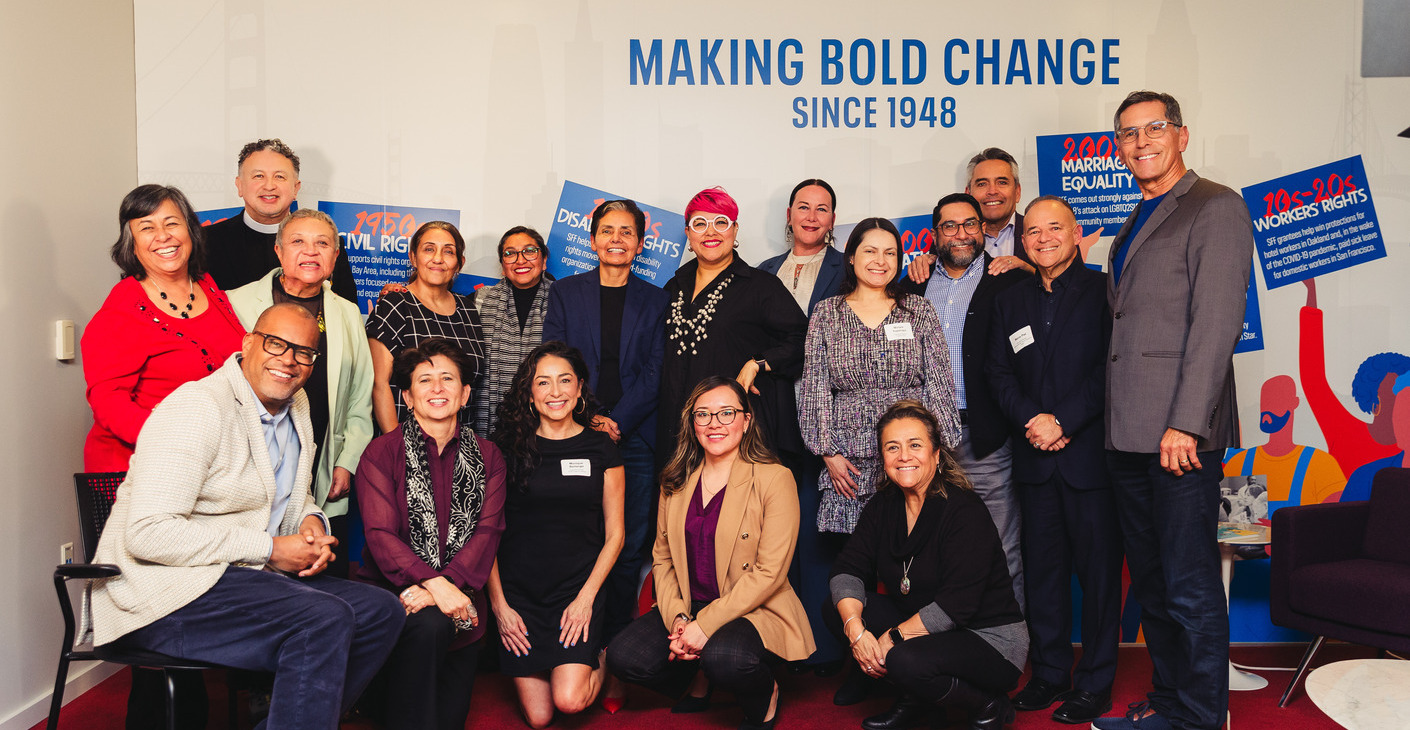
Nearly a decade of partnership between Latine community leaders and the San Francisco Foundation (SFF) offers a clear lesson for philanthropy: durable progress does not come from institutions acting alone, but from sharing power and building trust with the communities closest to the work. SFF’s Latine Kitchen Cabinet (LKC) shows that community engagement and power sharing are essential strategies for relevance and impact. Philanthropy that stays rooted in community is better equipped to respond to crisis, see emerging opportunities, and invest boldly in long‑term change.
At the NCG 2026 Annual Conference, SFF and LKC members explored what authentic community engagement looks like when philanthropy moves beyond consultation and toward shared power.
From Community Demand to Institutional Accountability
The LKC emerged when Latine leaders called for greater accountability and more authentic partnership from philanthropy. What began as a series of conversations with SFF CEO Fred Blackwell has become a long-term investment in shared leadership: pairing data and research on the Latine leadership landscape with internal equity self-assessment and deep relationship-building.
Over time, the partnership helped launch the Latinx Power Building Initiative, convene regional Latine leaders to produce the Bay Area Latine Regional Agenda, inform a study by the Bay Area Council, The Economic Impact of Immigration Enforcement in the Bay Area, and build coalitions across philanthropy.
For philanthropy, staying rooted in community means embracing transparency. “In order to share power, you have to share information,” said Fred Blackwell, CEO, San Francisco Foundation. “And sometimes that information isn’t flattering. But sharing power is about holding ourselves accountable and lifting community voices to address issues in a transparent way.”
Moving Beyond Advice to Shared Action
When philanthropy stays close to the community, it gains a more accurate understanding of complexity and opportunity and avoids oversimplified solutions. “The Latinx community is truly not a monolith,” said Marivel Mendoza Matheu, LKC Member and Executive Director & Co-founder, Hijas del Campo. “We are showing this by the organizations represented at the table—we are learning and growing from each other and building necessary connections.”
Shared Power Requires Shared Stewardship
A central takeaway from the session was that real power-sharing required community leaders, foundation staff, and trustees acting as co-stewards of strategy. Sergio Garcia, SFF Trustee and former LKC Co-Chair, emphasized that community engagement must evolve as conditions change and trust deepens. For Marivel, shared power also means shared responsibility: “Power doesn’t mean we know it all. It means that we lead with integrity and equity. There is a deep sense of shared responsibility to each other.”
This alignment matters because philanthropy’s influence—when disconnected from community—can unintentionally reinforce silos, inequity, or risk‑aversion. Ani Rivera, LKC Co-Chair and Executive Director, Galeria de la Raza, connected this accountability to a broader regional commitment: “We don’t think in isolation. We have to see ourselves as citizens of the Bay Area.” Alignment can unlock collective courage.
A Call to Philanthropy
Looking ahead, panelists urged philanthropy to join the LKC, invest in transformational partnerships that convene across sectors, lead with humility, invest in relationships, and practice transparency. The LKC is a replicable model for institutions serious about equity and results. It allows philanthropy to stay rooted in community and build power together, which is how lasting change is made.
